LEADER 04133cam a22006257i 4500
001 801138
003 TR_AnAIT
005 20260123021934
006 m o d
007 cr cnu---unuuu
008 250908s2026 enk ob 001 0 eng d
020 |a9781003511496|q(electronic bk.)
020 |a100351149X|q(electronic bk.)
020 |a9781040433959|q(electronic bk. : PDF)
020 |a1040433952|q(electronic bk. : PDF)
020 |a9781040434048|q(electronic bk. : EPUB)
020 |a1040434045|q(electronic bk. : EPUB)
020 |z9781032841588
020 |z1032841583
020 |z9781032841632
020 |z103284163X
024 7 |a10.4324/9781003511496|2doi
035 |a(OCoLC)1535504291
035 |a(OCoLC-P)1535504291
040 |aOCoLC-P|beng|erda|epn|cOCoLC-P
041 |aeng
049 |aTürk Tarih Kurumu Kütüphanesi
050 4|aBT741.3|b.S45 2025eb
072 7|aHBLH|2bicssc
072 7|aHIS037040|2bisacsh
072 7|aHRAX|2bicssc
072 7|aMBX|2bicssc
072 7|aHBTB|2bicssc
072 7|aHBJD|2bicssc
072 7|aHIS044000|2bisacsh
072 7|aREL082000|2bisacsh
082 04|a233/.5|223/eng/20251013
100 1 |aSennefelt, Karin,|eauthor.|4aut|4http://id.loc.gov/vocabulary/relators/aut|1https://id.oclc.org/worldcat/entity/E39PBJbMcjHQ4qXwpTm44Bg3Qq|1http://id.loc.gov/rwo/agents/n2002038109
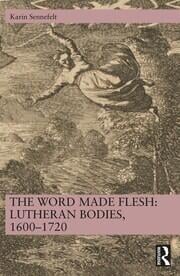
245 14|aThe Word made flesh :|bLutheran bodies, 1600-1720 /|cKarin Sennefelt.
264 1|aAbingdon, Oxon :|bRoutledge,|c2026.
300 |a1 online resource (272 pages) :|billustrations (black and white).
334 |asingle unit|bmono|0http://id.loc.gov/vocabulary/issuance/mono
336 |atext|btxt|2rdacontent
337 |acomputer|bc|2rdamedia
338 |aonline resource|bcr|2rdacarrier
353 |abibliography|bbibliography|0http://id.loc.gov/vocabulary/msupplcont/bibliography
353 |aindex|bindex|0http://id.loc.gov/vocabulary/msupplcont/index
520 |a"From children's visions of angels to the cancerous belly of a king, this book shows how the body was at the centre of religious experience in seventeenth-century Lutheran culture. It explores what it was like to live in a body that was situated between the heavenly and earthly realms in the century following the Reformations, how faith shaped the experience of the body, and how the body shaped religious experience. Lutherans fasted and fortified their bodies through asceticism or exposure to harsh conditions, people of all types could feel the Holy Spirit entering their bodies, and follow its movement within. Early modern Lutherans used their bodies to understand the complexities of their world, and by knowing about their physiology we come closer to grasping it. Based on a varied set of sources from the expansive Swedish empire, with connections from Lapland to the North American colonies, the book shows how spiritual experience played out in relation to gender and age, and the powerful resemblances that connected bodies spiritually, politically, socially and emotionally. The book challenges received notions that Lutheranism implied a removed corporeality, mediated by an abstracted faith, and offers new insights into studying early modern corporeality. The World made Flesh will be of interest to scholars and students in history, religion, history of medicine, gender and body studies."-- Provided by publisher.
588 |aOCLC-licensed vendor bibliographic record.
650 0|aHuman body|xReligious aspects|xLutheran Church|xHistory of doctrines|y17th century.
650 0|aLutheran Church|xDoctrines|xHistory|y17th century.
650 0|aHuman body|xReligious aspects|xLutheran Church|xHistory of doctrines|y18th century.
650 0|aLutheran Church|xDoctrines|xHistory|y18th century.
758 |1http://id.loc.gov/resources/instances/in00024302693
758 |4http://id.loc.gov/ontologies/bibframe/instanceOf|1http://id.loc.gov/resources/works/in00024302693
856 40|3Taylor & Francis|uhttps://www.taylorfrancis.com/books/9781003511496
856 42|3OCLC metadata license agreement|uhttp://www.oclc.org/content/dam/oclc/forms/terms/vbrl-201703.pdf
901 |aTaylor & Francis