

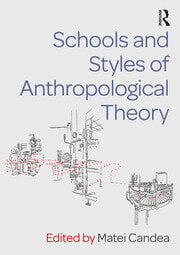
Schools and Styles of Anthropological Theory / edited by Matei Candea.
Erişim Adresi
ISBN
9781315388250 (e-book: PDF) (e-book: Mobi)
9781315388267 (e-book : PDF)
9781138229716 (hardback)
9781138229723 (paperback)
9781315388267 (e-book : PDF)
9781138229716 (hardback)
9781138229723 (paperback)
Dil Kodu
İngilizce
Basım Bildirimi
First edition.
Yayın Bilgisi
London : Taylor and Francis, 2018.
Fiziksel Niteleme
1 online resource (xli, 521 pages)
İçindekiler Notu
chapter Introduction -- Echoes of a conversation / Matei Candea -- chapter 1 Severed roots -- Evolutionism, diffusionism and (structural-)functionalism / Matei Candea -- chapter 2 Structuralism / Rupert Stasch -- chapter 3 Marxism and neo-Marxism / Caroline Humphrey -- chapter 4 From transactionalism to practice theory / David Sneath -- chapter 5 Anthropology and history / Susan Bayly -- chapter 6 From the extended-case method to multi-sited ethnography (and back) / Harri Englund -- chapter 7 Cognitive anthropology as epistemological critique / Richard D.G. Irvine -- chapter 8 Interpretive cultural anthropology -- Geertz and his ‘writing-culture’ critics / James Laidlaw -- chapter 9 The Frankfurt School, critical theory and anthropology / Christos Lynteris -- chapter 10 The anthropological lives of Michel Foucault / James Laidlaw -- chapter 11 From ‘the body’ to ‘embodiment’, with help from phenomenology / Maryon McDonald -- chapter 12 Feminist anthropology and the question of gender / Jessica Johnson -- chapter 13 No actor, no network, no theory -- Bruno Latour’s anthropology of the moderns / Matei Candea -- chapter 14 The ontological turn -- School or style? / Paolo Heywood -- chapter 15 Persons and partible persons / Marilyn Strathern.
Özet, vb.
"From the inception of the discipline in the 19th century, great ideas have always inspired and guided anthropologists when conducting their research amongst people all over the world. Such great ideas are born from the social and political contexts of their creators, and the challenge for scholars of anthropology today is to understand the value these ideas bring to modern fields of enquiry. Each chapter in this textbook has been written to provide a thorough yet engaging introduction to one particular theoretical school and style. These chapters build up to a coherent and well-organised picture of the history and contemporary shape of anthropological theory. Beginning with an introduction which reflects on the substantive themes which tie the chapters together, the book ends with an afterword by Marilyn Strathern reflecting on broader themes in the use of history and anthropological concepts. Presenting a detailed and comprehensive critical introduction to the most salient areas of the field, this book is essential reading for all undergraduate students undertaking a course on anthropological theory or the history of anthropological thought. It will also be useful reading for students of social and cultural anthropology, sociology, and human geography, and those enrolled in an anthropology course during their postgraduate degree with no background in the field."--Provided by publisher.
Konu
Ethnology __ History __ 19th century.
Diğer Yazarlar
Veritabanı
Eseri Alıntıla
Referansları kullanmadan önce gözden geçirmeniz ve varsa gerekli düzeltmeleri yapmanız önerilir.
Dijital Kaynak
MARC Görünümü
LEADER 03822cam a2200313Ii 4500
001 801308
003 TR_AnAIT
005 20260123022207
008 180706s2018 enka ob 001 0 eng d
020 |a9781315388250 (e-book: PDF)|q(e-book: Mobi)
020 |a9781315388267|q(e-book : PDF)
020 |z9781138229716|q(hardback)
020 |z9781138229723|q(paperback)
024 7 |a10.4324/9781315388267 |2doi
035 |a(OCoLC)1020627086
040 |aFlBoTFG|cFlBoTFG|erda
041 |aeng
049 |aTürk Tarih Kurumu Kütüphanesi
050 4|aGN308|b.S36 2018
082 04|a306.09|bS372
245 00|aSchools and Styles of Anthropological Theory /|cedited by Matei Candea.
250 |aFirst edition.
264 1|aLondon :|bTaylor and Francis,|c2018.
300 |a1 online resource (xli, 521 pages)
336 |atext|2rdacontent
337 |acomputer|2rdamedia
338 |aonline resource|2rdacarrier
505 00|tchapter Introduction -- |tEchoes of a conversation /|r Matei Candea -- |tchapter 1 Severed roots -- |tEvolutionism, diffusionism and (structural-)functionalism /|r Matei Candea -- |tchapter 2 Structuralism /|r Rupert Stasch -- |tchapter 3 Marxism and neo-Marxism /|r Caroline Humphrey -- |tchapter 4 From transactionalism to practice theory /|r David Sneath -- |tchapter 5 Anthropology and history /|r Susan Bayly -- |tchapter 6 From the extended-case method to multi-sited ethnography (and back) /|r Harri Englund -- |tchapter 7 Cognitive anthropology as epistemological critique /|r Richard D.G. Irvine -- |tchapter 8 Interpretive cultural anthropology -- |tGeertz and his ‘writing-culture’ critics /|r James Laidlaw -- |tchapter 9 The Frankfurt School, critical theory and anthropology /|r Christos Lynteris -- |tchapter 10 The anthropological lives of Michel Foucault /|r James Laidlaw -- |tchapter 11 From ‘the body’ to ‘embodiment’, with help from phenomenology /|r Maryon McDonald -- |tchapter 12 Feminist anthropology and the question of gender /|r Jessica Johnson -- |tchapter 13 No actor, no network, no theory -- |tBruno Latour’s anthropology of the moderns /|r Matei Candea -- |tchapter 14 The ontological turn -- |tSchool or style? /|r Paolo Heywood -- |tchapter 15 Persons and partible persons /|r Marilyn Strathern.
520 |a"From the inception of the discipline in the 19th century, great ideas have always inspired and guided anthropologists when conducting their research amongst people all over the world. Such great ideas are born from the social and political contexts of their creators, and the challenge for scholars of anthropology today is to understand the value these ideas bring to modern fields of enquiry. Each chapter in this textbook has been written to provide a thorough yet engaging introduction to one particular theoretical school and style. These chapters build up to a coherent and well-organised picture of the history and contemporary shape of anthropological theory. Beginning with an introduction which reflects on the substantive themes which tie the chapters together, the book ends with an afterword by Marilyn Strathern reflecting on broader themes in the use of history and anthropological concepts. Presenting a detailed and comprehensive critical introduction to the most salient areas of the field, this book is essential reading for all undergraduate students undertaking a course on anthropological theory or the history of anthropological thought. It will also be useful reading for students of social and cultural anthropology, sociology, and human geography, and those enrolled in an anthropology course during their postgraduate degree with no background in the field."--Provided by publisher.
650 0|aEthnology|xHistory|y19th century.
700 1 |aCandea, Matei,|eeditor.
776 08|iPrint version: |z9781138229716
856 40|uhttps://www.taylorfrancis.com/books/9781315388250|zClick here to view.
901 |aTaylor & Francis
001 801308
003 TR_AnAIT
005 20260123022207
008 180706s2018 enka ob 001 0 eng d
020 |a9781315388250 (e-book: PDF)|q(e-book: Mobi)
020 |a9781315388267|q(e-book : PDF)
020 |z9781138229716|q(hardback)
020 |z9781138229723|q(paperback)
024 7 |a10.4324/9781315388267 |2doi
035 |a(OCoLC)1020627086
040 |aFlBoTFG|cFlBoTFG|erda
041 |aeng
049 |aTürk Tarih Kurumu Kütüphanesi
050 4|aGN308|b.S36 2018
082 04|a306.09|bS372
245 00|aSchools and Styles of Anthropological Theory /|cedited by Matei Candea.
250 |aFirst edition.
264 1|aLondon :|bTaylor and Francis,|c2018.
300 |a1 online resource (xli, 521 pages)
336 |atext|2rdacontent
337 |acomputer|2rdamedia
338 |aonline resource|2rdacarrier
505 00|tchapter Introduction -- |tEchoes of a conversation /|r Matei Candea -- |tchapter 1 Severed roots -- |tEvolutionism, diffusionism and (structural-)functionalism /|r Matei Candea -- |tchapter 2 Structuralism /|r Rupert Stasch -- |tchapter 3 Marxism and neo-Marxism /|r Caroline Humphrey -- |tchapter 4 From transactionalism to practice theory /|r David Sneath -- |tchapter 5 Anthropology and history /|r Susan Bayly -- |tchapter 6 From the extended-case method to multi-sited ethnography (and back) /|r Harri Englund -- |tchapter 7 Cognitive anthropology as epistemological critique /|r Richard D.G. Irvine -- |tchapter 8 Interpretive cultural anthropology -- |tGeertz and his ‘writing-culture’ critics /|r James Laidlaw -- |tchapter 9 The Frankfurt School, critical theory and anthropology /|r Christos Lynteris -- |tchapter 10 The anthropological lives of Michel Foucault /|r James Laidlaw -- |tchapter 11 From ‘the body’ to ‘embodiment’, with help from phenomenology /|r Maryon McDonald -- |tchapter 12 Feminist anthropology and the question of gender /|r Jessica Johnson -- |tchapter 13 No actor, no network, no theory -- |tBruno Latour’s anthropology of the moderns /|r Matei Candea -- |tchapter 14 The ontological turn -- |tSchool or style? /|r Paolo Heywood -- |tchapter 15 Persons and partible persons /|r Marilyn Strathern.
520 |a"From the inception of the discipline in the 19th century, great ideas have always inspired and guided anthropologists when conducting their research amongst people all over the world. Such great ideas are born from the social and political contexts of their creators, and the challenge for scholars of anthropology today is to understand the value these ideas bring to modern fields of enquiry. Each chapter in this textbook has been written to provide a thorough yet engaging introduction to one particular theoretical school and style. These chapters build up to a coherent and well-organised picture of the history and contemporary shape of anthropological theory. Beginning with an introduction which reflects on the substantive themes which tie the chapters together, the book ends with an afterword by Marilyn Strathern reflecting on broader themes in the use of history and anthropological concepts. Presenting a detailed and comprehensive critical introduction to the most salient areas of the field, this book is essential reading for all undergraduate students undertaking a course on anthropological theory or the history of anthropological thought. It will also be useful reading for students of social and cultural anthropology, sociology, and human geography, and those enrolled in an anthropology course during their postgraduate degree with no background in the field."--Provided by publisher.
650 0|aEthnology|xHistory|y19th century.
700 1 |aCandea, Matei,|eeditor.
776 08|iPrint version: |z9781138229716
856 40|uhttps://www.taylorfrancis.com/books/9781315388250|zClick here to view.
901 |aTaylor & Francis
Materyaller
Depodan talep edilen materyal sadece kütüphane içerisinde kullanılmaktadır.
Materyal dışarıya ödünç verilmemektedir.
Materyal dışarıya ödünç verilmemektedir.
