LEADER 03669cam a2200517Mi 4500
001 801314
003 TR_AnAIT
005 20260123022212
006 m o d
007 cr |||||||||||
008 180115s2018 enk o 000 0 eng d
020 |a9781315402888|q(ePub ebook)
020 |a1315402882
020 |a9781315402895|q(PDF ebook)
020 |a1315402890
020 |a9781315402871|q(Mobipocket ebook)
020 |a1315402874
020 |a9781315402901|q(ebook)
020 |a1315402904
020 |z9781138224261|q(hbk.)
020 |z9781138224278|q(pbk.)
020 |z1138224278
020 |z113822426X
035 |a(OCoLC)1028770201|z(OCoLC)1027111336|z(OCoLC)1027354606|z(OCoLC)1027631750
035 |a(OCoLC-P)1028770201
040 |aOCoLC-P|beng|erda|epn|cOCoLC-P
041 |aeng
049 |aTürk Tarih Kurumu Kütüphanesi
050 4|aNA2500
072 7|aARC|x001000|2bisacsh
072 7|aARC|x005080|2bisacsh
072 7|aFIC|x051000|2bisacsh
072 7|aAMA|2bicssc
082 04|a720|223
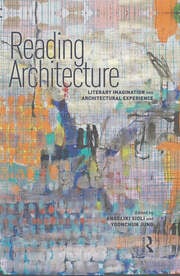
245 00|aReading architecture :|bliterary imagination and architectural experience /|cedited by Angeliki Sioli, Yoonchun Jung.
264 1|aLondon :|bRoutledge,|c2018.
300 |a1 online resource
336 |atext|btxt|2rdacontent
337 |acomputer|bc|2rdamedia
338 |aonline resource|bcr|2rdacarrier
520 |aWhy write instead of draw when it comes to architecture? Why rely on literary pieces instead of architectural treatises and writings when it comes to the of study buildings and urban environments? Why rely on literary techniques and accounts instead of architectural practices and analysis when it comes to academic research and educational projects? Why trust authors and writers instead of sociologists or scientists when it comes to planning for the future of cities? This book builds on the existing interdisciplinary bibliography on architecture and literature, but prioritizes literature's capacity to talk about the lived experience of place and the premise that literary language can often express the inexpressible. It sheds light on the importance of a literary instead of a pictorial imagination for architects and it looks into four contemporary architectural subjects through a wide variety of literary works. Drawing on novels that engage cities from around the world, thebook reveals aspects of urban space to which other means of architectural representation are blind. Whether through novels that employ historical buildings or sites interpreted through specific literary methods, it suggests a range of methodologies for contemporary architectural academic research. By exploring the power of narrative language in conveying the experience of lived space, it discusses its potential for architectural design and pedagogy. Questioning the massive architectural production of today's globalized capital-driven world, it turns to literature for ways to understand, resist or suggest alternative paths for architectural practice. Despite literature's fictional character, the essays of this volume reveal true dimensions of and for places beyond their historical, social and political reality; dimensions of utmost importance for architects, urban planners, historians and theoreticians nowadays.
588 |aOCLC-licensed vendor bibliographic record.
650 0|aArchitecture.
650 7|aARCHITECTURE / Criticism|2bisacsh
700 1 |aSioli, Angeliki,|eeditor.
700 1 |aJung, Yoonchun,|eeditor.
856 40|3Taylor & Francis|uhttps://www.taylorfrancis.com/books/9781315402901
856 42|3OCLC metadata license agreement|uhttp://www.oclc.org/content/dam/oclc/forms/terms/vbrl-201703.pdf
901 |aTaylor & Francis