

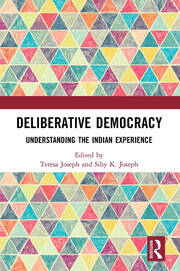
Deliberative Democracy : Understanding the Indian Experience / edited by Teresa Joseph, Siby K. Joseph.
Erişim Adresi
ISBN
9780429486340 (e-book : PDF)
9780429942679 (e-book: Mobi)
9781138598454 (hardback)
9780429942679 (e-book: Mobi)
9781138598454 (hardback)
Dil Kodu
İngilizce
Basım Bildirimi
First edition.
Yayın Bilgisi
London : Routledge, 2018.
Fiziksel Niteleme
1 online resource (249 pages)
İçindekiler Notu
chapter Introduction / Teresa Joseph Siby K. Joseph -- chapter 1 Deliberative Democracy: A Conceptual Overview / John S. Moolakkattu -- chapter 2 Deliberative Democracy and Constitution-making / Teresa Joseph A.M. Thomas -- chapter 3 Deliberative Democracy, Public Sphere and the Search for Alternative Politics in India: Gandhian Contributions / Siby K. Joseph -- chapter 4 Indian Democracy in a Changing World: A Case of Civil Society Intervention / K.M. Sajad Ibrahim -- chapter 5 Rights of the Urban Poor in Delhi and Deliberative Democracy: Understanding the Aam Aadmi Party Experience / M.V. Bijulal -- chapter 6 Mainstream and Indian Perspectives on Decentralization, Participation and Democracy / John S. Moolakkattu Jos Chathukulam -- chapter 7 Gram Sabha and Deliberative Democracy / D. Jeevan Kumar -- chapter 8 Democratic Deficits and Digital Compensation: The Digital Promises Revisited / Sabu Thomas -- chapter 9 ‘Mediated’ Public Sphere and Deliberative Democracy in India: A Critical Reflection / J. Prabhash -- chapter 10 Development, State and Mobilization: Reflections from the Margins / K.M. Sheeba -- chapter 11 Dalit Counterpublics: Reading the New Political Language of Dalit Rights Organizations / Elizabeth Abraham -- chapter 12 Ecological Movements and People’s Power / George K. Alex.
Özet, vb.
"Deliberative democracy can be seen as a part of the agenda of deepening democracy, wherein the public deliberation of citizens forms the basis of legitimate decision-making, with the people participating directly in the deliberations or making of decisions that affect them. Although political theorists have long contended that democracy should not be based merely on voting but also on informed public debate and despite diverse attempts at deliberative democracy having been made in various parts of the world, it is only during the recent decades that such initiatives have gained momentum.In terms of procedural democracy and the working of democratic institutions, India's record is considered to be noteworthy. However, questions relating to deliberative democracy have come to the fore, particularly in the recent years, with questions of inclusion and equality posing major challenges. The essays in this volume address various dimensions of the issue, ranging from a theoretical conceptualization of deliberative democracy to its role in constitution-making, Gandhian contributions to deliberative democracy, civil society interventions and the role of the media in deliberative processes in India, the participation of new social movements, Dalit and ecological movements, as well as the intricacies of deliberation and decentralization, and issues of development, marginalization and mobilization. The volume facilitates an understanding of the broad contours and evolving nature of democracy in India and how the Indian experience can inform larger debates on deliberative democracy. Please note: Taylor & Francis does not sell or distribute the Hardback in India, Pakistan, Nepal, Bhutan, Bangladesh and Sri Lanka."--Provided by publisher.
Konu
Deliberative democracy __ India.
India __ Politics and government.
India __ Politics and government.
Diğer Yazarlar
Veritabanı
Eseri Alıntıla
Referansları kullanmadan önce gözden geçirmeniz ve varsa gerekli düzeltmeleri yapmanız önerilir.
Dijital Kaynak
MARC Görünümü
LEADER 04239cam a2200325Ii 4500
001 801768
003 TR_AnAIT
005 20260123022848
008 180706s2018 enk o 000 0 eng d
020 |a9780429486340|q(e-book : PDF)
020 |a9780429942679|q(e-book: Mobi)
020 |z9781138598454|q(hardback)
024 7 |a10.4324/9780429486340 |2doi
035 |a(OCoLC)1023830454
040 |aFlBoTFG|cFlBoTFG|erda
041 |aeng
049 |aTürk Tarih Kurumu Kütüphanesi
050 4|aJQ281|b.D45 2018
082 04|a320.954|bD353
245 00|aDeliberative Democracy :|bUnderstanding the Indian Experience /|cedited by Teresa Joseph, Siby K. Joseph.
250 |aFirst edition.
264 1|aLondon :|bRoutledge,|c2018.
300 |a1 online resource (249 pages)
336 |atext|2rdacontent
337 |acomputer|2rdamedia
338 |aonline resource|2rdacarrier
505 00|tchapter Introduction /|r Teresa Joseph Siby K. Joseph -- |tchapter 1 Deliberative Democracy: A Conceptual Overview /|r John S. Moolakkattu -- |tchapter 2 Deliberative Democracy and Constitution-making /|r Teresa Joseph A.M. Thomas -- |tchapter 3 Deliberative Democracy, Public Sphere and the Search for Alternative Politics in India: Gandhian Contributions /|r Siby K. Joseph -- |tchapter 4 Indian Democracy in a Changing World: A Case of Civil Society Intervention /|r K.M. Sajad Ibrahim -- |tchapter 5 Rights of the Urban Poor in Delhi and Deliberative Democracy: Understanding the Aam Aadmi Party Experience /|r M.V. Bijulal -- |tchapter 6 Mainstream and Indian Perspectives on Decentralization, Participation and Democracy /|r John S. Moolakkattu Jos Chathukulam -- |tchapter 7 Gram Sabha and Deliberative Democracy /|r D. Jeevan Kumar -- |tchapter 8 Democratic Deficits and Digital Compensation: The Digital Promises Revisited /|r Sabu Thomas -- |tchapter 9 ‘Mediated’ Public Sphere and Deliberative Democracy in India: A Critical Reflection /|r J. Prabhash -- |tchapter 10 Development, State and Mobilization: Reflections from the Margins /|r K.M. Sheeba -- |tchapter 11 Dalit Counterpublics: Reading the New Political Language of Dalit Rights Organizations /|r Elizabeth Abraham -- |tchapter 12 Ecological Movements and People’s Power /|r George K. Alex.
520 |a"Deliberative democracy can be seen as a part of the agenda of deepening democracy, wherein the public deliberation of citizens forms the basis of legitimate decision-making, with the people participating directly in the deliberations or making of decisions that affect them. Although political theorists have long contended that democracy should not be based merely on voting but also on informed public debate and despite diverse attempts at deliberative democracy having been made in various parts of the world, it is only during the recent decades that such initiatives have gained momentum.In terms of procedural democracy and the working of democratic institutions, India's record is considered to be noteworthy. However, questions relating to deliberative democracy have come to the fore, particularly in the recent years, with questions of inclusion and equality posing major challenges. The essays in this volume address various dimensions of the issue, ranging from a theoretical conceptualization of deliberative democracy to its role in constitution-making, Gandhian contributions to deliberative democracy, civil society interventions and the role of the media in deliberative processes in India, the participation of new social movements, Dalit and ecological movements, as well as the intricacies of deliberation and decentralization, and issues of development, marginalization and mobilization. The volume facilitates an understanding of the broad contours and evolving nature of democracy in India and how the Indian experience can inform larger debates on deliberative democracy. Please note: Taylor & Francis does not sell or distribute the Hardback in India, Pakistan, Nepal, Bhutan, Bangladesh and Sri Lanka."--Provided by publisher.
650 0|aDeliberative democracy|zIndia.
651 0|aIndia|xPolitics and government.
700 1 |aJoseph, Siby K.,|eeditor.
700 1 |aJoseph, Teresa,|eeditor.
776 08|iPrint version:|z9781138598454
856 40|uhttps://www.taylorfrancis.com/books/9780429942693|zClick here to view.
901 |aTaylor & Francis
001 801768
003 TR_AnAIT
005 20260123022848
008 180706s2018 enk o 000 0 eng d
020 |a9780429486340|q(e-book : PDF)
020 |a9780429942679|q(e-book: Mobi)
020 |z9781138598454|q(hardback)
024 7 |a10.4324/9780429486340 |2doi
035 |a(OCoLC)1023830454
040 |aFlBoTFG|cFlBoTFG|erda
041 |aeng
049 |aTürk Tarih Kurumu Kütüphanesi
050 4|aJQ281|b.D45 2018
082 04|a320.954|bD353
245 00|aDeliberative Democracy :|bUnderstanding the Indian Experience /|cedited by Teresa Joseph, Siby K. Joseph.
250 |aFirst edition.
264 1|aLondon :|bRoutledge,|c2018.
300 |a1 online resource (249 pages)
336 |atext|2rdacontent
337 |acomputer|2rdamedia
338 |aonline resource|2rdacarrier
505 00|tchapter Introduction /|r Teresa Joseph Siby K. Joseph -- |tchapter 1 Deliberative Democracy: A Conceptual Overview /|r John S. Moolakkattu -- |tchapter 2 Deliberative Democracy and Constitution-making /|r Teresa Joseph A.M. Thomas -- |tchapter 3 Deliberative Democracy, Public Sphere and the Search for Alternative Politics in India: Gandhian Contributions /|r Siby K. Joseph -- |tchapter 4 Indian Democracy in a Changing World: A Case of Civil Society Intervention /|r K.M. Sajad Ibrahim -- |tchapter 5 Rights of the Urban Poor in Delhi and Deliberative Democracy: Understanding the Aam Aadmi Party Experience /|r M.V. Bijulal -- |tchapter 6 Mainstream and Indian Perspectives on Decentralization, Participation and Democracy /|r John S. Moolakkattu Jos Chathukulam -- |tchapter 7 Gram Sabha and Deliberative Democracy /|r D. Jeevan Kumar -- |tchapter 8 Democratic Deficits and Digital Compensation: The Digital Promises Revisited /|r Sabu Thomas -- |tchapter 9 ‘Mediated’ Public Sphere and Deliberative Democracy in India: A Critical Reflection /|r J. Prabhash -- |tchapter 10 Development, State and Mobilization: Reflections from the Margins /|r K.M. Sheeba -- |tchapter 11 Dalit Counterpublics: Reading the New Political Language of Dalit Rights Organizations /|r Elizabeth Abraham -- |tchapter 12 Ecological Movements and People’s Power /|r George K. Alex.
520 |a"Deliberative democracy can be seen as a part of the agenda of deepening democracy, wherein the public deliberation of citizens forms the basis of legitimate decision-making, with the people participating directly in the deliberations or making of decisions that affect them. Although political theorists have long contended that democracy should not be based merely on voting but also on informed public debate and despite diverse attempts at deliberative democracy having been made in various parts of the world, it is only during the recent decades that such initiatives have gained momentum.In terms of procedural democracy and the working of democratic institutions, India's record is considered to be noteworthy. However, questions relating to deliberative democracy have come to the fore, particularly in the recent years, with questions of inclusion and equality posing major challenges. The essays in this volume address various dimensions of the issue, ranging from a theoretical conceptualization of deliberative democracy to its role in constitution-making, Gandhian contributions to deliberative democracy, civil society interventions and the role of the media in deliberative processes in India, the participation of new social movements, Dalit and ecological movements, as well as the intricacies of deliberation and decentralization, and issues of development, marginalization and mobilization. The volume facilitates an understanding of the broad contours and evolving nature of democracy in India and how the Indian experience can inform larger debates on deliberative democracy. Please note: Taylor & Francis does not sell or distribute the Hardback in India, Pakistan, Nepal, Bhutan, Bangladesh and Sri Lanka."--Provided by publisher.
650 0|aDeliberative democracy|zIndia.
651 0|aIndia|xPolitics and government.
700 1 |aJoseph, Siby K.,|eeditor.
700 1 |aJoseph, Teresa,|eeditor.
776 08|iPrint version:|z9781138598454
856 40|uhttps://www.taylorfrancis.com/books/9780429942693|zClick here to view.
901 |aTaylor & Francis
Materyaller
Depodan talep edilen materyal sadece kütüphane içerisinde kullanılmaktadır.
Materyal dışarıya ödünç verilmemektedir.
Materyal dışarıya ödünç verilmemektedir.
