LEADER 03584cam a22005418i 4500
001 801799
003 TR_AnAIT
005 20260123022921
006 m d | |
007 cr |||||||||||
008 191202s2020 nyu ob 001 0 eng
020 |a9781000047929|q(epub)
020 |a100004792X
020 |a9781003026440|q(ebook)
020 |a1003026443
020 |a9781000047905|q(adobe pdf)
020 |a1000047903
020 |a9781000047912|q(mobi)
020 |a1000047911
020 |z9780367460099|q(hardback)
035 |a(OCoLC)1130318785
035 |a(OCoLC-P)1130318785
040 |aOCoLC-P|beng|erda|cOCoLC-P
041 |aeng
049 |aTürk Tarih Kurumu Kütüphanesi
050 00|aKD371.M8
072 7|aHIS|x000000|2bisacsh
072 7|aHIS|x015000|2bisacsh
072 7|aHIS|x054000|2bisacsh
072 7|aHBLH|2bicssc
082 00|a345.42/0252309033|223
100 1 |aGray, Drew D.,|eauthor.
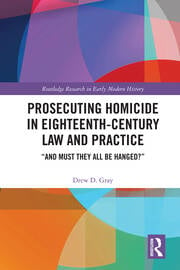
245 10|aProsecuting homicide in eighteenth-century law and practice :|b"and must they all be hanged?" /|cDrew D. Gray.
264 1|aAbingdon, Oxon ;|aNew York, NY :|bRoutledge Taylor and Francis,|c2020.
300 |a1 online resource.
336 |atext|btxt|2rdacontent
337 |acomputer|bn|2rdamedia
338 |aonline resource|bnc|2rdacarrier
490 1 |aRoutledge research in early modern history
505 0 |aIntroduction and Themes -- "Mercy Without Justice"? : Press Criticism of the Pardoning Process in Late EighteenthCentury London : The Kennedy Case of -- "There Goes Clarke, That Blood-Selling Rascal" : Murder, Revenge and the Crowd in Early 1770s Spitalfields -- The Royal Duchess and the Apothecary's Son : Homicide, Communal Prejudice and Pleading for Pardon in Provincial England -- Sex, Scandal and Strangulation : The Strange Case of Francis Kotzwara and Susannah Hill -- Conclusions
520 |a"This volume uses four case studies, all with strong London connections, to analyze homicide law and the pardoning process in eighteenth-century England. Each reveals evidence of how attempts were made to negotiate a path through the justice system to avoid conviction, and so avoid a sentence of hanging. This approach allows a deep examination of the workings of the justice system using social and cultural history methodologies. The cases explore wider areas of social and cultural history in the period, such as the role of policing agents, attitudes towards sexuality and prostitution, press reporting, and popular conceptions of "honorable" behavior. They also allow an engagement with what has been identified as the gradual erosion of individual agency within the law, and the concomitant rise of the state. Investigating the nature of the pardoning process shows how important it was to have "friends in high places," and also uncovers ways in which the legal system was susceptible to accusations of corruption. Readers will find an illuminating view of eighteenth-century London through a legal lens"--|cProvided by publisher.
588 |aOCLC-licensed vendor bibliographic record.
650 0|aTrials (Murder)|zEngland|xHistory|y18th century.
650 0|aCapital punishment|zEngland|xHistory|y18th century.
650 0|aClemency|zEngland|xDecision making|xHistory|y18th century.
650 7|aHISTORY / General|2bisacsh
650 7|aHISTORY / Europe / Great Britain|2bisacsh
650 7|aHISTORY / Social History|2bisacsh
856 40|3Taylor & Francis|uhttps://www.taylorfrancis.com/books/9781003026440
856 42|3OCLC metadata license agreement|uhttp://www.oclc.org/content/dam/oclc/forms/terms/vbrl-201703.pdf
901 |aTaylor & Francis