LEADER 03177cam a22005178i 4500
001 801826
003 TR_AnAIT
005 20260123022949
006 m o d
007 cr |||||||||||
008 220527s2023 enk ob 001 0 eng
020 |a9781003052975|q(ebk)
020 |a1003052975
020 |a9781000643039|q(electronic bk. : EPUB)
020 |a1000643034|q(electronic bk. : EPUB)
020 |a9781000643015|q(electronic bk. : PDF)
020 |a1000643018|q(electronic bk. : PDF)
020 |z9780367512361|q(hbk)
020 |z9780367512354|q(pbk)
024 7 |a10.4324/9781003052975|2doi
035 |a(OCoLC)1334894847
035 |a(OCoLC-P)1334894847
040 |aOCoLC-P|beng|erda|cOCoLC-P
041 |aeng
049 |aTürk Tarih Kurumu Kütüphanesi
050 00|aQH438.7
072 7|aHIS|x016000|2bisacsh
072 7|aHIS|x037000|2bisacsh
072 7|aHBA|2bicssc
082 00|a616/.042|223/eng/20220708
100 1 |aDe Groot, Jerome,|d1975-|eauthor.
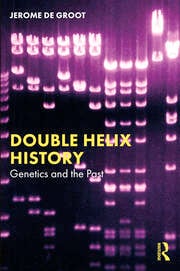
245 10|aDouble helix history :|bgenetics and the past /|cJerome De Groot.
250 |aFirst edition.
264 1|aAbingdon, Oxon ;|aNew York, NY :|bRoutledge,|c2023.
300 |a1 online resource
336 |atext|btxt|2rdacontent
337 |acomputer|bc|2rdamedia
338 |aonline resource|bcr|2rdacarrier
520 |a"Double Helix History examines the interface between genetics and history in order to investigate the plausibility of 'new' knowledge derived from scientific methods and to reflect upon what it might mean for the practice of history. Since the mapping of the human genome in 2001 there has been an expansion in the use of genetic information for historical investigation. Geneticists are confident that this has changed the way we know the past. This book considers the practicalities and implications of this seemingly new way of understanding the human past using genetics. It provides the first sustained engagement with these so-called 'genomic histories'. The book investigates the ways that genetic awareness and practice is seemingly changing historical practice and conceptualisation. Linking six concepts - 'Public', 'Practice', 'Ethics', 'Politics', 'Self' and 'Imagination - Double Helix History outlines the ways that genetic information, being postgenomic, the public life of DNA, and the genetic historical imaginary work on the body, on collective memory, on the historical imagination, on the ethics of historical investigation, on the articulation of history, and on the collection and interpretation of data regarding the 'past'. This book will appeal to researchers and students alike interested in DNA, genetics and historiography"--|cProvided by publisher.
588 |aOCLC-licensed vendor bibliographic record.
650 0|aHuman genetics|xSocial aspects.
650 0|aHuman genetics|xMoral and ethical aspects.
650 0|aDNA.
650 0|aHistoriography.
650 7|aHISTORY / Historiography|2bisacsh
650 7|aHISTORY / World|2bisacsh
856 40|3Taylor & Francis|uhttps://www.taylorfrancis.com/books/9781003052975
856 42|3OCLC metadata license agreement|uhttp://www.oclc.org/content/dam/oclc/forms/terms/vbrl-201703.pdf
901 |aTaylor & Francis