

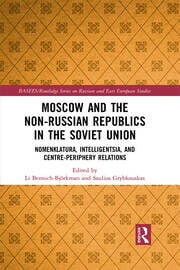
Moscow and the non-Russian Republics in the Soviet Union : nomenklatura, intelligentsia and centre-periphery relations / edited by Li Bennich-Björkman and Saulius Grybkauskas.
ISBN
9781003244608 (electronic bk.)
1003244602 (electronic bk.)
9781032155401
9781000516210 (electronic bk. : EPUB)
1000516210 (electronic bk. : EPUB)
9781032155470
9781000516203 (electronic bk. : PDF)
1000516202 (electronic bk. : PDF)
1003244602 (electronic bk.)
9781032155401
9781000516210 (electronic bk. : EPUB)
1000516210 (electronic bk. : EPUB)
9781032155470
9781000516203 (electronic bk. : PDF)
1000516202 (electronic bk. : PDF)
Dil Kodu
İngilizce
Basım Bildirimi
First edition.
Yayın Bilgisi
[Place of publication not identified] : Routledge, 2021.
Fiziksel Niteleme
1 online resource (272 pages).
Dizi
BASEES/Routledge Series on Russian and East European Studies
İçindekiler Notu
Introduction Li Bennich-Björkman and Saulius Grybkauskas 1. Purging in the Khrushchev Era: 'Red Cardinals' and Nationalism in the Soviet Republics Michael Loader 2. The Formation and Development of the Soviet Latvian Nomenklatura: Path Dependency, Cleavages, and Imposed Unanimity Daina Bleiere 3. Patterns of Succession: Top Party Elite Recruitment in Soviet Moldavia and Centre-Periphery Relations, 1940-1991 Igor Casu 4. The Transformist: The Evolution and Adaptability of Sharaf Rashidov's Regime in Soviet Uzbekistan Riccardo Mario Cucciolla 5. The Belarusian Soviet Nomenklatura: A Political History, 1947-1994 6. The Soviet nomenklatura and cultural opposition during the Brezhnev period in Lithuania Saulius Gyrbkauskas 7. Ukraine: Falling In and Out of Moscow's Grace Li Bennich-Björkman 8. Between Centre and Periphery: The Gamsakhurdia and Kostava Affair Timothy K. Blauvelt 9. Pragmatic Political Practice: The Estonian Communist Party, the Intelligentsia, and Moscow Li Bennich-Björkman
Özet, vb.
This book examines what came to determine the local power and character of the Communist party-state at the level of the national non-Russian republics. It discusses how, although the Soviet Union looked centralised and monolithic to outsiders, local party-states formed their own fiefdoms and had very considerable influence over many policies areas within their republics. It argues that local party-states were shaped by two decisive relationships - to the central Communist party in Moscow and to local constituencies, especially to the local intelligentsia and the creative professions who constituted the local party-states' biggest potential adversaries. It shows how local party-states negotiated stability and their own survival, and contends that the effects of "Sovietisation" continue to be felt in the independent states which succeeded the republics, particularly in the field of the relationship with Moscow, which remains of immense importance to these countries.
Konu
SOCIAL SCIENCE / Ethnic Studies / General __ bisacsh
SOCIAL SCIENCE / Research __ bisacsh
Central-local government relations __ Communist countries.
Communist parties __ Europe.
Communist parties __ Asia, Central.
Bureaucracy __ Communist countries.
Communist countries __ Politics and government.
Soviet Union __ Politics and government.
Soviet Union __ Relations __ Communist countries.
Communist countries __ Relations __ Soviet Union.
SOCIAL SCIENCE / Research __ bisacsh
Central-local government relations __ Communist countries.
Communist parties __ Europe.
Communist parties __ Asia, Central.
Bureaucracy __ Communist countries.
Communist countries __ Politics and government.
Soviet Union __ Politics and government.
Soviet Union __ Relations __ Communist countries.
Communist countries __ Relations __ Soviet Union.
Diğer Yazarlar
Veritabanı
Eseri Alıntıla
Referansları kullanmadan önce gözden geçirmeniz ve varsa gerekli düzeltmeleri yapmanız önerilir.
Dijital Kaynak
MARC Görünümü
LEADER 04397cam a2200601Ki 4500
001 801947
003 TR_AnAIT
005 20260123023201
006 m o d
007 cr cnu|||unuuu
008 211007s2021 xx o 000 0 eng d
020 |a9781003244608|q(electronic bk.)
020 |a1003244602|q(electronic bk.)
020 |z9781032155401
020 |a9781000516210|q(electronic bk. : EPUB)
020 |a1000516210|q(electronic bk. : EPUB)
020 |z9781032155470
020 |a9781000516203|q(electronic bk. : PDF)
020 |a1000516202|q(electronic bk. : PDF)
035 |a(OCoLC)1273727819
035 |a(OCoLC-P)1273727819
040 |aOCoLC-P|beng|erda|epn|cOCoLC-P
041 |aeng
049 |aTürk Tarih Kurumu Kütüphanesi
050 4|aD847
072 7|aSOC|x008000|2bisacsh
072 7|aSOC|x024000|2bisacsh
072 7|aSOC|x053000|2bisacsh
072 7|aRGL|2bicssc
082 04|a327.47|223/eng/20211012
245 00|aMoscow and the non-Russian Republics in the Soviet Union :|bnomenklatura, intelligentsia and centre-periphery relations /|cedited by Li Bennich-Björkman and Saulius Grybkauskas.
250 |aFirst edition.
264 1|a[Place of publication not identified] :|bRoutledge,|c2021.
300 |a1 online resource (272 pages).
336 |atext|btxt|2rdacontent
337 |acomputer|bc|2rdamedia
338 |aonline resource|bcr|2rdacarrier
490 0 |aBASEES/Routledge Series on Russian and East European Studies
505 0 |aIntroduction Li Bennich-Björkman and Saulius Grybkauskas 1. Purging in the Khrushchev Era: 'Red Cardinals' and Nationalism in the Soviet Republics Michael Loader 2. The Formation and Development of the Soviet Latvian Nomenklatura: Path Dependency, Cleavages, and Imposed Unanimity Daina Bleiere 3. Patterns of Succession: Top Party Elite Recruitment in Soviet Moldavia and Centre-Periphery Relations, 1940-1991 Igor Casu 4. The Transformist: The Evolution and Adaptability of Sharaf Rashidov's Regime in Soviet Uzbekistan Riccardo Mario Cucciolla 5. The Belarusian Soviet Nomenklatura: A Political History, 1947-1994 6. The Soviet nomenklatura and cultural opposition during the Brezhnev period in Lithuania Saulius Gyrbkauskas 7. Ukraine: Falling In and Out of Moscow's Grace Li Bennich-Björkman 8. Between Centre and Periphery: The Gamsakhurdia and Kostava Affair Timothy K. Blauvelt 9. Pragmatic Political Practice: The Estonian Communist Party, the Intelligentsia, and Moscow Li Bennich-Björkman
520 |aThis book examines what came to determine the local power and character of the Communist party-state at the level of the national non-Russian republics. It discusses how, although the Soviet Union looked centralised and monolithic to outsiders, local party-states formed their own fiefdoms and had very considerable influence over many policies areas within their republics. It argues that local party-states were shaped by two decisive relationships - to the central Communist party in Moscow and to local constituencies, especially to the local intelligentsia and the creative professions who constituted the local party-states' biggest potential adversaries. It shows how local party-states negotiated stability and their own survival, and contends that the effects of "Sovietisation" continue to be felt in the independent states which succeeded the republics, particularly in the field of the relationship with Moscow, which remains of immense importance to these countries.
588 |aOCLC-licensed vendor bibliographic record.
650 7|aSOCIAL SCIENCE / Ethnic Studies / General|2bisacsh
650 7|aSOCIAL SCIENCE / Research|2bisacsh
650 0|aCentral-local government relations|zCommunist countries.
650 0|aCommunist parties|zEurope.
650 0|aCommunist parties|zAsia, Central.
650 0|aBureaucracy|zCommunist countries.
651 0|aCommunist countries|xPolitics and government.
651 0|aSoviet Union|xPolitics and government.
651 0|aSoviet Union|xRelations|zCommunist countries.
651 0|aCommunist countries|xRelations|zSoviet Union.
700 1 |aBennich-Björkman, Li,|eeditor.
700 1 |aGrybkauskas, Saulius,|d1974-|eeditor.
856 40|3Taylor & Francis|uhttps://www.taylorfrancis.com/books/9781003244608
856 42|3OCLC metadata license agreement|uhttp://www.oclc.org/content/dam/oclc/forms/terms/vbrl-201703.pdf
901 |aTaylor & Francis
001 801947
003 TR_AnAIT
005 20260123023201
006 m o d
007 cr cnu|||unuuu
008 211007s2021 xx o 000 0 eng d
020 |a9781003244608|q(electronic bk.)
020 |a1003244602|q(electronic bk.)
020 |z9781032155401
020 |a9781000516210|q(electronic bk. : EPUB)
020 |a1000516210|q(electronic bk. : EPUB)
020 |z9781032155470
020 |a9781000516203|q(electronic bk. : PDF)
020 |a1000516202|q(electronic bk. : PDF)
035 |a(OCoLC)1273727819
035 |a(OCoLC-P)1273727819
040 |aOCoLC-P|beng|erda|epn|cOCoLC-P
041 |aeng
049 |aTürk Tarih Kurumu Kütüphanesi
050 4|aD847
072 7|aSOC|x008000|2bisacsh
072 7|aSOC|x024000|2bisacsh
072 7|aSOC|x053000|2bisacsh
072 7|aRGL|2bicssc
082 04|a327.47|223/eng/20211012
245 00|aMoscow and the non-Russian Republics in the Soviet Union :|bnomenklatura, intelligentsia and centre-periphery relations /|cedited by Li Bennich-Björkman and Saulius Grybkauskas.
250 |aFirst edition.
264 1|a[Place of publication not identified] :|bRoutledge,|c2021.
300 |a1 online resource (272 pages).
336 |atext|btxt|2rdacontent
337 |acomputer|bc|2rdamedia
338 |aonline resource|bcr|2rdacarrier
490 0 |aBASEES/Routledge Series on Russian and East European Studies
505 0 |aIntroduction Li Bennich-Björkman and Saulius Grybkauskas 1. Purging in the Khrushchev Era: 'Red Cardinals' and Nationalism in the Soviet Republics Michael Loader 2. The Formation and Development of the Soviet Latvian Nomenklatura: Path Dependency, Cleavages, and Imposed Unanimity Daina Bleiere 3. Patterns of Succession: Top Party Elite Recruitment in Soviet Moldavia and Centre-Periphery Relations, 1940-1991 Igor Casu 4. The Transformist: The Evolution and Adaptability of Sharaf Rashidov's Regime in Soviet Uzbekistan Riccardo Mario Cucciolla 5. The Belarusian Soviet Nomenklatura: A Political History, 1947-1994 6. The Soviet nomenklatura and cultural opposition during the Brezhnev period in Lithuania Saulius Gyrbkauskas 7. Ukraine: Falling In and Out of Moscow's Grace Li Bennich-Björkman 8. Between Centre and Periphery: The Gamsakhurdia and Kostava Affair Timothy K. Blauvelt 9. Pragmatic Political Practice: The Estonian Communist Party, the Intelligentsia, and Moscow Li Bennich-Björkman
520 |aThis book examines what came to determine the local power and character of the Communist party-state at the level of the national non-Russian republics. It discusses how, although the Soviet Union looked centralised and monolithic to outsiders, local party-states formed their own fiefdoms and had very considerable influence over many policies areas within their republics. It argues that local party-states were shaped by two decisive relationships - to the central Communist party in Moscow and to local constituencies, especially to the local intelligentsia and the creative professions who constituted the local party-states' biggest potential adversaries. It shows how local party-states negotiated stability and their own survival, and contends that the effects of "Sovietisation" continue to be felt in the independent states which succeeded the republics, particularly in the field of the relationship with Moscow, which remains of immense importance to these countries.
588 |aOCLC-licensed vendor bibliographic record.
650 7|aSOCIAL SCIENCE / Ethnic Studies / General|2bisacsh
650 7|aSOCIAL SCIENCE / Research|2bisacsh
650 0|aCentral-local government relations|zCommunist countries.
650 0|aCommunist parties|zEurope.
650 0|aCommunist parties|zAsia, Central.
650 0|aBureaucracy|zCommunist countries.
651 0|aCommunist countries|xPolitics and government.
651 0|aSoviet Union|xPolitics and government.
651 0|aSoviet Union|xRelations|zCommunist countries.
651 0|aCommunist countries|xRelations|zSoviet Union.
700 1 |aBennich-Björkman, Li,|eeditor.
700 1 |aGrybkauskas, Saulius,|d1974-|eeditor.
856 40|3Taylor & Francis|uhttps://www.taylorfrancis.com/books/9781003244608
856 42|3OCLC metadata license agreement|uhttp://www.oclc.org/content/dam/oclc/forms/terms/vbrl-201703.pdf
901 |aTaylor & Francis
Materyaller
Depodan talep edilen materyal sadece kütüphane içerisinde kullanılmaktadır.
Materyal dışarıya ödünç verilmemektedir.
Materyal dışarıya ödünç verilmemektedir.
