LEADER 04013cam a2200565Ki 4500
001 801975
003 TR_AnAIT
005 20260123023228
006 m o d
007 cr cnu|||unuuu
008 220318s2022 xx eo 000 0 eng d
020 |a9781003268765|q(electronic bk.)
020 |a1003268765|q(electronic bk.)
020 |a9781000578867|q(electronic bk. : EPUB)
020 |a1000578860|q(electronic bk. : EPUB)
020 |z9781032215174
020 |a9781000578843|q(electronic bk. : PDF)
020 |a1000578844|q(electronic bk. : PDF)
020 |z9781032215167
024 7 |a10.4324/9781003268765|2doi
035 |a(OCoLC)1304261805
035 |a(OCoLC-P)1304261805
040 |aOCoLC-P|beng|erda|epn|cOCoLC-P
041 |aeng
049 |aTürk Tarih Kurumu Kütüphanesi
050 4|aDS910.2.U6
072 7|aHIS|x023000|2bisacsh
072 7|aHIS|x037070|2bisacsh
072 7|aHBJF|2bicssc
082 04|a327.519073|223/eng/20220125
100 1 |aCha, Hyeonji,|eauthor.
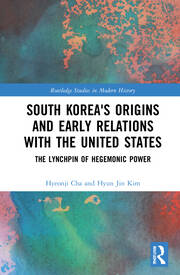
245 10|aSouth Korea's origins and early relations with the United States :|bthe lynchpin of hegemonic power /|cHyeonji Cha, Hyun Jin Kim.
250 |aFirst edition.
264 1|a[Place of publication not identified] :|bRoutledge,|c2022.
300 |a1 online resource (x, 130 pages).
336 |atext|btxt|2rdacontent
337 |acomputer|bc|2rdamedia
338 |aonline resource|bcr|2rdacarrier
490 0 |aRoutledge studies in modern history
505 0 |aWorld War Two and U.S. policy in East Asia -- Korean nationalists between the US and China -- The US policy of utilizing Korean soldiers -- Negotiations between the United States and the Provisional Government of the Republic of Korea -- The beginnings of the U.S- South Korea alliance -- from military cooperation to bilateral alliance.
520 |a"Bringing a fresh perspective to an understudied area, this book offers a critical, source-based examination and assessment of the roles of the Provisional Government of the Republic of Korea (KPG) and the United States during WW2 in the rebirth of Korea as a nation state. Presenting original research from contemporary Korean and American sources, the first half of this book explores how the US policy regarding the independence of the Korean peninsula was articulated by the US, and how it aimed to prevent the domination of Korea by either China or the Soviets. Chapters 4-5 introduce the US's policy of utilizing Korean soldiers on the battlefield against Japan, and examines whether the KPG's strategies of military diplomacy were effective or otherwise. Finally, chapter 6 assesses the impact of the joint military training for the "Eagle Project" involving the Korean independence Army and the US Office of Strategic Services, and its impact on the development of the US-South Korea alliance. Throughout the book, parallels can be drawn from this geopolitical struggle with a more contemporary one - that between China and the US, which shows how the lessons learned in the 1940s are just as relevant to researchers and policy-makers today. This is an illuminating read for students and scholars of Korean modern history, political science, and geopolitics of the Asia-Pacific region more generally. The book will also appeal to public servants in the area of foreign affairs and military strategy"--|cProvided by publisher.
588 |aOCLC-licensed vendor bibliographic record.
650 0|aHegemony|zEast Asia.
651 0|aKorea|xForeign relations|zUnited States.
651 0|aUnited States|xForeign relations|zKorea.
651 0|aKorea (South)|xForeign relations|zUnited States.
651 0|aUnited States|xForeign relations|zKorea (South)
651 0|aKorea|xHistory|y20th century.
651 0|aKorea (South)|xHistory|y1948-1960.
700 1 |aKim, Hyun Jin,|d1982-|eauthor.
856 40|3Taylor & Francis|uhttps://www.taylorfrancis.com/books/9781003268765
856 42|3OCLC metadata license agreement|uhttp://www.oclc.org/content/dam/oclc/forms/terms/vbrl-201703.pdf
901 |aTaylor & Francis