

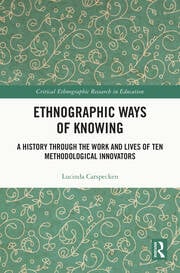
Ethnographic Ways of Knowing : A History Through the Work and Lives of Ten Methodological Innovators / Lucinda Carspecken.
ISBN
9781003329183 (electronic bk.)
1003329187 (electronic bk.)
9781040048832 (electronic bk. : EPUB)
1040048838 (electronic bk. : EPUB)
9781040048801 (electronic bk. : PDF)
1040048803 (electronic bk. : PDF)
9781032354033
9781032358864
1003329187 (electronic bk.)
9781040048832 (electronic bk. : EPUB)
1040048838 (electronic bk. : EPUB)
9781040048801 (electronic bk. : PDF)
1040048803 (electronic bk. : PDF)
9781032354033
9781032358864
Dil Kodu
İngilizce
Basım Bildirimi
First edition.
Yayın Bilgisi
New York : Routledge, Taylor & Francis Group, 2024.
Fiziksel Niteleme
1 online resource (x, 196 pages).
Dizi
Critical Ethnographic Research in Education
İçindekiler Notu
Introduction: Ethics and Ancestors in EthnographyPart I: Ethnography as Public Work1. The Traveler with the Ear Trumpet: Harriet Martineau as Methodological Pioneer2. Jane Addams and the Coat: Research as Lateral Practice3. Chart and Compass in W.E.B. Du Bois's Early WorkPart II: Building Imaginative Bridges4. "I was just crazy to get into the dance,": Zora Neale Hurston's Celebratory Research in Florida5. The Dakota Way of Life and Waterlily: Ella Deloria's Gifts6. M.N. Srinivas and the Inconvenient Detail7. The Work of Recognition in Barbara Myerhoff's Number Our DaysPart III: Fusions: Participatory Action Theory, Ethnographic History and Auto-ethnography8. Orlando Fals Borda and Participatory Action Research: Looking for the Place Where Waters Meet 9. The Many and the One: Ronald Takaki's Revisioning of the United States10. The Singing Man and the Suitor: Auto-ethnographic Ways of Knowing in Nawal El Saadawi's Memoirs
Özet, vb.
Drawing on the works of ten scholars and public intellectuals ranging over 200 years, this book foregrounds ways of knowing that include but go beyond the cognitive. The bookexplores the work of Harriet Martineau, Jane Addams, W. E. B. Du Bois, Zora Neale Hurston, Ella Deloria, M. N. Srinivas, Barbara Myerhoff, Orlando Fals Borda, Ronald Takaki and Nawal El Saadawi. The author discusses their multifaceted ethnographic practices and argues that such practices are still under-acknowledged in contemporary research in comparison to cognition and categorization. These scholars were outsiders to their societies in a variety of ways. They highlighted power imbalances in the perception and representation of one group by another and brought direct experience, emotion, narrative, imagination, recognition, self-reflection, activism and cultural humility into their writing, in addition to rationality. The book engages with the authors and their ideas in the context of their times and places. It also reclaims them as methodological predecessors, noting their contributions to what educational ethnography has been and what it could be in the future. Expanding the canon of social research history and providing insight into unique methodological forms, this text will be valuable for scholars and postgraduate students with interests in ethnography, as well as the history of research, anthropology and qualitative methods more broadly.
Konu
Knowledge, Theory of.
EDUCATION / General __ bisacsh
SOCIAL SCIENCE / Sociology / General __ bisacsh
EDUCATION / General __ bisacsh
SOCIAL SCIENCE / Sociology / General __ bisacsh
Veritabanı
Eseri Alıntıla
Referansları kullanmadan önce gözden geçirmeniz ve varsa gerekli düzeltmeleri yapmanız önerilir.
Dijital Kaynak
MARC Görünümü
LEADER 04230cam a2200505 i 4500
001 802013
003 TR_AnAIT
005 20260123023301
006 m o d
007 cr cnu|||unuuu
008 240429s2024 nyu eo 000 0 eng d
020 |a9781003329183|q(electronic bk.)
020 |a1003329187|q(electronic bk.)
020 |a9781040048832|q(electronic bk. : EPUB)
020 |a1040048838|q(electronic bk. : EPUB)
020 |a9781040048801|q(electronic bk. : PDF)
020 |a1040048803|q(electronic bk. : PDF)
020 |z9781032354033
020 |z9781032358864
024 7 |a10.4324/b23157|2doi
035 |a(OCoLC)1432095060
035 |a(OCoLC-P)1432095060
040 |aOCoLC-P|beng|erda|epn|cOCoLC-P
041 |aeng
049 |aTürk Tarih Kurumu Kütüphanesi
050 4|aBD161
072 7|aEDU|x000000|2bisacsh
072 7|aSOC|x026000|2bisacsh
072 7|aJNAM|2bicssc
082 04|a121|223/eng/20240506
100 1 |aCarspecken, Lucinda,|d1957-|eauthor.
245 10|aEthnographic Ways of Knowing :|bA History Through the Work and Lives of Ten Methodological Innovators /|cLucinda Carspecken.
250 |aFirst edition.
264 1|aNew York :|bRoutledge, Taylor & Francis Group,|c2024.
300 |a1 online resource (x, 196 pages).
336 |atext|btxt|2rdacontent
337 |acomputer|bc|2rdamedia
338 |aonline resource|bcr|2rdacarrier
490 0 |aCritical Ethnographic Research in Education
505 0 |aIntroduction: Ethics and Ancestors in EthnographyPart I: Ethnography as Public Work1. The Traveler with the Ear Trumpet: Harriet Martineau as Methodological Pioneer2. Jane Addams and the Coat: Research as Lateral Practice3. Chart and Compass in W.E.B. Du Bois's Early WorkPart II: Building Imaginative Bridges4. "I was just crazy to get into the dance,": Zora Neale Hurston's Celebratory Research in Florida5. The Dakota Way of Life and Waterlily: Ella Deloria's Gifts6. M.N. Srinivas and the Inconvenient Detail7. The Work of Recognition in Barbara Myerhoff's Number Our DaysPart III: Fusions: Participatory Action Theory, Ethnographic History and Auto-ethnography8. Orlando Fals Borda and Participatory Action Research: Looking for the Place Where Waters Meet 9. The Many and the One: Ronald Takaki's Revisioning of the United States10. The Singing Man and the Suitor: Auto-ethnographic Ways of Knowing in Nawal El Saadawi's Memoirs
520 |aDrawing on the works of ten scholars and public intellectuals ranging over 200 years, this book foregrounds ways of knowing that include but go beyond the cognitive. The bookexplores the work of Harriet Martineau, Jane Addams, W. E. B. Du Bois, Zora Neale Hurston, Ella Deloria, M. N. Srinivas, Barbara Myerhoff, Orlando Fals Borda, Ronald Takaki and Nawal El Saadawi. The author discusses their multifaceted ethnographic practices and argues that such practices are still under-acknowledged in contemporary research in comparison to cognition and categorization. These scholars were outsiders to their societies in a variety of ways. They highlighted power imbalances in the perception and representation of one group by another and brought direct experience, emotion, narrative, imagination, recognition, self-reflection, activism and cultural humility into their writing, in addition to rationality. The book engages with the authors and their ideas in the context of their times and places. It also reclaims them as methodological predecessors, noting their contributions to what educational ethnography has been and what it could be in the future. Expanding the canon of social research history and providing insight into unique methodological forms, this text will be valuable for scholars and postgraduate students with interests in ethnography, as well as the history of research, anthropology and qualitative methods more broadly.
588 |aOCLC-licensed vendor bibliographic record.
650 0|aKnowledge, Theory of.
650 7|aEDUCATION / General|2bisacsh
650 7|aSOCIAL SCIENCE / Sociology / General|2bisacsh
856 40|3Taylor & Francis|uhttps://www.taylorfrancis.com/books/9781003329183
856 42|3OCLC metadata license agreement|uhttp://www.oclc.org/content/dam/oclc/forms/terms/vbrl-201703.pdf
901 |aTaylor & Francis
001 802013
003 TR_AnAIT
005 20260123023301
006 m o d
007 cr cnu|||unuuu
008 240429s2024 nyu eo 000 0 eng d
020 |a9781003329183|q(electronic bk.)
020 |a1003329187|q(electronic bk.)
020 |a9781040048832|q(electronic bk. : EPUB)
020 |a1040048838|q(electronic bk. : EPUB)
020 |a9781040048801|q(electronic bk. : PDF)
020 |a1040048803|q(electronic bk. : PDF)
020 |z9781032354033
020 |z9781032358864
024 7 |a10.4324/b23157|2doi
035 |a(OCoLC)1432095060
035 |a(OCoLC-P)1432095060
040 |aOCoLC-P|beng|erda|epn|cOCoLC-P
041 |aeng
049 |aTürk Tarih Kurumu Kütüphanesi
050 4|aBD161
072 7|aEDU|x000000|2bisacsh
072 7|aSOC|x026000|2bisacsh
072 7|aJNAM|2bicssc
082 04|a121|223/eng/20240506
100 1 |aCarspecken, Lucinda,|d1957-|eauthor.
245 10|aEthnographic Ways of Knowing :|bA History Through the Work and Lives of Ten Methodological Innovators /|cLucinda Carspecken.
250 |aFirst edition.
264 1|aNew York :|bRoutledge, Taylor & Francis Group,|c2024.
300 |a1 online resource (x, 196 pages).
336 |atext|btxt|2rdacontent
337 |acomputer|bc|2rdamedia
338 |aonline resource|bcr|2rdacarrier
490 0 |aCritical Ethnographic Research in Education
505 0 |aIntroduction: Ethics and Ancestors in EthnographyPart I: Ethnography as Public Work1. The Traveler with the Ear Trumpet: Harriet Martineau as Methodological Pioneer2. Jane Addams and the Coat: Research as Lateral Practice3. Chart and Compass in W.E.B. Du Bois's Early WorkPart II: Building Imaginative Bridges4. "I was just crazy to get into the dance,": Zora Neale Hurston's Celebratory Research in Florida5. The Dakota Way of Life and Waterlily: Ella Deloria's Gifts6. M.N. Srinivas and the Inconvenient Detail7. The Work of Recognition in Barbara Myerhoff's Number Our DaysPart III: Fusions: Participatory Action Theory, Ethnographic History and Auto-ethnography8. Orlando Fals Borda and Participatory Action Research: Looking for the Place Where Waters Meet 9. The Many and the One: Ronald Takaki's Revisioning of the United States10. The Singing Man and the Suitor: Auto-ethnographic Ways of Knowing in Nawal El Saadawi's Memoirs
520 |aDrawing on the works of ten scholars and public intellectuals ranging over 200 years, this book foregrounds ways of knowing that include but go beyond the cognitive. The bookexplores the work of Harriet Martineau, Jane Addams, W. E. B. Du Bois, Zora Neale Hurston, Ella Deloria, M. N. Srinivas, Barbara Myerhoff, Orlando Fals Borda, Ronald Takaki and Nawal El Saadawi. The author discusses their multifaceted ethnographic practices and argues that such practices are still under-acknowledged in contemporary research in comparison to cognition and categorization. These scholars were outsiders to their societies in a variety of ways. They highlighted power imbalances in the perception and representation of one group by another and brought direct experience, emotion, narrative, imagination, recognition, self-reflection, activism and cultural humility into their writing, in addition to rationality. The book engages with the authors and their ideas in the context of their times and places. It also reclaims them as methodological predecessors, noting their contributions to what educational ethnography has been and what it could be in the future. Expanding the canon of social research history and providing insight into unique methodological forms, this text will be valuable for scholars and postgraduate students with interests in ethnography, as well as the history of research, anthropology and qualitative methods more broadly.
588 |aOCLC-licensed vendor bibliographic record.
650 0|aKnowledge, Theory of.
650 7|aEDUCATION / General|2bisacsh
650 7|aSOCIAL SCIENCE / Sociology / General|2bisacsh
856 40|3Taylor & Francis|uhttps://www.taylorfrancis.com/books/9781003329183
856 42|3OCLC metadata license agreement|uhttp://www.oclc.org/content/dam/oclc/forms/terms/vbrl-201703.pdf
901 |aTaylor & Francis
Materyaller
Depodan talep edilen materyal sadece kütüphane içerisinde kullanılmaktadır.
Materyal dışarıya ödünç verilmemektedir.
Materyal dışarıya ödünç verilmemektedir.
