

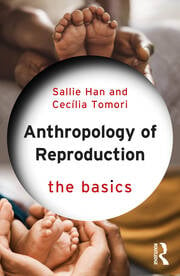
Anthropology of Reproduction : The Basics / Sallie Han and Cecília Tomori.
ISBN
9781003379416 (electronic bk.)
1003379419 (electronic bk.)
9781040298084 (electronic bk. : EPUB)
1040298087 (electronic bk. : EPUB)
9781040298053 (electronic bk. : PDF)
1040298052 (electronic bk. : PDF)
9781032459554
9781032459561
1003379419 (electronic bk.)
9781040298084 (electronic bk. : EPUB)
1040298087 (electronic bk. : EPUB)
9781040298053 (electronic bk. : PDF)
1040298052 (electronic bk. : PDF)
9781032459554
9781032459561
Dil Kodu
İngilizce
Yazar
Yayın Bilgisi
New York : Routledge, 2025.
Fiziksel Niteleme
1 online resource (200 pages).
Dizi
The basics
İçindekiler Notu
1 Why reproduction matters and what the anthropology of reproduction offersFour-field anthropology and the study of reproductionHow does the anthropology of reproduction help us understand reproduction?Key axes of oppression: Colonialism and race, sex, and gender inequalitiesReproductive justiceReproduction as reckoningOverview of this bookSummaryFurther Exploring· Readings in the anthropology of reproduction· Resources on reproductive justiceReferences2 Menstruation, contraception, and abortionMenstruation· The meanings of menstruation· The endometrial cycle· Period products· Regulating menstruation· MenopauseContraception· Gendered division of birth control· Sterilization and long-acting reversible contraceptives (LARCs)AbortionSummaryFurther Exploring· Menstruation· Contraception· AbortionReferences3 Infertility, assisted reproductive technologies, and reproductive lossesInfertility, unwanted childlessness, and the "quest for conception"· Seeking solutions for childlessness· The infertility treatment journeyAssisted reproductive technologies (ARTs)· Alleviating the gendered burden of infertility· Marriage, kinship, and religion· Troubling kinship relations· Surrogacy, kinship, race/ethnicity and the nation· ARTs and ideologies of race and nation· The political economy of ARTs· ARTs as a reproductive justice issueReproductive losses· Pregnancy loss and its meanings· Experiencing loss· Losing a pregnancy· Repeat losses· Reproductive loss and reproductive justiceSummaryFurther ExploringReferences4 Pregnancy and birthPregnancy· The paradoxes of pregnancy· Pregnancy as an occasion for ritual· Prenatal biomedical care and diagnostic testing· Imperfect woman, perfectible pregnancyBirth· Birth, culture, and social support· Who assists or attends to birthing people: Kinship, care and biomedicalization· Racism, colonialism, and biomedicine in birth· Where births take place: Sites of safety or violenceSummaryFurther Exploring· Pregnancy· BirthReferences5 Postpartum, infant, and other careThe postpartum period - care, community and kinshipEvolutionary rootsWhat happened to the postpartum period and infant care?The transformation of breastfeeding to infant feeding - and back again?Infant sleep and breastsleeping"Transgressive" breastfeeding and milk sharingBreastfeeding and infectious diseaseBreastfeeding and emergenciesCollective models of careReproductive justice and the return to community postpartum and infant careSummaryFurther Exploring· Breastfeeding and lactation· Infant sleep· AlloparentsReferences6 Struggles and movements toward reproductive justicePopulation and fertility crises in context· From anti-natalism to pronatalism in South Korea· Anti-natalism, anti-immigration, and pro-nationalismReproduction in times and places of armed conflict and war· Pregnancy, birth, and breastfeeding in Gaza, 2023-2024· Female combatants, sexual violence, and the removal of children in Ukraine, 2022-2024Continuing fights for reproductive rights, freedom and justice· Fighting for access to birth control and abortion· The struggle for LGBTQ+ recognition· Struggles against racism in sexuality, birth and infant careConceiving our futureSummaryFurther ExploringReferencesGlossaryIndex
Özet, vb.
Anthropology of Reproduction: The Basics is a clear and accessible guide to topics in reproduction from the perspective of anthropology, emphasizing the central importance of reproduction in human sociocultural and biological experience. It examines why reproduction matters so much to human beings and what anthropology offers to better understand their decisions about having or not having children, and their experiences with periods, infertility, contraception, abortion, pregnancy, pregnancy loss, birth, and care for children. The book shows that all of reproduction is shaped by our evolution, prehistory and history, as well as the cultural, social, political, and economic contexts and conditions that impact our lives. It tells the story of how these conditions enable, support, constrain or coerce reproduction - and how people around the world survive or thrive within, comply with, or resist against these forces to create their reproductive futures. Its primary goals are to promote: · an understanding of human reproduction as sociocultural and biological experience · awareness of and attention to the sociocultural, historical, political, and economic contexts and conditions influence the ideas and practices of human reproduction, particularly how social inequities shape reproduction and, in turn, how we can move towards more equal and just reproductive futures. · to introduce and reinforce an understanding of anthropology as a discipline taking a holistic approach to human experiences. This student-friendly text provides an overview of the fundamental principles of reproduction and is an invaluable guide for anyone wanting to learn more about this fascinating subject. It is an essential read for students approaching the subject for the first time, as well as researchers coming to the topic from another discipline in the sciences and humanities.
Konu
Human reproduction.
SOCIAL SCIENCE / Anthropology / General __ bisacsh
SOCIAL SCIENCE / Anthropology / Cultural __ bisacsh
SOCIAL SCIENCE / Anthropology / General __ bisacsh
SOCIAL SCIENCE / Anthropology / Cultural __ bisacsh
Diğer Yazarlar
Veritabanı
Eseri Alıntıla
Referansları kullanmadan önce gözden geçirmeniz ve varsa gerekli düzeltmeleri yapmanız önerilir.
Dijital Kaynak
MARC Görünümü
LEADER 07097cam a2200517 i 4500
001 802044
003 TR_AnAIT
005 20260123023330
006 m o d
007 cr cnu|||unuuu
008 250218s2025 nyu go 000 0 eng d
020 |a9781003379416|q(electronic bk.)
020 |a1003379419|q(electronic bk.)
020 |a9781040298084|q(electronic bk. : EPUB)
020 |a1040298087|q(electronic bk. : EPUB)
020 |a9781040298053|q(electronic bk. : PDF)
020 |a1040298052|q(electronic bk. : PDF)
020 |z9781032459554
020 |z9781032459561
024 7 |a10.4324/9781003379416|2doi
035 |a(OCoLC)1500074418
035 |a(OCoLC-P)1500074418
040 |aOCoLC-P|beng|erda|epn|cOCoLC-P
041 |aeng
049 |aTürk Tarih Kurumu Kütüphanesi
050 4|aQP251
072 7|aSOC|x002000|2bisacsh
072 7|aSOC|x002010|2bisacsh
072 7|aPSXM|2bicssc
082 04|a612.6|223/eng/20250226
100 1 |aHan, Sallie,|eauthor.|1https://id.oclc.org/worldcat/entity/E39PCjyMMRbBmHMWB3RVqDvMWC
245 10|aAnthropology of Reproduction :|bThe Basics /|cSallie Han and Cecília Tomori.
264 1|aNew York :|bRoutledge,|c2025.
300 |a1 online resource (200 pages).
336 |atext|btxt|2rdacontent
337 |acomputer|bc|2rdamedia
338 |aonline resource|bcr|2rdacarrier
490 1 |aThe basics
505 0 |a1 Why reproduction matters and what the anthropology of reproduction offersFour-field anthropology and the study of reproductionHow does the anthropology of reproduction help us understand reproduction?Key axes of oppression: Colonialism and race, sex, and gender inequalitiesReproductive justiceReproduction as reckoningOverview of this bookSummaryFurther Exploring· Readings in the anthropology of reproduction· Resources on reproductive justiceReferences2 Menstruation, contraception, and abortionMenstruation· The meanings of menstruation· The endometrial cycle· Period products· Regulating menstruation· MenopauseContraception· Gendered division of birth control· Sterilization and long-acting reversible contraceptives (LARCs)AbortionSummaryFurther Exploring· Menstruation· Contraception· AbortionReferences3 Infertility, assisted reproductive technologies, and reproductive lossesInfertility, unwanted childlessness, and the "quest for conception"· Seeking solutions for childlessness· The infertility treatment journeyAssisted reproductive technologies (ARTs)· Alleviating the gendered burden of infertility· Marriage, kinship, and religion· Troubling kinship relations· Surrogacy, kinship, race/ethnicity and the nation· ARTs and ideologies of race and nation· The political economy of ARTs· ARTs as a reproductive justice issueReproductive losses· Pregnancy loss and its meanings· Experiencing loss· Losing a pregnancy· Repeat losses· Reproductive loss and reproductive justiceSummaryFurther ExploringReferences4 Pregnancy and birthPregnancy· The paradoxes of pregnancy· Pregnancy as an occasion for ritual· Prenatal biomedical care and diagnostic testing· Imperfect woman, perfectible pregnancyBirth· Birth, culture, and social support· Who assists or attends to birthing people: Kinship, care and biomedicalization· Racism, colonialism, and biomedicine in birth· Where births take place: Sites of safety or violenceSummaryFurther Exploring· Pregnancy· BirthReferences5 Postpartum, infant, and other careThe postpartum period - care, community and kinshipEvolutionary rootsWhat happened to the postpartum period and infant care?The transformation of breastfeeding to infant feeding - and back again?Infant sleep and breastsleeping"Transgressive" breastfeeding and milk sharingBreastfeeding and infectious diseaseBreastfeeding and emergenciesCollective models of careReproductive justice and the return to community postpartum and infant careSummaryFurther Exploring· Breastfeeding and lactation· Infant sleep· AlloparentsReferences6 Struggles and movements toward reproductive justicePopulation and fertility crises in context· From anti-natalism to pronatalism in South Korea· Anti-natalism, anti-immigration, and pro-nationalismReproduction in times and places of armed conflict and war· Pregnancy, birth, and breastfeeding in Gaza, 2023-2024· Female combatants, sexual violence, and the removal of children in Ukraine, 2022-2024Continuing fights for reproductive rights, freedom and justice· Fighting for access to birth control and abortion· The struggle for LGBTQ+ recognition· Struggles against racism in sexuality, birth and infant careConceiving our futureSummaryFurther ExploringReferencesGlossaryIndex
520 |aAnthropology of Reproduction: The Basics is a clear and accessible guide to topics in reproduction from the perspective of anthropology, emphasizing the central importance of reproduction in human sociocultural and biological experience. It examines why reproduction matters so much to human beings and what anthropology offers to better understand their decisions about having or not having children, and their experiences with periods, infertility, contraception, abortion, pregnancy, pregnancy loss, birth, and care for children. The book shows that all of reproduction is shaped by our evolution, prehistory and history, as well as the cultural, social, political, and economic contexts and conditions that impact our lives. It tells the story of how these conditions enable, support, constrain or coerce reproduction - and how people around the world survive or thrive within, comply with, or resist against these forces to create their reproductive futures. Its primary goals are to promote: · an understanding of human reproduction as sociocultural and biological experience · awareness of and attention to the sociocultural, historical, political, and economic contexts and conditions influence the ideas and practices of human reproduction, particularly how social inequities shape reproduction and, in turn, how we can move towards more equal and just reproductive futures. · to introduce and reinforce an understanding of anthropology as a discipline taking a holistic approach to human experiences. This student-friendly text provides an overview of the fundamental principles of reproduction and is an invaluable guide for anyone wanting to learn more about this fascinating subject. It is an essential read for students approaching the subject for the first time, as well as researchers coming to the topic from another discipline in the sciences and humanities.
588 |aOCLC-licensed vendor bibliographic record.
650 0|aHuman reproduction.
650 7|aSOCIAL SCIENCE / Anthropology / General|2bisacsh
650 7|aSOCIAL SCIENCE / Anthropology / Cultural|2bisacsh
700 1 |aTomori, Cecília,|eauthor.|1https://id.oclc.org/worldcat/entity/E39PCjBXM6hhdC3QhJTFPmF64y
830 0|aBasics (Routledge (Firm))
856 40|3Taylor & Francis|uhttps://www.taylorfrancis.com/books/9781003379416
856 42|3OCLC metadata license agreement|uhttp://www.oclc.org/content/dam/oclc/forms/terms/vbrl-201703.pdf
901 |aTaylor & Francis
001 802044
003 TR_AnAIT
005 20260123023330
006 m o d
007 cr cnu|||unuuu
008 250218s2025 nyu go 000 0 eng d
020 |a9781003379416|q(electronic bk.)
020 |a1003379419|q(electronic bk.)
020 |a9781040298084|q(electronic bk. : EPUB)
020 |a1040298087|q(electronic bk. : EPUB)
020 |a9781040298053|q(electronic bk. : PDF)
020 |a1040298052|q(electronic bk. : PDF)
020 |z9781032459554
020 |z9781032459561
024 7 |a10.4324/9781003379416|2doi
035 |a(OCoLC)1500074418
035 |a(OCoLC-P)1500074418
040 |aOCoLC-P|beng|erda|epn|cOCoLC-P
041 |aeng
049 |aTürk Tarih Kurumu Kütüphanesi
050 4|aQP251
072 7|aSOC|x002000|2bisacsh
072 7|aSOC|x002010|2bisacsh
072 7|aPSXM|2bicssc
082 04|a612.6|223/eng/20250226
100 1 |aHan, Sallie,|eauthor.|1https://id.oclc.org/worldcat/entity/E39PCjyMMRbBmHMWB3RVqDvMWC
245 10|aAnthropology of Reproduction :|bThe Basics /|cSallie Han and Cecília Tomori.
264 1|aNew York :|bRoutledge,|c2025.
300 |a1 online resource (200 pages).
336 |atext|btxt|2rdacontent
337 |acomputer|bc|2rdamedia
338 |aonline resource|bcr|2rdacarrier
490 1 |aThe basics
505 0 |a1 Why reproduction matters and what the anthropology of reproduction offersFour-field anthropology and the study of reproductionHow does the anthropology of reproduction help us understand reproduction?Key axes of oppression: Colonialism and race, sex, and gender inequalitiesReproductive justiceReproduction as reckoningOverview of this bookSummaryFurther Exploring· Readings in the anthropology of reproduction· Resources on reproductive justiceReferences2 Menstruation, contraception, and abortionMenstruation· The meanings of menstruation· The endometrial cycle· Period products· Regulating menstruation· MenopauseContraception· Gendered division of birth control· Sterilization and long-acting reversible contraceptives (LARCs)AbortionSummaryFurther Exploring· Menstruation· Contraception· AbortionReferences3 Infertility, assisted reproductive technologies, and reproductive lossesInfertility, unwanted childlessness, and the "quest for conception"· Seeking solutions for childlessness· The infertility treatment journeyAssisted reproductive technologies (ARTs)· Alleviating the gendered burden of infertility· Marriage, kinship, and religion· Troubling kinship relations· Surrogacy, kinship, race/ethnicity and the nation· ARTs and ideologies of race and nation· The political economy of ARTs· ARTs as a reproductive justice issueReproductive losses· Pregnancy loss and its meanings· Experiencing loss· Losing a pregnancy· Repeat losses· Reproductive loss and reproductive justiceSummaryFurther ExploringReferences4 Pregnancy and birthPregnancy· The paradoxes of pregnancy· Pregnancy as an occasion for ritual· Prenatal biomedical care and diagnostic testing· Imperfect woman, perfectible pregnancyBirth· Birth, culture, and social support· Who assists or attends to birthing people: Kinship, care and biomedicalization· Racism, colonialism, and biomedicine in birth· Where births take place: Sites of safety or violenceSummaryFurther Exploring· Pregnancy· BirthReferences5 Postpartum, infant, and other careThe postpartum period - care, community and kinshipEvolutionary rootsWhat happened to the postpartum period and infant care?The transformation of breastfeeding to infant feeding - and back again?Infant sleep and breastsleeping"Transgressive" breastfeeding and milk sharingBreastfeeding and infectious diseaseBreastfeeding and emergenciesCollective models of careReproductive justice and the return to community postpartum and infant careSummaryFurther Exploring· Breastfeeding and lactation· Infant sleep· AlloparentsReferences6 Struggles and movements toward reproductive justicePopulation and fertility crises in context· From anti-natalism to pronatalism in South Korea· Anti-natalism, anti-immigration, and pro-nationalismReproduction in times and places of armed conflict and war· Pregnancy, birth, and breastfeeding in Gaza, 2023-2024· Female combatants, sexual violence, and the removal of children in Ukraine, 2022-2024Continuing fights for reproductive rights, freedom and justice· Fighting for access to birth control and abortion· The struggle for LGBTQ+ recognition· Struggles against racism in sexuality, birth and infant careConceiving our futureSummaryFurther ExploringReferencesGlossaryIndex
520 |aAnthropology of Reproduction: The Basics is a clear and accessible guide to topics in reproduction from the perspective of anthropology, emphasizing the central importance of reproduction in human sociocultural and biological experience. It examines why reproduction matters so much to human beings and what anthropology offers to better understand their decisions about having or not having children, and their experiences with periods, infertility, contraception, abortion, pregnancy, pregnancy loss, birth, and care for children. The book shows that all of reproduction is shaped by our evolution, prehistory and history, as well as the cultural, social, political, and economic contexts and conditions that impact our lives. It tells the story of how these conditions enable, support, constrain or coerce reproduction - and how people around the world survive or thrive within, comply with, or resist against these forces to create their reproductive futures. Its primary goals are to promote: · an understanding of human reproduction as sociocultural and biological experience · awareness of and attention to the sociocultural, historical, political, and economic contexts and conditions influence the ideas and practices of human reproduction, particularly how social inequities shape reproduction and, in turn, how we can move towards more equal and just reproductive futures. · to introduce and reinforce an understanding of anthropology as a discipline taking a holistic approach to human experiences. This student-friendly text provides an overview of the fundamental principles of reproduction and is an invaluable guide for anyone wanting to learn more about this fascinating subject. It is an essential read for students approaching the subject for the first time, as well as researchers coming to the topic from another discipline in the sciences and humanities.
588 |aOCLC-licensed vendor bibliographic record.
650 0|aHuman reproduction.
650 7|aSOCIAL SCIENCE / Anthropology / General|2bisacsh
650 7|aSOCIAL SCIENCE / Anthropology / Cultural|2bisacsh
700 1 |aTomori, Cecília,|eauthor.|1https://id.oclc.org/worldcat/entity/E39PCjBXM6hhdC3QhJTFPmF64y
830 0|aBasics (Routledge (Firm))
856 40|3Taylor & Francis|uhttps://www.taylorfrancis.com/books/9781003379416
856 42|3OCLC metadata license agreement|uhttp://www.oclc.org/content/dam/oclc/forms/terms/vbrl-201703.pdf
901 |aTaylor & Francis
Materyaller
Depodan talep edilen materyal sadece kütüphane içerisinde kullanılmaktadır.
Materyal dışarıya ödünç verilmemektedir.
Materyal dışarıya ödünç verilmemektedir.
