LEADER 03648cam a22006017i 4500
001 802154
003 TR_AnAIT
005 20260123023522
006 m o d
007 cr |n|||||||||
008 251019s2026 enk ob 000 0 eng d
020 |a9781003619864|q(electronic bk.)
020 |a100361986X|q(electronic bk.)
020 |a9781040448229|q(electronic bk. : EPUB)
020 |a1040448224|q(electronic bk. : EPUB)
020 |a9781040448199|q(electronic bk. : PDF)
020 |a1040448194|q(electronic bk. : PDF)
020 |z104102553X
020 |z9781041025535
024 7 |a10.4324/9781003619864|2doi
035 |a(OCoLC)1545630683
035 |a(OCoLC-P)1545630683
040 |aOCoLC-P|beng|erda|cOCoLC-P
041 |aeng
049 |aTürk Tarih Kurumu Kütüphanesi
050 4|aHC407.Y6
072 7|aKCZ|2bicssc
072 7|aBUS023000|2bisacsh
072 7|aKCP|2bicssc
072 7|aJPFF|2bicssc
072 7|aGTB|2bicssc
072 7|aHBJD|2bicssc
072 7|aHBLW3|2bicssc
072 7|aHBAH|2bicssc
072 7|aHPS|2bicssc
072 7|aHIS010010|2bisacsh
072 7|aBUS069030|2bisacsh
082 04|a338.9497|223/eng/20260113
100 1 |aGrdes??ic??, Marko,|eauthor.|1https://id.oclc.org/worldcat/entity/E39PCjFc8wWJGFRcRRwq3thT73
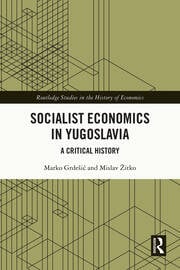
245 10|aSocialist economics in Yugoslavia :|ba critical history /|cMarko Grdes??ic?? and Mislav Z??itko.
264 1|aAbingdon, Oxon :|bRoutledge,|c2026.
300 |a1 online resource.
336 |atext|btxt|2rdacontent
337 |acomputer|bc|2rdamedia
338 |aonline resource|bcr|2rdacarrier
490 1 |aRoutledge studies in the history of economics
520 |aThis book presents a critical history of Yugoslav socialist economics, from its inception in the late 1940s to its dissolution in the late 1980s. After the dramatic break with the Soviet Union in 1948, Yugoslavia found itself in urgent need of a third way: A socialist trajectory which would not resemble the Soviet model nor succumb to the imperatives of capitalist modernization. This monumental historical task resulted in the gradual constitution of the system of socialist self-management.This book is the first to provide a systematic response to key questions about this specifically Yugoslav form of socialist economics: How did it develop? How was it consolidated into a productive and influential academic discipline? What were the theoretical concerns and empirical procedures used by economists in order to create a modern scientific discipline and advance the cause of socialist Yugoslavia? And finally, how did this body of work enter a terminal crisis and disappear simultaneously with the country itself? Even given its failure, socialist Yugoslavia constitutes one of the more important and sustained twentieth-century attempts at building socialism. Thus, the Yugoslav way of thinking remains relevant for contemporary topics such as economic democracy, comparative economic systems and post-capitalist economic models.This book will appeal to all readers interested in the history of economics, economic sociology, political economy, the history of Yugoslavia and socialist debates.
588 |aOCLC-licensed vendor bibliographic record.
650 0|aSocialism|zYugoslavia.
650 0|aEconomic history|y20th century.
651 0|aYugoslavia|xEconomic policy|y1945-1992.
700 1 |aZ??itko, Mislav,|eauthor
830 0|aRoutledge studies in the history of economics.
856 40|3Taylor & Francis|uhttps://www.taylorfrancis.com/books/9781003619864
856 42|3OCLC metadata license agreement|uhttp://www.oclc.org/content/dam/oclc/forms/terms/vbrl-201703.pdf
901 |aTaylor & Francis