LEADER 03867cam a22005298i 4500
001 802399
003 TR_AnAIT
005 20260123023911
006 m o d
007 cr |||||||||||
008 230906s2024 enk ob 001 0 eng
020 |a9781315597836|q(ebook)
020 |a1315597837
020 |a9781317088837|q(electronic bk. : EPUB)
020 |a1317088832|q(electronic bk. : EPUB)
020 |a9781317088844|q(electronic bk. : PDF)
020 |a1317088840|q(electronic bk. : PDF)
020 |a9781317088820|q(electronic bk. : Mobipocket)
020 |a1317088824|q(electronic bk. : Mobipocket)
020 |z9781409406082|q(hardback)
020 |z9781032309521|q(paperback)
024 7 |a10.4324/9781315597836|2doi
035 |a(OCoLC)1396561139
035 |a(OCoLC-P)1396561139
040 |aOCoLC-P|beng|erda|cOCoLC-P
041 |aeng
049 |aTürk Tarih Kurumu Kütüphanesi
050 00|aHF3520.L5
072 7|aHIS|x000000|2bisacsh
072 7|aHBLL|2bicssc
082 00|a381.09427/5|223/eng/20230906
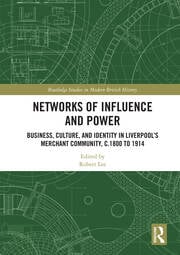
245 00|aNetworks of influence and power :|bbusiness, culture and identity in Liverpool's merchant community, c.1800 to 1914 /|cedited by Robert Lee.
264 1|aAbingdon, Oxon ;|aNew York, NY :|bRoutledge,|c2024.
300 |a1 online resource.
336 |atext|btxt|2rdacontent
337 |acomputer|bc|2rdamedia
338 |aonline resource|bcr|2rdacarrier
490 0 |aRoutledge studies in modern British history
520 |a"During the nineteenth century Liverpool became the heart of an international maritime network. As the 'second city' of Empire, its merchants and shipowners operated within a transnational commercial and financial system, while its trading connections stimulated the development of new markets and their integration within an increasingly global economy. This ground-breaking volume brings together ten original contributions that reflect upon the development of the city's business community from the early-nineteenth century to the outbreak of the First World War with an emphasis on the period from 1851 to 1912. It offers the first detailed analysis of Liverpool's merchant community within a conceptual and historiographical framework which focuses on the economic, social and cultural role of business elites in the nineteenth century. It explores the extent to which business success was predicated on the maintenance of networks of trust; analyses the importance of business culture in structuring commercial operations; and discusses the role of ethics, trust and reputation within the changing framework of the business environment. Particular attention is paid to the role of women and the important contribution of the family to commercial success and the maintenance of social networks. Changes in business practice and social networks are also examined within a spatial context in order to assess the impact of the development of a distinct commercial centre and the clustering of commercial activity on interaction, reputation and trust, while particular attention is paid to the effect of suburbanization on existing associational networks, the social cohesiveness of business culture, and the cultural identity of the merchant community as a whole"--|cProvided by publisher.
588 |aOCLC-licensed vendor bibliographic record.
650 0|aMerchants|zEngland|zLiverpool|xHistory.
650 0|aBusinesspeople|zEngland|zLiverpool|xHistory.
650 7|aHISTORY / General|2bisacsh
651 0|aLiverpool (England)|xCommerce|xHistory.
651 0|aLiverpool (England)|xEconomic conditions.
651 0|aLiverpool (England)|xSocial conditions.
700 1 |aLee, W. Robert,|eeditor.
856 40|3Taylor & Francis|uhttps://www.taylorfrancis.com/books/9781315597836
856 42|3OCLC metadata license agreement|uhttp://www.oclc.org/content/dam/oclc/forms/terms/vbrl-201703.pdf
901 |aTaylor & Francis