LEADER 03504nam a2200589Ii 4500
001 802622
003 TR_AnAIT
005 20260123024221
006 m o d
007 cr
008 190122t20182019fluab ob 001 0 eng d
020 |a9780203730751(e-book : PDF)
035 |a(OCoLC)1051778529
040 |aFlBoTFG|cFlBoTFG|erda
041 |aeng
049 |aTürk Tarih Kurumu Kütüphanesi
050 4|aHQ1090.7|b.N35
072 7|aSOC|x032000 |2bisacsh
072 7|aSOC|x042000 |2bisacsh
072 7|aGTF |2bicscc
082 04|a306.3/62095496|223
100 1 |aMaycock, Matthew,|eauthor.
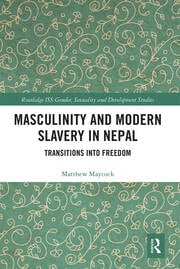
245 10|aMasculinity and Modern Slavery in Nepal :|bTransitions into Freedom /|cby Matthew Maycock.
250 |aFirst edition.
264 1|aBoca Raton, FL :|bRoutledge,|c[2018].
264 4|c©2019.
300 |a1 online resource (214 pages) :|b13 illustrations, text file, PDF.
336 |atext|2rdacontent
337 |acomputer|2rdamedia
338 |aonline resource|2rdacarrier
490 1 |aRoutledge ISS Gender, Sexuality and Development Studies
504 |aIncludes bibliographical references and index.
505 00|tList of Figures List of Tables Use of Tharu/Nepali Words and CalendarAcknowledgements List of Abbreviations Chapter 1 Introduction Chapter 2 Bonded labour in South Asia and the Kamaiya system in Nepal Chapter 3 The setting; far-west Nepal and the two field sites Chapter 4 Bodies, consumption and health after freedom Chapter 5 Work, Education and Mobility after freedom Chapter 6 Relationships and families after freedom Chapter 7 Conclusion Index.
520 3 |aSouth Asia is the region with the highest number of slaves globally according to the Global Slavery Index. Bonded labour affects between 15 and 20 million labourers within the region, and is shaped by locally specific interconnections between ethnicity, class, caste and, critically, gender structures. Masculinity and Modern Slavery in Nepal explores the role of masculinity in shaping the structures and experience of slavery and subsequent freedom. While many I/NGOs and human rights organisations use freedom from slavery as a powerful and emotive goal, the lived reality of freedom for many bonded labourers often results in disappointment and frustration as they navigate diverse expectations of masculinity. Taking Nepal as a case study, the book illustrates how men’s gendered experiences of bondedness and freedom can inform perspectives on the transition to freedom and modernity in South Asia more broadly. Researchers of modern slavery, gender studies, and South Asian studies will be interested in the rich analysis on offer in this book.
530 |aAlso available in print format.
650 7|aSOCIAL SCIENCE / Developing Countries.|2bisacsh
650 7|abonded labour.|2bisacsh
650 7|afreedom.|2bisacsh
650 7|agender and development.|2bisacsh
650 7|amasculinity.|2bisacsh
650 7|amodern slavery.|2bisacsh
650 7|aNepal.|2bisacsh
650 7|aSouth Asia.|2bisacsh
650 7|asubaltern masculinities.|2bisacsh
650 0|aMasculinity|zNepal.
650 0|aMen|xIdentity.
650 0|aSlavery|zNepal.
650 0|aSlave labor|zNepal.
650 0|aMasculinity.
655 0|aElectronic books.
710 2 |aTaylor and Francis.
776 08|iPrint version: |z9781138303782
830 0|aRoutledge ISS Gender, Sexuality and Development Studies.
856 40|uhttps://www.taylorfrancis.com/books/9780203730751|zClick here to view
901 |aTaylor & Francis