LEADER 03528cam a2200529Ki 4500
001 802736
003 TR_AnAIT
005 20260123024417
006 m o d
007 cr cnu|||unuuu
008 210108s2020 xx o 000 0 eng d
020 |a9780429424601|q(electronic bk.)
020 |a0429424604|q(electronic bk.)
020 |a9780429755484|q(electronic bk. : Mobipocket)
020 |a0429755481|q(electronic bk. : Mobipocket)
020 |a9780429755491|q(electronic bk. : EPUB)
020 |a042975549X|q(electronic bk. : EPUB)
020 |z9781138354715
020 |z9780367694920
020 |a9780429755507|q(electronic bk. : PDF)
020 |a0429755503|q(electronic bk. : PDF)
024 7 |a10.4324/9780429424601|2doi
035 |a(OCoLC)1229166348|z(OCoLC)1225548132
035 |a(OCoLC-P)1229166348
040 |aOCoLC-P|beng|erda|epn|cOCoLC-P
041 |aeng
049 |aTürk Tarih Kurumu Kütüphanesi
050 4|aDS518.4|b.S89 2020
072 7|aSOC|x008000|2bisacsh
072 7|aSOC|x053000|2bisacsh
072 7|aHBJF|2bicssc
082 04|a327.4105|223
100 1 |aSuzuki, Yu.
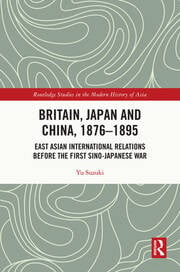
245 10|aBritain, Japan and China, 1876-1895 :|bEast Asian International Relations before the First Sino-Japanese War.
250 |aFirst edition.
264 1|a[Place of publication not identified] :|bRoutledge,|c2020.
300 |a1 online resource (xii, 222 pages).
336 |atext|btxt|2rdacontent
337 |acomputer|bc|2rdamedia
338 |aonline resource|bcr|2rdacarrier
490 1 |aRoutledge Studies in the Modern History of Asia Series
505 0 |aIntroduction 1. Anglo-Japanese Relationship and Korea before the Imo Mutiny 2. The Imo Crisis and Its Aftermath, July 1882-April 1884 3. East Asian Crises, Phase One: May 1884-October 1885 4. East Asian Crises, Phase Two: November 1885-February 1887 5. The Post-Crises Order in East Asia, March 1887-July 1892 6. The Road to the First Sino-Japanese War, August 1892-July 1894 7. The First Sino-Japanese War and Anglo-Japanese Relations Conclusion
520 |aThis book revises the conventional wisdom about the Anglo-Japanese relationship in the late nineteenth century that these two countries were bound by mutual sympathy and common interests, and therefore the common ground which led to the signing of the Anglo-Japanese Alliance in 1902, had already existed in the 1880s. Such understandings fail to take account of the fact that the Qing dynasty of China had emerged as the strongest regional power in East Asia by reasserting its influence as the traditional suzerain of the region in the years prior to the First Sino-Japanese War. The British and the Japanese governments clearly recognised that it would become difficult to maintain their interests in East Asia if they antagonised the Qing by challenging its claim of suzerainty over Korea. It was difficult for them to come to closer terms when their priority before 1894-5 was to maintain good relations with China, and when they were also experiencing numerous diplomatic difficulties with each other.
588 |aOCLC-licensed vendor bibliographic record.
650 7|aSOCIAL SCIENCE / Ethnic Studies / General|2bisacsh
651 0|aEast Asia|xForeign relations|zGreat Britain|xHistory|y19th century.
651 0|aGreat Britain|xForeign relations|zEast Asia|xHistory|y19th century.
856 40|3Taylor & Francis|uhttps://www.taylorfrancis.com/books/9780429424601
856 42|3OCLC metadata license agreement|uhttp://www.oclc.org/content/dam/oclc/forms/terms/vbrl-201703.pdf
901 |aTaylor & Francis