LEADER 03737cam a2200541 i 4500
001 802993
003 TR_AnAIT
005 20260123024839
006 m o d
007 cr cnu|||unuuu
008 231220t20242024enk eob 001 0 eng d
020 |a9781003318750|qelectronic book
020 |a1003318754|qelectronic book
020 |z9781032332161
020 |z9781003831853|qelectronic book
020 |a9781003831976|qelectronic book|qEPUB
020 |a1003831974|qelectronic book|qEPUB
020 |z9781032332154
024 7 |a10.4324/9781003318750|2doi
035 |a(OCoLC)1415570295
035 |a(OCoLC-P)1415570295
040 |aOCoLC-P|beng|erda|epn|cOCoLC-P
041 |aeng
049 |aTürk Tarih Kurumu Kütüphanesi
050 4|aD809.S65
072 7|aHIS|x000000|2bisacsh
072 7|aHIS|x027100|2bisacsh
072 7|aHIS|x032000|2bisacsh
072 7|aHBWQ|2bicssc
082 04|a940.53/1450947|223/eng/20240108
100 1 |aBelsky, Natalie,|eauthor.
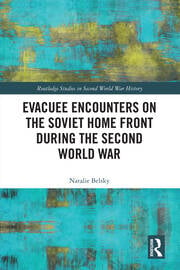
245 10|aEvacuee Encounters on the Soviet Home Front During the Second World War /|cNatalie Belsky.
264 1|aAbingdon, Oxon ;|aNew York :|bRoutledge,|c2024.
264 4|c©2024
300 |a1 online resource (xii, 212 pages).
336 |atext|btxt|2rdacontent
337 |acomputer|bc|2rdamedia
338 |aonline resource|bcr|2rdacarrier
490 1 |aRoutledge Studies in Second World War History
505 0 |aIntroduction: Encounters in the East1. Endless Itinerancy: Evacuee Journeys to Sites of Resettlement2. Unwanted Neighbors: The Struggle Over Evacuee Housing3. The "Right to Be Useful" and the Debates Over Evacuee Employment 4. The Home Front Economy and the Leningrad Ration 5. "You Are Not an Orphan:" The Campaign in Defense of Evacuated Children6. Soviet and Jewish?: Antisemitism on the Home FrontConclusion
520 |aThis study is the first to examine the experiences of the millions of Soviet civilians evacuated to the interior of the country during the Second World War in the context of their encounters and relations with local communities and populations across Soviet Central Asia, Kazakhstan, Siberia, and the Urals. The book considers the impact of this episode of massive population displacement across Eurasia on individuals, communities, and society more broadly. It explores how the challenges associated with wartime displacement gave rise to tensions between evacuees and local residents. These frictions, in turn, forced individuals to interrogate the meaning, terms, and limitations of citizenship and belonging in the Soviet Union. Evacuation thus played a critical role in the changing relationship between citizens and the Soviet state in the war and postwar periods. Furthermore, this study pays particular attention to the plight of Soviet Jewish evacuees, who constitute the largest contingent of Holocaust survivors in Europe, and the rise of anti-Semitism on the Soviet home front during the war. This volume will be of interest to students and scholars of the Second World War, migration and displacement, the Holocaust, Soviet Jewish history, and the Soviet experience more broadly.
588 |aOCLC-licensed vendor bibliographic record.
650 0|aWorld War, 1939-1945|xEvacuation of civilians|zSoviet Union.
650 0|aJews|zSoviet Union|xHistory|y20th century.
650 7|aHISTORY / General|2bisacsh
650 7|aHISTORY / Military / World War II|2bisacsh
650 7|aHISTORY / Europe / Russia & the Former Soviet Union|2bisacsh
830 0|aRoutledge studies in Second World War history.
856 40|3Taylor & Francis|uhttps://www.taylorfrancis.com/books/9781003318750
856 42|3OCLC metadata license agreement|uhttp://www.oclc.org/content/dam/oclc/forms/terms/vbrl-201703.pdf
901 |aTaylor & Francis