LEADER 03946cam a2200505 i 4500
001 803096
003 TR_AnAIT
005 20260123235009
006 m o d
007 cr cnu|||unuuu
008 241029s2025 enk eo 000 0 eng d
020 |a9781003507062|q(electronic bk.)
020 |a1003507069|q(electronic bk.)
020 |z9781032829456
020 |a9781040229217|q(electronic bk. : EPUB)
020 |a1040229212|q(electronic bk. : EPUB)
020 |z9781032764214
020 |a9781040229187|q(electronic bk. : PDF)
020 |a1040229182|q(electronic bk. : PDF)
024 7 |a10.4324/9781003507062|2doi
035 |a(OCoLC)1464076457
035 |a(OCoLC-P)1464076457
040 |aOCoLC-P|beng|erda|epn|cOCoLC-P
041 |aeng
049 |aTürk Tarih Kurumu Kütüphanesi
050 4|aBL65.P7
072 7|aHIS|x000000|2bisacsh
072 7|aSOC|x003000|2bisacsh
072 7|aREL|x072000|2bisacsh
072 7|aHB|2bicssc
082 04|a322/.10954|223/eng/20241121
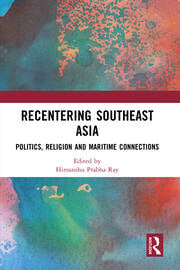
245 00|aRecentering Southeast Asia :|bPolitics, Religion and Maritime Connections.
264 1|aLondon :|bRoutledge,|c2025.
300 |a1 online resource (xiv, 202 pages).
336 |atext|btxt|2rdacontent
337 |acomputer|bc|2rdamedia
338 |aonline resource|bcr|2rdacarrier
505 0 |a1. IntroductionHimanshu Prabha Ray Section I: The Making of the Discourse: 2. Nehru's Southeast Asia Madhavan K. Palat.3. Greater India Scholars in a Decolonizing World: The Asian Relations Conference and the Indian Council of World Affairs T. C. A. Raghavan.Modern Japanese Interest and Understanding of Buddhism in Southeast Asia: The Case of Chikō Satō and Thailand Koji Osawa.5. Buddhist-mediated Relations between Japan and Myanmar after World War IITakahiro Kojima. Section II: Beyond Binaries: The Way Forward 6. Maritime Buddhism: Of Relics, Rituals and Shipwrecks Himanshu Prabha Ray7. The ninth century Lakṣmīndra-Lokeśvara vihāra Đồng Dương viewed as a maṇḍala architecture Trần Kỳ Phương and Nguyễn Thị Tú Anh.8. Multiple Lives of Temples Across the Bay of BengalEmma Natalya Stein.9. Early India and Vietnam (ancient Campā): Revisiting the Vo-canh stele and the Indianization debate Ashish Kumar
520 |aThis book assesses the impact of European colonization in the late 19th and early 20th century in 'restructuring' the shared past of India and Southeast Asia. It provides case studies that transcend colonial constructs and adopt newer approaches to understanding the shared past. The authors explore these developments through the lens of political figures like Jawaharlal Nehru (1889-1964) and re-examine themes such as the Greater India Society (1926-1959) established in Calcutta, and the role of Buddhism in post-World War II connections, as the repatriation of the mortal remains of Japanese soldiers killed in Burma (Myanmar) acquired urgency. Drawing on a diverse range of sources including archaeology, Buddhist texts, the afterlives of the Hindu temples, maritime networks, and inscriptions from Vietnam and central India, the book will be an essential read for scholars and researchers of history, Buddhism, archaeology, heritage studies, cultural studies, and political history as well as South and Southeast Asian history.
588 |aOCLC-licensed vendor bibliographic record.
650 0|aReligion and politics|zSoutheast Asia.
650 7|aHISTORY / General|2bisacsh
650 7|aSOCIAL SCIENCE / Archaeology|2bisacsh
650 7|aRELIGION / Antiquities & Archaeology|2bisacsh
700 1 |aRay, Himanshu Prabha,|eeditor.|uProject Mausam, Indira Gandhi National Centre for the Arts, India; Munich Graduate School of Ancient Studies, Germany; Oxford Centre for Hindu Studies, UK.
856 40|3Taylor & Francis|uhttps://www.taylorfrancis.com/books/9781003507062
856 42|3OCLC metadata license agreement|uhttp://www.oclc.org/content/dam/oclc/forms/terms/vbrl-201703.pdf
901 |aTaylor & Francis