

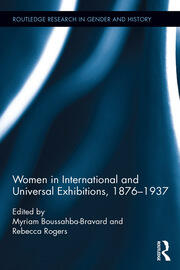
Women in International and Universal Exhibitions, 1876-1937 / Rebecca Rogers.
Erişim Adresi
ISBN
9781315196534 (e-book : PDF)
9781351767323 (e-book: Mobi)
9781138636057 (hardback)
9781351767323 (e-book: Mobi)
9781138636057 (hardback)
Dil Kodu
İngilizce
Yazar
Basım Bildirimi
First edition.
Yayın Bilgisi
London : Taylor and Francis, 2017.
Fiziksel Niteleme
1 online resource (328 pages)
Dizi
Routledge Research in Gender and History ; Volume 28
İçindekiler Notu
chapter Introduction: Positioning Women in the World’s Fairs, 1876–1937 / MYRIAM BOUSSAHBA-BRAVARD AND REBECCA ROGERS -- part Part I Exhibiting Women: Collectors, Artists and Students -- chapter 1 Expositions and Collections: Women Art Collectors and Patrons in the Age of the Great Expositions JULIE VERLAINE -- chapter 2 Unpretentious Paintings: Mexico’s National School of Fine Arts’ Women Students at the 1893 Chicago Columbian Exposition / URSULA TANIA ESTRADA -- chapter 3 Inserting the Personal in the International: The American Girl at the 1900 Paris Exposition / LINDA KIM -- part Part II Promoting Women: Professionals, Workers and Organizers -- chapter 4 “After Mature Deliberation”: Women Lawyers’ Infiltration of the 1893 World’s Columbian Exposition / GWEN JORDAN -- chapter 5 Rewriting Portuguese Women’s History at International Expositions (1889–1908) / TERESA PINTO -- chapter 6 A “Reason to Act, an Ideal to Strive Towards”: Women as Intellectual Organizers at the Paris Exhibition of 1900 / ANNE R. EPSTEIN -- part Part III Staging Otherness: Women on and from the Margins -- chapter 7 African American Women’s Voices at the 1893 Chicago World’s Fair / CLAUDINE RAYNAUD -- chapter 8 Between Knowledge and Spectacle: Exotic Women at International Exhibitions (Paris, 1889 and 1900) / CHRISTIANE DEMEULENAERE-DOUYÈRE -- chapter 9 International Activism After the Fair: New South Wales, Utah and the 1893 World’s Columbian Exposition / JAMES KEATING -- part Part IV Mobilizing Women: National, International and Transnational Feminism(s) -- chapter 10 Rendezvous at the Expo: Building a Franco-American Women’s Network, 1889–1893–1900 / KAREN OFFEN -- chapter 11 Forging the Transnational out of the International: Feminist Internationalism at World’s Fairs and International Exhibitions / TRACEY JEAN BOISSEAU -- chapter 12 French Women at the Paris 1937 Exhibition: One Step Forward, Two Steps Back? / SIń REYNOLDS.
Özet, vb.
This book argues for the importance of bringing women and gender more directly into the dynamic field of exposition studies. Reclaiming women for the history of world fairs (1876-1937), it also seeks to introduce new voices into these studies, dialoguing across disciplinary and national historiographies. From the outset, women participated not only as spectators, but also as artists, writers, educators, artisans and workers, without figuring among the organizers of international exhibitions until the 20th century. Their presence became more pointedly acknowledged as feminist movements developed within the Western World and specific spaces dedicated to women’s achievements emerged. International exhibitions emerged as showcases of "modernity" and "progress," but also as windows onto the foreign, the different, the unexpected and the spectacular. As public rituals of celebration, they transposed national ceremonies and protests onto an international stage. For spectators, exhibitions brought the world home; for organizers, the entire world was a fair. Women were actors and writers of the fair narrative, although acknowledgment of their contribution was uneven and often ephemeral. Uncovering such silence highlights how gendered the triumphant history of modernity was, and reveals the ways women as a category engaged with modern life within that quintessential modern space—the world fair.
Konu
Minority women.
Sex role.
Women __ Intellectual life.
Women professional employees.
Feminism.
Social & Cultural History
Women's & Gender History
HISTORY / Social History __ bisacsh
HISTORY / Women __ bisacsh
Sex role.
Women __ Intellectual life.
Women professional employees.
Feminism.
Social & Cultural History
Women's & Gender History
HISTORY / Social History __ bisacsh
HISTORY / Women __ bisacsh
Diğer Yazarlar
Veritabanı
Eseri Alıntıla
Referansları kullanmadan önce gözden geçirmeniz ve varsa gerekli düzeltmeleri yapmanız önerilir.
Dijital Kaynak
MARC Görünümü
LEADER 04862cam a2200421Ii 4500
001 803219
003 TR_AnAIT
005 20260123235222
008 180706s2017 xx a o 000 0 eng d
020 |a9781315196534|q(e-book : PDF)
020 |a9781351767323|q(e-book: Mobi)
020 |z9781138636057|q(hardback)
024 7 |a10.4324/9781315196534 |2doi
035 |a(OCoLC)993949182
040 |aFlBoTFG|cFlBoTFG|erda
041 |aeng
049 |aTürk Tarih Kurumu Kütüphanesi
050 4|aT395|b.R644 2017
082 04|a700
100 1 |aRogers, Rebecca,|eauthor.
245 10|aWomen in International and Universal Exhibitions, 1876-1937 /|cRebecca Rogers.
250 |aFirst edition.
264 1|aLondon :|bTaylor and Francis,|c2017.
300 |a1 online resource (328 pages)
336 |atext|2rdacontent
337 |acomputer|2rdamedia
338 |aonline resource|2rdacarrier
490 0 |aRoutledge Research in Gender and History ;|vVolume 28
505 00|tchapter Introduction: Positioning Women in the World’s Fairs, 1876–1937 /|rMYRIAM BOUSSAHBA-BRAVARD AND REBECCA ROGERS -- |tpart Part I Exhibiting Women: Collectors, Artists and Students -- |tchapter 1 Expositions and Collections: Women Art Collectors and Patrons in the Age of the Great Expositions JULIE VERLAINE -- |tchapter 2 Unpretentious Paintings: Mexico’s National School of Fine Arts’ Women Students at the 1893 Chicago Columbian Exposition /|rURSULA TANIA ESTRADA -- |tchapter 3 Inserting the Personal in the International: The American Girl at the 1900 Paris Exposition /|rLINDA KIM -- |tpart Part II Promoting Women: Professionals, Workers and Organizers -- |tchapter 4 “After Mature Deliberation”: Women Lawyers’ Infiltration of the 1893 World’s Columbian Exposition /|rGWEN JORDAN -- |tchapter 5 Rewriting Portuguese Women’s History at International Expositions (1889–1908) /|rTERESA PINTO -- |tchapter 6 A “Reason to Act, an Ideal to Strive Towards”: Women as Intellectual Organizers at the Paris Exhibition of 1900 /|rANNE R. EPSTEIN -- |tpart Part III Staging Otherness: Women on and from the Margins -- |tchapter 7 African American Women’s Voices at the 1893 Chicago World’s Fair /|rCLAUDINE RAYNAUD -- |tchapter 8 Between Knowledge and Spectacle: Exotic Women at International Exhibitions (Paris, 1889 and 1900) /|rCHRISTIANE DEMEULENAERE-DOUYÈRE -- |tchapter 9 International Activism After the Fair: New South Wales, Utah and the 1893 World’s Columbian Exposition /|rJAMES KEATING -- |tpart Part IV Mobilizing Women: National, International and Transnational Feminism(s) -- |tchapter 10 Rendezvous at the Expo: Building a Franco-American Women’s Network, 1889–1893–1900 /|rKAREN OFFEN -- |tchapter 11 Forging the Transnational out of the International: Feminist Internationalism at World’s Fairs and International Exhibitions /|rTRACEY JEAN BOISSEAU -- |tchapter 12 French Women at the Paris 1937 Exhibition: One Step Forward, Two Steps Back? /|rSIń REYNOLDS.
520 2 |aThis book argues for the importance of bringing women and gender more directly into the dynamic field of exposition studies. Reclaiming women for the history of world fairs (1876-1937), it also seeks to introduce new voices into these studies, dialoguing across disciplinary and national historiographies. From the outset, women participated not only as spectators, but also as artists, writers, educators, artisans and workers, without figuring among the organizers of international exhibitions until the 20th century. Their presence became more pointedly acknowledged as feminist movements developed within the Western World and specific spaces dedicated to women’s achievements emerged. International exhibitions emerged as showcases of "modernity" and "progress," but also as windows onto the foreign, the different, the unexpected and the spectacular. As public rituals of celebration, they transposed national ceremonies and protests onto an international stage. For spectators, exhibitions brought the world home; for organizers, the entire world was a fair. Women were actors and writers of the fair narrative, although acknowledgment of their contribution was uneven and often ephemeral. Uncovering such silence highlights how gendered the triumphant history of modernity was, and reveals the ways women as a category engaged with modern life within that quintessential modern space—the world fair.
650 0|aMinority women.
650 0|aSex role.
650 0|aWomen|xIntellectual life.
650 0|aWomen professional employees.
650 0|aFeminism.
650 04|aSocial & Cultural History
650 04|aWomen's & Gender History
650 07|aHISTORY / Social History|2bisacsh
650 07|aHISTORY / Women|2bisacsh
700 1 |aBoussahba-Bravard, Myriam
776 08|iPrint version: |z9781138636057|w(DLC) 2017028280
856 40|uhttps://www.taylorfrancis.com/books/9781315196534|zClick here to view.
901 |aTaylor & Francis
001 803219
003 TR_AnAIT
005 20260123235222
008 180706s2017 xx a o 000 0 eng d
020 |a9781315196534|q(e-book : PDF)
020 |a9781351767323|q(e-book: Mobi)
020 |z9781138636057|q(hardback)
024 7 |a10.4324/9781315196534 |2doi
035 |a(OCoLC)993949182
040 |aFlBoTFG|cFlBoTFG|erda
041 |aeng
049 |aTürk Tarih Kurumu Kütüphanesi
050 4|aT395|b.R644 2017
082 04|a700
100 1 |aRogers, Rebecca,|eauthor.
245 10|aWomen in International and Universal Exhibitions, 1876-1937 /|cRebecca Rogers.
250 |aFirst edition.
264 1|aLondon :|bTaylor and Francis,|c2017.
300 |a1 online resource (328 pages)
336 |atext|2rdacontent
337 |acomputer|2rdamedia
338 |aonline resource|2rdacarrier
490 0 |aRoutledge Research in Gender and History ;|vVolume 28
505 00|tchapter Introduction: Positioning Women in the World’s Fairs, 1876–1937 /|rMYRIAM BOUSSAHBA-BRAVARD AND REBECCA ROGERS -- |tpart Part I Exhibiting Women: Collectors, Artists and Students -- |tchapter 1 Expositions and Collections: Women Art Collectors and Patrons in the Age of the Great Expositions JULIE VERLAINE -- |tchapter 2 Unpretentious Paintings: Mexico’s National School of Fine Arts’ Women Students at the 1893 Chicago Columbian Exposition /|rURSULA TANIA ESTRADA -- |tchapter 3 Inserting the Personal in the International: The American Girl at the 1900 Paris Exposition /|rLINDA KIM -- |tpart Part II Promoting Women: Professionals, Workers and Organizers -- |tchapter 4 “After Mature Deliberation”: Women Lawyers’ Infiltration of the 1893 World’s Columbian Exposition /|rGWEN JORDAN -- |tchapter 5 Rewriting Portuguese Women’s History at International Expositions (1889–1908) /|rTERESA PINTO -- |tchapter 6 A “Reason to Act, an Ideal to Strive Towards”: Women as Intellectual Organizers at the Paris Exhibition of 1900 /|rANNE R. EPSTEIN -- |tpart Part III Staging Otherness: Women on and from the Margins -- |tchapter 7 African American Women’s Voices at the 1893 Chicago World’s Fair /|rCLAUDINE RAYNAUD -- |tchapter 8 Between Knowledge and Spectacle: Exotic Women at International Exhibitions (Paris, 1889 and 1900) /|rCHRISTIANE DEMEULENAERE-DOUYÈRE -- |tchapter 9 International Activism After the Fair: New South Wales, Utah and the 1893 World’s Columbian Exposition /|rJAMES KEATING -- |tpart Part IV Mobilizing Women: National, International and Transnational Feminism(s) -- |tchapter 10 Rendezvous at the Expo: Building a Franco-American Women’s Network, 1889–1893–1900 /|rKAREN OFFEN -- |tchapter 11 Forging the Transnational out of the International: Feminist Internationalism at World’s Fairs and International Exhibitions /|rTRACEY JEAN BOISSEAU -- |tchapter 12 French Women at the Paris 1937 Exhibition: One Step Forward, Two Steps Back? /|rSIń REYNOLDS.
520 2 |aThis book argues for the importance of bringing women and gender more directly into the dynamic field of exposition studies. Reclaiming women for the history of world fairs (1876-1937), it also seeks to introduce new voices into these studies, dialoguing across disciplinary and national historiographies. From the outset, women participated not only as spectators, but also as artists, writers, educators, artisans and workers, without figuring among the organizers of international exhibitions until the 20th century. Their presence became more pointedly acknowledged as feminist movements developed within the Western World and specific spaces dedicated to women’s achievements emerged. International exhibitions emerged as showcases of "modernity" and "progress," but also as windows onto the foreign, the different, the unexpected and the spectacular. As public rituals of celebration, they transposed national ceremonies and protests onto an international stage. For spectators, exhibitions brought the world home; for organizers, the entire world was a fair. Women were actors and writers of the fair narrative, although acknowledgment of their contribution was uneven and often ephemeral. Uncovering such silence highlights how gendered the triumphant history of modernity was, and reveals the ways women as a category engaged with modern life within that quintessential modern space—the world fair.
650 0|aMinority women.
650 0|aSex role.
650 0|aWomen|xIntellectual life.
650 0|aWomen professional employees.
650 0|aFeminism.
650 04|aSocial & Cultural History
650 04|aWomen's & Gender History
650 07|aHISTORY / Social History|2bisacsh
650 07|aHISTORY / Women|2bisacsh
700 1 |aBoussahba-Bravard, Myriam
776 08|iPrint version: |z9781138636057|w(DLC) 2017028280
856 40|uhttps://www.taylorfrancis.com/books/9781315196534|zClick here to view.
901 |aTaylor & Francis
Materyaller
Depodan talep edilen materyal sadece kütüphane içerisinde kullanılmaktadır.
Materyal dışarıya ödünç verilmemektedir.
Materyal dışarıya ödünç verilmemektedir.
