LEADER 02824cam a2200337Ii 4500
001 803536
003 TR_AnAIT
005 20260123235720
008 180706s2014 enkabd ob 001 0 eng d
020 |a9781134677979 (e-book: PDF)|q(e-book : PDF)
020 |a9781134678044|q(e-book: ePub)
020 |a9781134678112|q(e-book: Mobi)
020 |z9780415842198|q(hardback)
024 7 |a10.4324/9781315883366 |2doi
035 |a(OCoLC)868926107
041 |aeng
049 |aTürk Tarih Kurumu Kütüphanesi
050 4|aCC79.H85|bR68 2014
082 04|a930.1|bR869
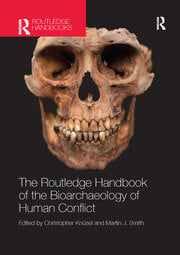
245 04|aThe Routledge handbook of the bioarchaeology of human conflict /|cedited by Christopher Knusel and Martin J. Smith.
246 30|aHandbook of the bioarchaeology of human conflict
264 1|aAbington, Oxon ;|aNew York, N.Y. :|bRoutledge,|c2014.
300 |a1 online resource (xlvi, 704 pages)
505 0 |apt. 1. Context is everything -- pt. 2. Since time immemorial? Conflict in prehistory -- pt. 3. Hierarchies and violence -- pt. 4. New world orders : conflict in the Americas -- pt. 5. Modern world emergence.
520 |a"If human burials were our only window onto the past, what story would they tell? Skeletal injuries constitute the most direct and unambiguous evidence for violence in the past. Whereas weapons or defenses may simply be statements of prestige or status and written sources are characteristically biased and incomplete, human remains offer clear and unequivocal evidence of physical aggression reaching as far back as we have burials to examine. Warfare is often described as 'senseless' and as having no place in society. Consequently, its place in social relations and societal change remains obscure. The studies in The Routledge Handbook of the Bioarchaeology of Human Conflict present an overview of the nature and development of human conflict from prehistory to recent times as evidenced by the remains of past people themselves in order to explore the social contexts in which such injuries were inflicted. A broadly chronological approach is taken from prehistory through to recent conflicts, however this book is not simply a catalogue of injuries illustrating weapon development or a narrative detailing 'progress' in warfare but rather provides a framework in which to explore both continuity and change based on a range of important themes which hold continuing relevance throughout human development"--|cProvided by publisher.
650 0|aHuman remains (Archaeology)
650 0|aWar wounds|xHistory.
650 0|aWounds and injuries|xHistory.
650 0|aWar and society|xHistory.
650 0|aViolence|xHistory.
650 0|aFuneral rites and ceremonies|xHistory.
700 1 |aKnusel, Christopher.
700 1 |aSmith, Martin,|d1971-
776 08|iPrint version: |z9780415842198|w(DLC) 2013027922
856 40|uhttps://www.taylorfrancis.com/books/9781134677979|zClick here to view.
901 |aTaylor & Francis