LEADER 03788cam a2200517 i 4500
001 803623
003 TR_AnAIT
005 20260123235858
006 m o d
007 cr cnu---unuuu
008 220718t20222022enk o 100 0 eng d
020 |a1000624420|q(electronic book)
020 |a9780429291012|q(electronic book)
020 |a0429291019|q(electronic book)
020 |a9781000624489|q(electronic book)
020 |a100062448X|q(electronic book)
020 |a9781000624427|q(electronic bk.)
020 |z9780367260149|q(hardcover)
024 7 |a10.4324/9780429291012|2doi
035 |a(OCoLC)1336458142
035 |a(OCoLC-P)1336458142
040 |aOCoLC-P|beng|erda|epn|cOCoLC-P
041 |aeng
049 |aTürk Tarih Kurumu Kütüphanesi
050 4|aDF521|b.S67 2022
072 7|aHIS|x000000|2bisacsh
072 7|aAC|2bicssc
082 04|a949.502|223
111 2 |aSpring Symposium of Byzantine Studies|n(50th),|jcreator.
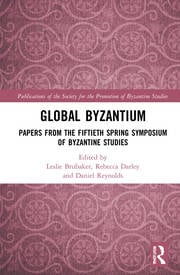
245 10|aGlobal Byzantium :|bpapers from the fiftieth Spring Symposium of Byzantine Studies /|cedited by Leslie Brubaker, Rebecca Darley, Daniel Reynolds.
264 1|aAbingdon, Oxon ;|aNew York, NY :|bRoutledge,|c2023.
264 4|c©2022
300 |a1 online resource (xx, 423 pages) :|billustrations (black and white), maps
336 |atext|btxt|2rdacontent
337 |acomputer|bc|2rdamedia
338 |aonline resource|bcr|2rdacarrier
490 1 |aPublications of the Society for the Promotion of Byzantine Studies ;|v24
520 |aGlobal Byzantium is, in part, a recasting and expansion of the old Byzantium and its neighbours' theme with, however, a methodological twist away from the resolutely political and toward the cultural and economic. A second thing that Global Byzantium - as a concept - explicitly endorses is comparative methodology. Global Byzantium needs also to address three further issues: cultural capital, the importance of the local, and the empire's strategic geographical location. Cultural capital: in past decades it was fashionable to define Byzantium as culturally superior to western Christian Europe, and Byzantine influence was a key concept, especially in art historical circles. This concept has been increasingly criticised, and what we now see emerging is a comparative methodology that relies on the concept of competitive sharing', not blind copying but rather competitive appropriation. The importance of the local is equally critical. We need to talk more about what the Byzantines saw when they looked out', and what others saw in Byzantium when they looked in' and to think about how that impacted on our, very post-modern, concepts of globalism. Finally, we need to think about the empire's strategic geographical position: between the fourth and the thirteenth centuries, if anyone was travelling internationally, they had to travel across (or along the coasts of) the Byzantine Empire. Byzantium was thus a crucial intermediary, for good or for ill, between Europe, Africa, and Asia - effectively, the glue that held the Christian world together, and it was also a critical transit point between the various Islamic polities and the Christian world.
588 |aOCLC-licensed vendor bibliographic record.
650 7|aHISTORY|xGeneral.|2bisacsh
651 0|aByzantine Empire|xCivilization|vCongresses.
651 0|aByzantine Empire|xForeign relations|vCongresses.
700 1 |aBrubaker, Leslie,|eeditor.
700 1 |aDarley, Rebecca,|eeditor.
700 1 |aReynolds, Daniel,|eeditor.
830 0|aPublications (Society for the Promotion of Byzantine Studies (Great Britain)) ;|v24.
856 40|3Taylor & Francis|uhttps://www.taylorfrancis.com/books/e/9780429291012
856 42|3OCLC metadata license agreement|uhttp://www.oclc.org/content/dam/oclc/forms/terms/vbrl-201703.pdf
901 |aTaylor & Francis