

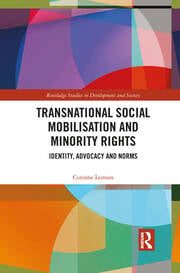
Transnational social mobilisation and minority rights : identity, advocacy and norms / Corinne Lennox.
ISBN
9780429399183 (ebook)
0429399189
9780429678332 (electronic bk. : Mobipocket)
0429678339 (electronic bk. : Mobipocket)
9780429678349 (electronic bk. : EPUB)
0429678347 (electronic bk. : EPUB)
9780429678356 (electronic bk. : PDF)
0429678355 (electronic bk. : PDF)
9780367025076 (hardback)
0429399189
9780429678332 (electronic bk. : Mobipocket)
0429678339 (electronic bk. : Mobipocket)
9780429678349 (electronic bk. : EPUB)
0429678347 (electronic bk. : EPUB)
9780429678356 (electronic bk. : PDF)
0429678355 (electronic bk. : PDF)
9780367025076 (hardback)
Dil Kodu
İngilizce
Yazar
Yayın Bilgisi
Milton Park, Abingdon, Oxon ; New York, NY : Roultedge, 2020.
Fiziksel Niteleme
1 online resource.
Dizi
Routledge studies in development and society
İçindekiler Notu
Introduction: minorities, states and norm entrepreneurship in international society -- Indigenous peoples and Roma as norm entrepreneurs -- Dalits and norm entrepreneurship on caste-based discrimination -- Afro-descendants and norm entrepreneurship in Latin America -- Conclusion: assessing group-specific norm entrepreneurship.
Özet, vb.
"This book explores the ways in which minority groups across the world are reshaping the international minority rights protection system. It documents the actions of four major groups that are using transnational social mobilisation to achieve recognition of their identities and their rights. The result is a greater pluralism in global identity politics and a wide range of new group-specific standards that can inform policies on multiculturalism, political participation, and socio-economic inclusion in the national and international spheres. The book begins by summarising the learning from the global movements of indigenous peoples and Roma. The book then focuses in greater depth on the cases of Afro-descendants in Latin America and of Dalits and caste-affected groups in South Asia and beyond. Each case study shows the historical roots of group-specific transnational mobilisation and how activists have constructed a distinct identity frame out of shared experiences. The book explores key parallels and differences between the discourse, framing strategies, organisational structures and political opportunities used in each case to show which factors have influenced the success or failures of their norm entrepreneurship. The role that international institutions have played in supporting these efforts is given special attention, including intergovernmental bodies such as the UN, the EU and the OAS, and international non-governmental organisations. The UN World Conference Against Racism is explored as a particularly significant political opportunity across the cases. Among academic audiences, this book will appeal to those researching minority rights, social movements, global governance, discrimination and multiculturalism from legal, political, sociological and critical theory perspectives. It will also interest practitioners and activists working on minority rights and the challenges of norm compliance, socio-economic inclusion and governance"-- Provided by publisher.
Konu
Indigenous peoples __ Civil rights.
Romanies __ Civil rights.
Blacks __ Civil rights __ Latin America.
Dalits __ Civil rights.
POLITICAL SCIENCE / Political Freedom & Security / Human Rights __ bisacsh
SOCIAL SCIENCE / Third World Development __ bisacsh
Romanies __ Civil rights.
Blacks __ Civil rights __ Latin America.
Dalits __ Civil rights.
POLITICAL SCIENCE / Political Freedom & Security / Human Rights __ bisacsh
SOCIAL SCIENCE / Third World Development __ bisacsh
Veritabanı
Eseri Alıntıla
Referansları kullanmadan önce gözden geçirmeniz ve varsa gerekli düzeltmeleri yapmanız önerilir.
Dijital Kaynak
MARC Görünümü
LEADER 04334cam a22005298i 4500
001 803636
003 TR_AnAIT
005 20260123235912
006 m o d
007 cr |||||||||||
008 191106s2020 enk o 000 0 eng
020 |a9780429399183|q(ebook)
020 |a0429399189
020 |a9780429678332|q(electronic bk. : Mobipocket)
020 |a0429678339|q(electronic bk. : Mobipocket)
020 |a9780429678349|q(electronic bk. : EPUB)
020 |a0429678347|q(electronic bk. : EPUB)
020 |a9780429678356|q(electronic bk. : PDF)
020 |a0429678355|q(electronic bk. : PDF)
020 |z9780367025076|q(hardback)
035 |a(OCoLC)1128065797
035 |a(OCoLC-P)1128065797
040 |aOCoLC-P|beng|erda|cOCoLC-P
041 |aeng
049 |aTürk Tarih Kurumu Kütüphanesi
050 00|aHT612
072 7|aPOL|x035010|2bisacsh
072 7|aSOC|x042000|2bisacsh
072 7|aGTF|2bicssc
082 00|a323.18|223
100 1 |aLennox, Corinne,|eauthor.
245 10|aTransnational social mobilisation and minority rights :|bidentity, advocacy and norms /|cCorinne Lennox.
264 1|aMilton Park, Abingdon, Oxon ;|aNew York, NY :|bRoultedge,|c2020.
300 |a1 online resource.
336 |atext|btxt|2rdacontent
337 |acomputer|bn|2rdamedia
338 |aonline resource|bnc|2rdacarrier
490 1 |aRoutledge studies in development and society
505 0 |aIntroduction: minorities, states and norm entrepreneurship in international society -- Indigenous peoples and Roma as norm entrepreneurs -- Dalits and norm entrepreneurship on caste-based discrimination -- Afro-descendants and norm entrepreneurship in Latin America -- Conclusion: assessing group-specific norm entrepreneurship.
520 |a"This book explores the ways in which minority groups across the world are reshaping the international minority rights protection system. It documents the actions of four major groups that are using transnational social mobilisation to achieve recognition of their identities and their rights. The result is a greater pluralism in global identity politics and a wide range of new group-specific standards that can inform policies on multiculturalism, political participation, and socio-economic inclusion in the national and international spheres. The book begins by summarising the learning from the global movements of indigenous peoples and Roma. The book then focuses in greater depth on the cases of Afro-descendants in Latin America and of Dalits and caste-affected groups in South Asia and beyond. Each case study shows the historical roots of group-specific transnational mobilisation and how activists have constructed a distinct identity frame out of shared experiences. The book explores key parallels and differences between the discourse, framing strategies, organisational structures and political opportunities used in each case to show which factors have influenced the success or failures of their norm entrepreneurship. The role that international institutions have played in supporting these efforts is given special attention, including intergovernmental bodies such as the UN, the EU and the OAS, and international non-governmental organisations. The UN World Conference Against Racism is explored as a particularly significant political opportunity across the cases. Among academic audiences, this book will appeal to those researching minority rights, social movements, global governance, discrimination and multiculturalism from legal, political, sociological and critical theory perspectives. It will also interest practitioners and activists working on minority rights and the challenges of norm compliance, socio-economic inclusion and governance"--|cProvided by publisher.
588 |aOCLC-licensed vendor bibliographic record.
650 0|aIndigenous peoples|xCivil rights.
650 0|aRomanies|xCivil rights.
650 0|aBlacks|xCivil rights|zLatin America.
650 0|aDalits|xCivil rights.
650 7|aPOLITICAL SCIENCE / Political Freedom & Security / Human Rights|2bisacsh
650 7|aSOCIAL SCIENCE / Third World Development|2bisacsh
856 40|3Taylor & Francis|uhttps://www.taylorfrancis.com/books/9780429399183
856 42|3OCLC metadata license agreement|uhttp://www.oclc.org/content/dam/oclc/forms/terms/vbrl-201703.pdf
901 |aTaylor & Francis
001 803636
003 TR_AnAIT
005 20260123235912
006 m o d
007 cr |||||||||||
008 191106s2020 enk o 000 0 eng
020 |a9780429399183|q(ebook)
020 |a0429399189
020 |a9780429678332|q(electronic bk. : Mobipocket)
020 |a0429678339|q(electronic bk. : Mobipocket)
020 |a9780429678349|q(electronic bk. : EPUB)
020 |a0429678347|q(electronic bk. : EPUB)
020 |a9780429678356|q(electronic bk. : PDF)
020 |a0429678355|q(electronic bk. : PDF)
020 |z9780367025076|q(hardback)
035 |a(OCoLC)1128065797
035 |a(OCoLC-P)1128065797
040 |aOCoLC-P|beng|erda|cOCoLC-P
041 |aeng
049 |aTürk Tarih Kurumu Kütüphanesi
050 00|aHT612
072 7|aPOL|x035010|2bisacsh
072 7|aSOC|x042000|2bisacsh
072 7|aGTF|2bicssc
082 00|a323.18|223
100 1 |aLennox, Corinne,|eauthor.
245 10|aTransnational social mobilisation and minority rights :|bidentity, advocacy and norms /|cCorinne Lennox.
264 1|aMilton Park, Abingdon, Oxon ;|aNew York, NY :|bRoultedge,|c2020.
300 |a1 online resource.
336 |atext|btxt|2rdacontent
337 |acomputer|bn|2rdamedia
338 |aonline resource|bnc|2rdacarrier
490 1 |aRoutledge studies in development and society
505 0 |aIntroduction: minorities, states and norm entrepreneurship in international society -- Indigenous peoples and Roma as norm entrepreneurs -- Dalits and norm entrepreneurship on caste-based discrimination -- Afro-descendants and norm entrepreneurship in Latin America -- Conclusion: assessing group-specific norm entrepreneurship.
520 |a"This book explores the ways in which minority groups across the world are reshaping the international minority rights protection system. It documents the actions of four major groups that are using transnational social mobilisation to achieve recognition of their identities and their rights. The result is a greater pluralism in global identity politics and a wide range of new group-specific standards that can inform policies on multiculturalism, political participation, and socio-economic inclusion in the national and international spheres. The book begins by summarising the learning from the global movements of indigenous peoples and Roma. The book then focuses in greater depth on the cases of Afro-descendants in Latin America and of Dalits and caste-affected groups in South Asia and beyond. Each case study shows the historical roots of group-specific transnational mobilisation and how activists have constructed a distinct identity frame out of shared experiences. The book explores key parallels and differences between the discourse, framing strategies, organisational structures and political opportunities used in each case to show which factors have influenced the success or failures of their norm entrepreneurship. The role that international institutions have played in supporting these efforts is given special attention, including intergovernmental bodies such as the UN, the EU and the OAS, and international non-governmental organisations. The UN World Conference Against Racism is explored as a particularly significant political opportunity across the cases. Among academic audiences, this book will appeal to those researching minority rights, social movements, global governance, discrimination and multiculturalism from legal, political, sociological and critical theory perspectives. It will also interest practitioners and activists working on minority rights and the challenges of norm compliance, socio-economic inclusion and governance"--|cProvided by publisher.
588 |aOCLC-licensed vendor bibliographic record.
650 0|aIndigenous peoples|xCivil rights.
650 0|aRomanies|xCivil rights.
650 0|aBlacks|xCivil rights|zLatin America.
650 0|aDalits|xCivil rights.
650 7|aPOLITICAL SCIENCE / Political Freedom & Security / Human Rights|2bisacsh
650 7|aSOCIAL SCIENCE / Third World Development|2bisacsh
856 40|3Taylor & Francis|uhttps://www.taylorfrancis.com/books/9780429399183
856 42|3OCLC metadata license agreement|uhttp://www.oclc.org/content/dam/oclc/forms/terms/vbrl-201703.pdf
901 |aTaylor & Francis
Materyaller
Depodan talep edilen materyal sadece kütüphane içerisinde kullanılmaktadır.
Materyal dışarıya ödünç verilmemektedir.
Materyal dışarıya ödünç verilmemektedir.
