LEADER 03720cam a2200469M 4500
001 803668
003 TR_AnAIT
005 20260123235944
006 m o d
007 cr |n|||||||||
008 221124s2023 xx o 0|| 0 eng d
020 |a9781000819588|q(electronic bk.)
020 |a1000819582|q(electronic bk.)
020 |a9781003089780|q(electronic bk.)
020 |a100308978X|q(electronic bk.)
020 |a9781000819601|q(electronic bk. : EPUB)
020 |a1000819604|q(electronic bk. : EPUB)
020 |z0367545772
020 |z9780367545772
024 7 |a10.4324/9781003089780|2doi
035 |a(OCoLC)1351613058
035 |a(OCoLC-P)1351613058
040 |aOCoLC-P|beng|cOCoLC-P
041 |aeng
049 |aTürk Tarih Kurumu Kütüphanesi
050 4|aHV6250.4.W65
072 7|aSCI|x030000|2bisacsh
072 7|aSOC|x015000|2bisacsh
072 7|aTQ|2bicssc
082 04|a362.88082|223
100 1 |aRezwana, Nahid.
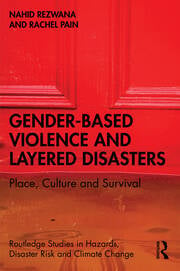
245 10|aGENDER-BASED VIOLENCE AND LAYERED DISASTERS|h[electronic resource] :|bplace, culture and survival.
260 |a[S.l.] :|bROUTLEDGE,|c2023.
300 |a1 online resource
520 |aThis book investigates the widespread and persistent relationship between disasters and gender-based violence, drawing on new research with victim-survivors to show how the two forms of harm constitute layered disasters' in particular places, intensifying and reproducing one another. The evidence is now overwhelming that disasters and gender-based violence are closely connected, not just in moments of crisis but in the years that follow as the social, economic and environmental impacts of disasters play out. This book addresses two key gaps in research. First, it examines what causes the relationship between disasters and gender-based violence to be so widespread and so enduring. Second, it highlights victim-survivors' own accounts of gender-based violence and disasters. It does so by presenting findings from original research on cyclones and flooding in Bangladesh and the UK and a review of global evidence on the Covid-19 pandemic. Drawing on feminist theories, it conceptualises the coincidence of gender-based violence, disasters and other aggravating factors in particular places as layered disasters.' Taking an intersectional approach that emphasises the connections between culture, place, patriarchy, racism, poverty, settler-colonialism, environmental degradation and climate change, the authors show the significance of gender-based violence in creating vulnerability to future disasters. Forefronting victim-survivors' experiences and understandings, the book explores the important role of trauma, and how those affected go about the process of survival and recovery. Understanding disasters as layeredcasts light on why tackling gender-based violence must be a key priority in disaster planning, management and recovery. The book concludes by exploring critiques of existing formal responses, which often ignore or underplay gender-based violence. The book will be of interest to all those interested in understanding the causes and impacts of disasters, as well as scholars and researchers of gender and gender-based violence.
588 |aOCLC-licensed vendor bibliographic record.
650 0|aWomen|xViolence against.
650 0|aNatural disasters|xSocial aspects.
650 0|aCOVID-19 (Disease)|xSocial aspects.
650 7|aSCIENCE / Earth Sciences / Geography|2bisacsh
650 7|aSOCIAL SCIENCE / Human Geography|2bisacsh
700 1 |aPain, Rachel.
856 40|3Taylor & Francis|uhttps://www.taylorfrancis.com/books/9781003089780
856 42|3OCLC metadata license agreement|uhttp://www.oclc.org/content/dam/oclc/forms/terms/vbrl-201703.pdf
901 |aTaylor & Francis