LEADER 03451cam a22005418i 4500
001 803674
003 TR_AnAIT
005 20260123235949
006 m o d
007 cr |||||||||||
008 220907s2023 enk ob 001 0 eng
020 |a9781003147220|q(ebook)
020 |a1003147224
020 |a9781000830620|q(electronic bk. : EPUB)
020 |a1000830624|q(electronic bk. : EPUB)
020 |a9781000830590|q(electronic bk. : PDF)
020 |a1000830594|q(electronic bk. : PDF)
020 |z9780367706173|q(hardback)
020 |z9780367706180|q(paperback)
024 7 |a10.4324/9781003147220|2doi
035 |a(OCoLC)1344005682
035 |a(OCoLC-P)1344005682
040 |aOCoLC-P|beng|erda|cOCoLC-P
041 |aeng
049 |aTürk Tarih Kurumu Kütüphanesi
050 00|aD804.348
072 7|aHIS|x000000|2bisacsh
072 7|aHIS|x014000|2bisacsh
072 7|aHIS|x019000|2bisacsh
072 7|aHBTZ1|2bicssc
082 00|a940.53/18072|223/eng/20220907
100 1 |aSmith, Stephen D.,|d1967-|eauthor.
245 14|aThe trajectory of Holocaust memory :|bthe crisis of testimony in theory and practice /|cStephen D. Smith.
264 1|aAbingdon, Oxon ;|aNew York, NY :|bRoutledge,|c2023.
300 |a1 online resource
336 |atext|btxt|2rdacontent
337 |acomputer|bc|2rdamedia
338 |aonline resource|bcr|2rdacarrier
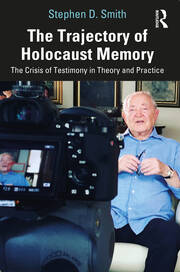
520 |a"The Trajectory of Holocaust Memory: The Crisis of Testimony in Theory and Practice re-considers survivor testimony, moving from a subject-object reading of the past to a subject-subject encounter in the present. It explores how testimony evolves in relationship to the life of eyewitnesses across time. This book breaks new ground based on three principles. The first draws on Martin Buber's 'I-Thou' concept, transforming the object of history into an encounter between subjects. The second employs the Jungian concept of identity, whereby the individual (internal identity) and the persona (external identity) reframe testimony as an extension of the individual. They are a living subject, rather than merely a persona or narrative. The third principle draws on Daniel Kahneman's concept of the experiencing self, which re-lives events as they occurred, and the remembering self, which reflects on their meaning in sum. Taken together, these principles comprise a new literacy of testimony that enables the surviving victim and the listener to enter a relationship of trust. Designed for readers of Holocaust history and literature, this book defines the modalities of memory, witness, and testimony. It shows how encountering the individual who lived through the past changes how testimony is understood, and therefore what it can come to mean"--|cProvided by publisher.
588 |aOCLC-licensed vendor bibliographic record.
647 7|aJewish Holocaust|d(1939-1945)|2fast|0(OCoLC)fst00958866
650 0|aHolocaust, Jewish (1939-1945)|xHistoriography.
650 0|aHolocaust, Jewish (1939-1945)|vPersonal narratives|xHistory and criticism.
650 0|aHolocaust survivors|xInterviews.
650 0|aCollective memory.
650 7|aHISTORY / General|2bisacsh
650 7|aHISTORY / Europe / Germany|2bisacsh
650 7|aHISTORY / Middle East / Israel|2bisacsh
856 40|3Taylor & Francis|uhttps://www.taylorfrancis.com/books/9781003147220
856 42|3OCLC metadata license agreement|uhttp://www.oclc.org/content/dam/oclc/forms/terms/vbrl-201703.pdf
901 |aTaylor & Francis