

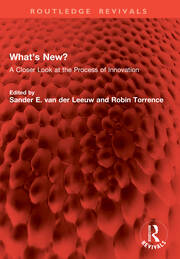
What's new? : a closer look at the process of innovation / edited by Sander E. van der Leeuw and Robin Torrence.
ISBN
9781003655695 (electronic bk.)
1003655696 (electronic bk.)
9781040433973 (electronic bk. : PDF)
1040433979 (electronic bk. : PDF)
9781040434062 (electronic bk. : EPUB)
1040434061 (electronic bk. : EPUB)
9781041105558
1003655696 (electronic bk.)
9781040433973 (electronic bk. : PDF)
1040433979 (electronic bk. : PDF)
9781040434062 (electronic bk. : EPUB)
1040434061 (electronic bk. : EPUB)
9781041105558
Dil Kodu
İngilizce
Basım Bildirimi
First edition.
Yayın Bilgisi
Abingdon : Routledge, 2025.
Fiziksel Niteleme
1 online resource (374 pages).
Dizi
Routledge revivals
Genel Not
First published in 1989 by Unwin Hyman Ltd.
İçindekiler Notu
Introduction: what's new about innovation? 1. Innovation and the integration of sociocultural systems 2. Pellaport 3. Alternative technologies and socio-economic contexts of adaptation: a study of the coastal fishermen of Saurashtra in western India 4. The genesis of coaxial field systems 5. Dynamics of production intensification in precontact Hawaii 6. The impact of Inca conquest on local technology in the Upper Montaro Valley, Peru 7. Technological change as social rebellion 8. Technological continuity and change among the Andrea peasants: opposition between local and global strategies 9. Ignoring innovation-denying change: the role of iron and the impact of external influences on the transformation of Scandinavian societies 800-500 BC 10. The beginnings of pottery as an economic process 11. The context of adoption of brass technology in northeastern Nigeria and its effects on the elaboration of culture 12. Innovation theory made plain 13. Modelling innovation and change 14. Modelling the innovative component of social change 15. Risk, perception, innovation 16. Cultural transmission and cultural change
Özet, vb.
First published in 1989, What's New? puts innovation firmly back on the agenda of archaeological interpretation. This book revives interest in the process of innovation and reinterprets it by drawing on original work done in a variety of disciplines. It demonstrates that the study of the components of innovation-invention, acceptance, and the context in which they occur-is essential if social change is to be better understood.The book contains detailed case studies that cover a broad geographical range in the prehistoric, historic, and modern world. It simulates and analyses the conditions of innovation and provides the necessary theoretical framework. The technologies involved are diverse: herding, fishing, pottery-making, metalworking, and land management. Several important issues emerge from this diversity: it is the context of innovation that determines whether change will take place; within hierarchical societies, ideology can both stimulate and deny innovation; and the potential for innovation, experimentation, and change in traditional societies is systematically underrated by the Western world, which is dominated by a narrow, technological perspective. The contributors also study innovation in social and applied anthropology, industrial planning, and the natural sciences.What's New? will provoke renewed discussion throughout the archaeological community about the process of innovation. Anthropologists, human geographers, and other social scientists will find it fascinating because it provides a time dimension for the study of the conditions of human and social change.
Konu
Prehistoric peoples.
Hunting and gathering societies.
Social change.
Diffusion of innovations.
Hunting and gathering societies.
Social change.
Diffusion of innovations.
Diğer Yazarlar
Veritabanı
Eseri Alıntıla
Referansları kullanmadan önce gözden geçirmeniz ve varsa gerekli düzeltmeleri yapmanız önerilir.
Dijital Kaynak
MARC Görünümü
LEADER 06120cam a22006017i 4500
001 803768
003 TR_AnAIT
005 20260124000125
006 m o d
007 cr cnu|||unuuu
008 250808r20251989enk eo 000 0 eng d
020 |a9781003655695|q(electronic bk.)
020 |a1003655696|q(electronic bk.)
020 |a9781040433973|q(electronic bk. : PDF)
020 |a1040433979|q(electronic bk. : PDF)
020 |a9781040434062|q(electronic bk. : EPUB)
020 |a1040434061|q(electronic bk. : EPUB)
020 |z9781041105558
024 7 |a10.4324/9781003655695|2doi
035 |a(OCoLC)1531295199
035 |a(OCoLC-P)1531295199
040 |aOCoLC-P|beng|erda|epn|cOCoLC-P
041 |aeng
049 |aTürk Tarih Kurumu Kütüphanesi
050 4|aGN741
072 7|aHDW|2bicssc
072 7|aSOC003000|2bisacsh
072 7|aHDD|2bicssc
072 7|aJHMC|2bicssc
082 04|a303.48/4|1https://id.oclc.org/worldcat/ddc/E3cP7GtHXDjcbFdqxVwhqjXvrY|223/eng/20250820
245 00|aWhat's new? :|ba closer look at the process of innovation /|cedited by Sander E. van der Leeuw and Robin Torrence.
250 |aFirst edition.
264 1|aAbingdon :|bRoutledge,|c2025.
300 |a1 online resource (374 pages).
336 |atext|btxt|2rdacontent
337 |acomputer|bc|2rdamedia
338 |aonline resource|bcr|2rdacarrier
341 0 |3PDF|bTable of contents navigation|bIndex navigation|bShort alternative textual descriptions|bPrint-equivalent page numbering|2onix
341 0 |3EPUB|bEpub Accessibility Specification 1.1|bTable of contents navigation|bIndex navigation|bSingle logical reading order|bShort alternative textual descriptions|bAccessible math content as MathML|bPrint-equivalent page numbering|bUse of color is not sole means of conveying information|bNext / Previous structural navigation|bARIA roles provided|bAll non-decorative content supports reading without sight|2onix
490 1 |aRoutledge revivals
500 |aFirst published in 1989 by Unwin Hyman Ltd.
505 0 |aIntroduction: what's new about innovation? 1. Innovation and the integration of sociocultural systems 2. Pellaport 3. Alternative technologies and socio-economic contexts of adaptation: a study of the coastal fishermen of Saurashtra in western India 4. The genesis of coaxial field systems 5. Dynamics of production intensification in precontact Hawaii 6. The impact of Inca conquest on local technology in the Upper Montaro Valley, Peru 7. Technological change as social rebellion 8. Technological continuity and change among the Andrea peasants: opposition between local and global strategies 9. Ignoring innovation-denying change: the role of iron and the impact of external influences on the transformation of Scandinavian societies 800-500 BC 10. The beginnings of pottery as an economic process 11. The context of adoption of brass technology in northeastern Nigeria and its effects on the elaboration of culture 12. Innovation theory made plain 13. Modelling innovation and change 14. Modelling the innovative component of social change 15. Risk, perception, innovation 16. Cultural transmission and cultural change
520 |aFirst published in 1989, What's New? puts innovation firmly back on the agenda of archaeological interpretation. This book revives interest in the process of innovation and reinterprets it by drawing on original work done in a variety of disciplines. It demonstrates that the study of the components of innovation-invention, acceptance, and the context in which they occur-is essential if social change is to be better understood.The book contains detailed case studies that cover a broad geographical range in the prehistoric, historic, and modern world. It simulates and analyses the conditions of innovation and provides the necessary theoretical framework. The technologies involved are diverse: herding, fishing, pottery-making, metalworking, and land management. Several important issues emerge from this diversity: it is the context of innovation that determines whether change will take place; within hierarchical societies, ideology can both stimulate and deny innovation; and the potential for innovation, experimentation, and change in traditional societies is systematically underrated by the Western world, which is dominated by a narrow, technological perspective. The contributors also study innovation in social and applied anthropology, industrial planning, and the natural sciences.What's New? will provoke renewed discussion throughout the archaeological community about the process of innovation. Anthropologists, human geographers, and other social scientists will find it fascinating because it provides a time dimension for the study of the conditions of human and social change.
532 8 |3EPUB|aAccessibility summary: What's New? works towards the AA level of the Web Content Accessibility Guidelines. It is a complex book with images, equations, tables, lists, endnotes, references, cross-references, backlinks and hyperlinks. Some images and tables may appear on pages different from the print version. Blank pages were removed but their page break labels remain in place and have been identified. All images have short descriptions. Linked DOIs are provided, but not uniquely identified. In-text citations are linked, however backlinks only return to the first in-text citation.
588 |aOCLC-licensed vendor bibliographic record.
650 0|aPrehistoric peoples.
650 0|aHunting and gathering societies.
650 0|aSocial change.
650 0|aDiffusion of innovations.
653 |aInnovation;Prehistoric;social change;Western world;invention
700 1 |aLeeuw, Sander Ernst van der,|eeditor.|1https://id.oclc.org/worldcat/entity/E39PBJwX8XWVjk4t6rYrv9jcT3
700 1 |aTorrence, Robin,|eeditor.|1https://id.oclc.org/worldcat/entity/E39PCjxPy96tGHqvwyGytmbKV3
830 0|aRoutledge revivals.
856 40|3Taylor & Francis|uhttps://www.taylorfrancis.com/books/9781003655695
856 42|3OCLC metadata license agreement|uhttp://www.oclc.org/content/dam/oclc/forms/terms/vbrl-201703.pdf
901 |aTaylor & Francis
001 803768
003 TR_AnAIT
005 20260124000125
006 m o d
007 cr cnu|||unuuu
008 250808r20251989enk eo 000 0 eng d
020 |a9781003655695|q(electronic bk.)
020 |a1003655696|q(electronic bk.)
020 |a9781040433973|q(electronic bk. : PDF)
020 |a1040433979|q(electronic bk. : PDF)
020 |a9781040434062|q(electronic bk. : EPUB)
020 |a1040434061|q(electronic bk. : EPUB)
020 |z9781041105558
024 7 |a10.4324/9781003655695|2doi
035 |a(OCoLC)1531295199
035 |a(OCoLC-P)1531295199
040 |aOCoLC-P|beng|erda|epn|cOCoLC-P
041 |aeng
049 |aTürk Tarih Kurumu Kütüphanesi
050 4|aGN741
072 7|aHDW|2bicssc
072 7|aSOC003000|2bisacsh
072 7|aHDD|2bicssc
072 7|aJHMC|2bicssc
082 04|a303.48/4|1https://id.oclc.org/worldcat/ddc/E3cP7GtHXDjcbFdqxVwhqjXvrY|223/eng/20250820
245 00|aWhat's new? :|ba closer look at the process of innovation /|cedited by Sander E. van der Leeuw and Robin Torrence.
250 |aFirst edition.
264 1|aAbingdon :|bRoutledge,|c2025.
300 |a1 online resource (374 pages).
336 |atext|btxt|2rdacontent
337 |acomputer|bc|2rdamedia
338 |aonline resource|bcr|2rdacarrier
341 0 |3PDF|bTable of contents navigation|bIndex navigation|bShort alternative textual descriptions|bPrint-equivalent page numbering|2onix
341 0 |3EPUB|bEpub Accessibility Specification 1.1|bTable of contents navigation|bIndex navigation|bSingle logical reading order|bShort alternative textual descriptions|bAccessible math content as MathML|bPrint-equivalent page numbering|bUse of color is not sole means of conveying information|bNext / Previous structural navigation|bARIA roles provided|bAll non-decorative content supports reading without sight|2onix
490 1 |aRoutledge revivals
500 |aFirst published in 1989 by Unwin Hyman Ltd.
505 0 |aIntroduction: what's new about innovation? 1. Innovation and the integration of sociocultural systems 2. Pellaport 3. Alternative technologies and socio-economic contexts of adaptation: a study of the coastal fishermen of Saurashtra in western India 4. The genesis of coaxial field systems 5. Dynamics of production intensification in precontact Hawaii 6. The impact of Inca conquest on local technology in the Upper Montaro Valley, Peru 7. Technological change as social rebellion 8. Technological continuity and change among the Andrea peasants: opposition between local and global strategies 9. Ignoring innovation-denying change: the role of iron and the impact of external influences on the transformation of Scandinavian societies 800-500 BC 10. The beginnings of pottery as an economic process 11. The context of adoption of brass technology in northeastern Nigeria and its effects on the elaboration of culture 12. Innovation theory made plain 13. Modelling innovation and change 14. Modelling the innovative component of social change 15. Risk, perception, innovation 16. Cultural transmission and cultural change
520 |aFirst published in 1989, What's New? puts innovation firmly back on the agenda of archaeological interpretation. This book revives interest in the process of innovation and reinterprets it by drawing on original work done in a variety of disciplines. It demonstrates that the study of the components of innovation-invention, acceptance, and the context in which they occur-is essential if social change is to be better understood.The book contains detailed case studies that cover a broad geographical range in the prehistoric, historic, and modern world. It simulates and analyses the conditions of innovation and provides the necessary theoretical framework. The technologies involved are diverse: herding, fishing, pottery-making, metalworking, and land management. Several important issues emerge from this diversity: it is the context of innovation that determines whether change will take place; within hierarchical societies, ideology can both stimulate and deny innovation; and the potential for innovation, experimentation, and change in traditional societies is systematically underrated by the Western world, which is dominated by a narrow, technological perspective. The contributors also study innovation in social and applied anthropology, industrial planning, and the natural sciences.What's New? will provoke renewed discussion throughout the archaeological community about the process of innovation. Anthropologists, human geographers, and other social scientists will find it fascinating because it provides a time dimension for the study of the conditions of human and social change.
532 8 |3EPUB|aAccessibility summary: What's New? works towards the AA level of the Web Content Accessibility Guidelines. It is a complex book with images, equations, tables, lists, endnotes, references, cross-references, backlinks and hyperlinks. Some images and tables may appear on pages different from the print version. Blank pages were removed but their page break labels remain in place and have been identified. All images have short descriptions. Linked DOIs are provided, but not uniquely identified. In-text citations are linked, however backlinks only return to the first in-text citation.
588 |aOCLC-licensed vendor bibliographic record.
650 0|aPrehistoric peoples.
650 0|aHunting and gathering societies.
650 0|aSocial change.
650 0|aDiffusion of innovations.
653 |aInnovation;Prehistoric;social change;Western world;invention
700 1 |aLeeuw, Sander Ernst van der,|eeditor.|1https://id.oclc.org/worldcat/entity/E39PBJwX8XWVjk4t6rYrv9jcT3
700 1 |aTorrence, Robin,|eeditor.|1https://id.oclc.org/worldcat/entity/E39PCjxPy96tGHqvwyGytmbKV3
830 0|aRoutledge revivals.
856 40|3Taylor & Francis|uhttps://www.taylorfrancis.com/books/9781003655695
856 42|3OCLC metadata license agreement|uhttp://www.oclc.org/content/dam/oclc/forms/terms/vbrl-201703.pdf
901 |aTaylor & Francis
Materyaller
Depodan talep edilen materyal sadece kütüphane içerisinde kullanılmaktadır.
Materyal dışarıya ödünç verilmemektedir.
Materyal dışarıya ödünç verilmemektedir.
