LEADER 03499cam a2200397Ii 4500
001 803865
003 TR_AnAIT
005 20260124000314
008 180706s2016 enkb ob 001 0 eng d
020 |a9781315656960|q(e-book : PDF)
020 |a9781317326618|q(e-book: Mobi)
020 |a9781317326625|q(e-book: ePub)
020 |z9781138101388|q(hardback)
020 |z9780815358060|q(paperback)
024 7 |a10.4324/9781315656960 |2doi
035 |a(OCoLC)958108106
041 |aeng
043 |ae------|aaw-----|amm-----
049 |aTürk Tarih Kurumu Kütüphanesi
050 4|aDF571|b.H45 2016
082 04|a297.0921|bH466
100 1 |aHeilo, Olof.,|eauthor.
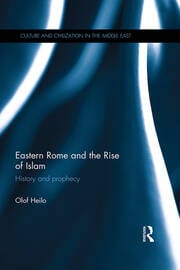
245 10|aEastern Rome and the rise of Islam :|bhistory and prophecy /|cOlof Heilo.
264 1|aLondon ;|aNew York :|bRoutledge,|c2016.
300 |a1 online resource (149 pages)
490 1 |aCulture and civilization in the Middle East ;|vVolume 51
504 |aIncludes bibliographical references (pages [132]-142) and index.
505 0 |a1. A broken colossus -- 2. Taming Leviathan -- 3. Shadows at dusk -- 4. Eyes in the dark -- 5. New horizons -- 6. Cultural capitals.
520 |a"The emergence of Islam in the seventh century AD still polarises scholars who seek to separate religious truth from the historical reality with which it is associated. However, history and prophecy are not solely defined by positive evidence or apocalyptic truth, but by human subjects, who consider them to convey distinct messages and in turn make these messages meaningful to others. These messages are mutually interdependent, and analysed together provide new insights into history. It is by way of this concept that Olof Heilo presents the decline of the Eastern Roman Empire as a key to understanding the rise of Islam; two historical processes often perceived as distinct from one another. Eastern Rome and the Rise of Islam highlights significant convergences between Early Islam and the Late Ancient world. It suggests that Islam's rise is a feature of a common process during which tensions between imperial ambitions and apocalyptic beliefs in Europe and the Middle East cut straight across today's theological and political definitions. The conquests of Islam, the emergence of the caliphate, and the transformation of the Roman and Christian world are approached from both prophetic anticipations in the Ancient and Late Ancient world, and from the Medieval and Modern receptions of history. In the shadow of their narratives it becomes possible to trace the outline of a shared history of Christianity and Islam. The 'Dark Ages' thus emerge not merely as a tale of sound and fury, but as an era of openness, diversity and unexpected possibilities. Approaching the rise of Islam as a historical phenomenon, this book opens new perspectives in the study of early religion and philosophy, as well as providing a valuable resource for students and scholars of Islamic Studies"--|cProvided by publisher.
650 0|aChristianity and politics|xHistory|yMiddle Ages, 600-1500.
650 0|aIslam and politics|zEurope.
650 0|aChristianity|xRelations|xIslam.
650 0|aIslam|xRelations|xChristianity.
650 0|aCivilization, Western.
650 0|aIslamic civilization.
651 0|aByzantine Empire|xHistory|y527-1081.
651 0|aIslamic Empire|xHistory|y750-1258.
776 08|iPrint version: |z9781138101388|w(DLC) 2015025825
830 0|aCulture and civilisation in the Middle East ;|vVolume 51.
856 40|uhttps://www.taylorfrancis.com/books/9781315656960|zClick here to view.
901 |aTaylor & Francis