

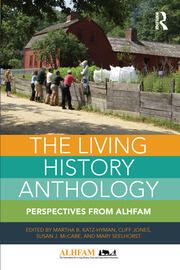
The Living History Anthology : Perspectives from the ALHFAM / edited by Martha B. Katz-Hyman, Cliff Jones, Susan J. McCabe and Mary Seelhorst.
Erişim Adresi
ISBN
9780429427282(e-book : PDF)
Dil Kodu
İngilizce
Basım Bildirimi
First edition.
Yayın Bilgisi
Boca Raton, FL : Routledge, [2018].
©2019.
©2019.
Fiziksel Niteleme
1 online resource (262 pages) : 28 illustrations, text file, PDF
Bibliyografi, vb. Notu
Includes bibliographical references and index.
İçindekiler Notu
Foreword Part I: Introduction Bringing History to Life Martha B. Katz-Hyman, Cliff Jones, Susan J. McCabe, and Mary Seelhorst Part II: Defining Living History: Or, How Living History Came to Be 1.Revisiting Living History: A Business, An Art, A Pleasure, An Education Kathryn Boardman 2. Living Historical FarmsVirginia Wolf Briscoe Part III: Planning and Managing: Or, TheBusiness End of the Bull 3. Visitor Comfort, Safety, and Access at a Living History SiteNan Rickey and Jerry Shapins 4. How to Hire the Best Person for Your Living History SiteDerrick Birdsall 5. Friends Indeed: Creating a Successful Museum Volunteer ProgramDavid W. Floyd 6. Planning Living History Programs and Facilities: Seven Areas of ConcernEdward L. Hawes Part IV: Teaching and Learning: Or, Interpretation is a Many-Splendored Thing 7. Choosing Your Method: Strengths and Weaknesses of Interpretive Techniques Prudence P. Haines, Ron Kley, and William Reid 8. Reconnecting with Agriculture: Practical ApproachesBarbara Corson 9. First person interpretation: Perspectives on Interpreter-Visitor Communication Lynne D. Dierking 10. Historically Correct Trade Craft Presentations: Are they Possible? A Question to Provoke More QuestionsTom Kelleher 11. Special Events and Their Impact on Museums: The Eleven Commandments of Public Programs Ken Yellis 12. Utilizing Living History Hobby Resources Thomas Shaw 13. Using Their Voices: Engaging Cultural Communities In Living HistoryEllen Gasser Part V: Living Collections: Or, Putting the Life in Living History 14. Breeds and SeedsAndrew H. Baker 15. Management Policies for Living CollectionsAndrew H. Baker 16. Living with Livestock: A Primer on Livestock Program Planning and ImplementationWendy Engler Part VI: Researching and Collecting: Or, The Right Stuff 17. Sketch of a Theory for Outdoor History MuseumsMark P. Leone 18. Tier Levels and Collections Management: Adapting Traditional Museum Approaches for Historic Site UseDeborah Scott 19. The Right Stuff: How to Get ItMartha B. Katz-Hyman and Michael L. Woodcock 20. Attitudes Toward MachineryPeter Ledwith 21. Acquisition and Restoration of Appropriate Machinery for Living Historical SitesTom Brown and George Nicholson 22. Serving Two Masters: Accurate Costuming for Small Historic SitesCarrie Fellows and Heidi Campbell-Shoaf 23. Connections: Forethought in InterpretationJ. Marc Meltonville, Richard Fitch, Robert Hoare, and Robin Mitchener 24. The Basics of Writing Furnishings PlansMartha B. Katz-Hyman and Michael L. Woodcock Part VII: Rewards and Challenges: Or, Growing and Evolving 25. Living Things Grow and Evolve: The Evolution and Expansion of Living HistoryTom Kelleher 26. Sowbelly and Seedbanks: The Living History Museum as a Process RepositoryRoger L. Welsch Part VIII: Further Reading Living History Highpoints: A Bibliographic Essay Debra A. Reid.
Özet, vb.
The Living History Anthology brings together twenty-six practical essays on thecraft of establishing and running living history museums. Contributions cover all aspects of developing and running a living history site. Including contributions on strategic planning, human resource management, research programs, collection policies, and engagement with varied audiences, including indigenous groups,the book demonstrates how to approach such tasks from a living history perspective. Topics unique to the sector, such as re-enactment, historic trade crafts, and working with machinery and livestock, are also covered. Each essay is briefly introduced and contextualized by the editors, while the collection is bookended by a new foreword and afterword from Debra A. Reid,and an introduction from the editors. Representing the collective wisdom of the Association for Living History, Farm and Agricultural Museums (ALHFAM) members across the decades, The Living History Anthology provides a valuable resource for all living history practitioners. Itshould also be of interestto students and scholars studying living history.
Konu
Historic sites __ Management.
Historical reenactments.
Electronic books.
Historical reenactments.
Electronic books.
Kurum Adı
Veritabanı
Eseri Alıntıla
Referansları kullanmadan önce gözden geçirmeniz ve varsa gerekli düzeltmeleri yapmanız önerilir.
Dijital Kaynak
MARC Görünümü
LEADER 05494nam a2200445Ii 4500
001 804122
003 TR_AnAIT
005 20260124000743
006 m o d
007 cr
008 190122t20182019fluab ob 001 0 eng d
020 |a9780429427282(e-book : PDF)
035 |a(OCoLC)1057244794
040 |aFlBoTFG|cFlBoTFG|erda
041 |aeng
049 |aTürk Tarih Kurumu Kütüphanesi
050 4|aE172
072 7|aSOC|x003000 |2bisacsh
072 7|aHD |2bicscc
082 04|a973|223
245 04|aThe Living History Anthology :|bPerspectives from the ALHFAM /|cedited by Martha B. Katz-Hyman, Cliff Jones, Susan J. McCabe and Mary Seelhorst.
250 |aFirst edition.
264 1|aBoca Raton, FL :|bRoutledge,|c[2018].
264 4|c©2019.
300 |a1 online resource (262 pages) :|b28 illustrations, text file, PDF
336 |atext|2rdacontent
337 |acomputer|2rdamedia
338 |aonline resource|2rdacarrier
504 |aIncludes bibliographical references and index.
505 00|tForeword Part I: Introduction Bringing History to Life Martha B. Katz-Hyman, Cliff Jones, Susan J. McCabe, and Mary Seelhorst Part II: Defining Living History: Or, How Living History Came to Be 1.Revisiting Living History: A Business, An Art, A Pleasure, An Education Kathryn Boardman 2. Living Historical FarmsVirginia Wolf Briscoe Part III: Planning and Managing: Or, TheBusiness End of the Bull 3. Visitor Comfort, Safety, and Access at a Living History SiteNan Rickey and Jerry Shapins 4. How to Hire the Best Person for Your Living History SiteDerrick Birdsall 5. Friends Indeed: Creating a Successful Museum Volunteer ProgramDavid W. Floyd 6. Planning Living History Programs and Facilities: Seven Areas of ConcernEdward L. Hawes Part IV: Teaching and Learning: Or, Interpretation is a Many-Splendored Thing 7. Choosing Your Method: Strengths and Weaknesses of Interpretive Techniques Prudence P. Haines, Ron Kley, and William Reid 8. Reconnecting with Agriculture: Practical ApproachesBarbara Corson 9. First person interpretation: Perspectives on Interpreter-Visitor Communication Lynne D. Dierking 10. Historically Correct Trade Craft Presentations: Are they Possible? A Question to Provoke More QuestionsTom Kelleher 11. Special Events and Their Impact on Museums: The Eleven Commandments of Public Programs Ken Yellis 12. Utilizing Living History Hobby Resources Thomas Shaw 13. Using Their Voices: Engaging Cultural Communities In Living HistoryEllen Gasser Part V: Living Collections: Or, Putting the Life in Living History 14. Breeds and SeedsAndrew H. Baker 15. Management Policies for Living CollectionsAndrew H. Baker 16. Living with Livestock: A Primer on Livestock Program Planning and ImplementationWendy Engler Part VI: Researching and Collecting: Or, The Right Stuff 17. Sketch of a Theory for Outdoor History MuseumsMark P. Leone 18. Tier Levels and Collections Management: Adapting Traditional Museum Approaches for Historic Site UseDeborah Scott 19. The Right Stuff: How to Get ItMartha B. Katz-Hyman and Michael L. Woodcock 20. Attitudes Toward MachineryPeter Ledwith 21. Acquisition and Restoration of Appropriate Machinery for Living Historical SitesTom Brown and George Nicholson 22. Serving Two Masters: Accurate Costuming for Small Historic SitesCarrie Fellows and Heidi Campbell-Shoaf 23. Connections: Forethought in InterpretationJ. Marc Meltonville, Richard Fitch, Robert Hoare, and Robin Mitchener 24. The Basics of Writing Furnishings PlansMartha B. Katz-Hyman and Michael L. Woodcock Part VII: Rewards and Challenges: Or, Growing and Evolving 25. Living Things Grow and Evolve: The Evolution and Expansion of Living HistoryTom Kelleher 26. Sowbelly and Seedbanks: The Living History Museum as a Process RepositoryRoger L. Welsch Part VIII: Further Reading Living History Highpoints: A Bibliographic Essay Debra A. Reid.
520 3 |aThe Living History Anthology brings together twenty-six practical essays on thecraft of establishing and running living history museums. Contributions cover all aspects of developing and running a living history site. Including contributions on strategic planning, human resource management, research programs, collection policies, and engagement with varied audiences, including indigenous groups,the book demonstrates how to approach such tasks from a living history perspective. Topics unique to the sector, such as re-enactment, historic trade crafts, and working with machinery and livestock, are also covered. Each essay is briefly introduced and contextualized by the editors, while the collection is bookended by a new foreword and afterword from Debra A. Reid,and an introduction from the editors. Representing the collective wisdom of the Association for Living History, Farm and Agricultural Museums (ALHFAM) members across the decades, The Living History Anthology provides a valuable resource for all living history practitioners. Itshould also be of interestto students and scholars studying living history.
530 |aAlso available in print format.
650 0|aHistoric sites|xManagement.
650 0|aHistorical reenactments.
655 0|aElectronic books.
700 1 |aKatz-Hyman, Martha B.,|eeditor.
700 1 |aJones, Cliff,|eeditor.
700 1 |aMcCabe, Susan J.,|eeditor.
700 1 |aSeelhorst, Mary,|eeditor.
710 2 |aTaylor and Francis.
776 08|iPrint version: |z9780815386865
856 40|uhttps://www.taylorfrancis.com/books/9780429427282|zClick here to view
901 |aTaylor & Francis
001 804122
003 TR_AnAIT
005 20260124000743
006 m o d
007 cr
008 190122t20182019fluab ob 001 0 eng d
020 |a9780429427282(e-book : PDF)
035 |a(OCoLC)1057244794
040 |aFlBoTFG|cFlBoTFG|erda
041 |aeng
049 |aTürk Tarih Kurumu Kütüphanesi
050 4|aE172
072 7|aSOC|x003000 |2bisacsh
072 7|aHD |2bicscc
082 04|a973|223
245 04|aThe Living History Anthology :|bPerspectives from the ALHFAM /|cedited by Martha B. Katz-Hyman, Cliff Jones, Susan J. McCabe and Mary Seelhorst.
250 |aFirst edition.
264 1|aBoca Raton, FL :|bRoutledge,|c[2018].
264 4|c©2019.
300 |a1 online resource (262 pages) :|b28 illustrations, text file, PDF
336 |atext|2rdacontent
337 |acomputer|2rdamedia
338 |aonline resource|2rdacarrier
504 |aIncludes bibliographical references and index.
505 00|tForeword Part I: Introduction Bringing History to Life Martha B. Katz-Hyman, Cliff Jones, Susan J. McCabe, and Mary Seelhorst Part II: Defining Living History: Or, How Living History Came to Be 1.Revisiting Living History: A Business, An Art, A Pleasure, An Education Kathryn Boardman 2. Living Historical FarmsVirginia Wolf Briscoe Part III: Planning and Managing: Or, TheBusiness End of the Bull 3. Visitor Comfort, Safety, and Access at a Living History SiteNan Rickey and Jerry Shapins 4. How to Hire the Best Person for Your Living History SiteDerrick Birdsall 5. Friends Indeed: Creating a Successful Museum Volunteer ProgramDavid W. Floyd 6. Planning Living History Programs and Facilities: Seven Areas of ConcernEdward L. Hawes Part IV: Teaching and Learning: Or, Interpretation is a Many-Splendored Thing 7. Choosing Your Method: Strengths and Weaknesses of Interpretive Techniques Prudence P. Haines, Ron Kley, and William Reid 8. Reconnecting with Agriculture: Practical ApproachesBarbara Corson 9. First person interpretation: Perspectives on Interpreter-Visitor Communication Lynne D. Dierking 10. Historically Correct Trade Craft Presentations: Are they Possible? A Question to Provoke More QuestionsTom Kelleher 11. Special Events and Their Impact on Museums: The Eleven Commandments of Public Programs Ken Yellis 12. Utilizing Living History Hobby Resources Thomas Shaw 13. Using Their Voices: Engaging Cultural Communities In Living HistoryEllen Gasser Part V: Living Collections: Or, Putting the Life in Living History 14. Breeds and SeedsAndrew H. Baker 15. Management Policies for Living CollectionsAndrew H. Baker 16. Living with Livestock: A Primer on Livestock Program Planning and ImplementationWendy Engler Part VI: Researching and Collecting: Or, The Right Stuff 17. Sketch of a Theory for Outdoor History MuseumsMark P. Leone 18. Tier Levels and Collections Management: Adapting Traditional Museum Approaches for Historic Site UseDeborah Scott 19. The Right Stuff: How to Get ItMartha B. Katz-Hyman and Michael L. Woodcock 20. Attitudes Toward MachineryPeter Ledwith 21. Acquisition and Restoration of Appropriate Machinery for Living Historical SitesTom Brown and George Nicholson 22. Serving Two Masters: Accurate Costuming for Small Historic SitesCarrie Fellows and Heidi Campbell-Shoaf 23. Connections: Forethought in InterpretationJ. Marc Meltonville, Richard Fitch, Robert Hoare, and Robin Mitchener 24. The Basics of Writing Furnishings PlansMartha B. Katz-Hyman and Michael L. Woodcock Part VII: Rewards and Challenges: Or, Growing and Evolving 25. Living Things Grow and Evolve: The Evolution and Expansion of Living HistoryTom Kelleher 26. Sowbelly and Seedbanks: The Living History Museum as a Process RepositoryRoger L. Welsch Part VIII: Further Reading Living History Highpoints: A Bibliographic Essay Debra A. Reid.
520 3 |aThe Living History Anthology brings together twenty-six practical essays on thecraft of establishing and running living history museums. Contributions cover all aspects of developing and running a living history site. Including contributions on strategic planning, human resource management, research programs, collection policies, and engagement with varied audiences, including indigenous groups,the book demonstrates how to approach such tasks from a living history perspective. Topics unique to the sector, such as re-enactment, historic trade crafts, and working with machinery and livestock, are also covered. Each essay is briefly introduced and contextualized by the editors, while the collection is bookended by a new foreword and afterword from Debra A. Reid,and an introduction from the editors. Representing the collective wisdom of the Association for Living History, Farm and Agricultural Museums (ALHFAM) members across the decades, The Living History Anthology provides a valuable resource for all living history practitioners. Itshould also be of interestto students and scholars studying living history.
530 |aAlso available in print format.
650 0|aHistoric sites|xManagement.
650 0|aHistorical reenactments.
655 0|aElectronic books.
700 1 |aKatz-Hyman, Martha B.,|eeditor.
700 1 |aJones, Cliff,|eeditor.
700 1 |aMcCabe, Susan J.,|eeditor.
700 1 |aSeelhorst, Mary,|eeditor.
710 2 |aTaylor and Francis.
776 08|iPrint version: |z9780815386865
856 40|uhttps://www.taylorfrancis.com/books/9780429427282|zClick here to view
901 |aTaylor & Francis
Materyaller
Depodan talep edilen materyal sadece kütüphane içerisinde kullanılmaktadır.
Materyal dışarıya ödünç verilmemektedir.
Materyal dışarıya ödünç verilmemektedir.
