

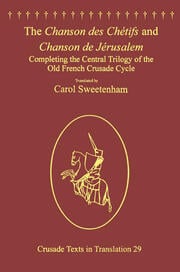
The Chanson des Chétifs and Chanson de Jérusalem : Completing the Central Trilogy of the Old French Crusade Cycle / translated by Carol Sweetenham.
ISBN
9781315614533 (electronic bk.)
1315614537 (electronic bk.)
9781409445197
9781317038740 (electronic bk. : PDF)
1317038746 (electronic bk. : PDF)
9781317038733 (electronic bk. : EPUB)
1317038738 (electronic bk. : EPUB)
9781317038726 (electronic bk. : Mobipocket)
131703872X (electronic bk. : Mobipocket)
9781138307247
1315614537 (electronic bk.)
9781409445197
9781317038740 (electronic bk. : PDF)
1317038746 (electronic bk. : PDF)
9781317038733 (electronic bk. : EPUB)
1317038738 (electronic bk. : EPUB)
9781317038726 (electronic bk. : Mobipocket)
131703872X (electronic bk. : Mobipocket)
9781138307247
Dil Kodu
İngilizce
Yayın Bilgisi
Abingdon, Oxon : Routledge, 2016.
Fiziksel Niteleme
1 online resource (442 pages).
Dizi
Crusade texts in translation ; v. 27
İçindekiler Notu
Contents: Part I Introduction: Introduction: from Antioch to Jerusalem by way of Oliferne; Editions and principles of translation. Part II Translation: Summary of texts; The Chanson des Chétifs; Major variants of the Chanson des Chétifs; The Chanson de Jérusalem. Part III Appendices. Bibliography; Index.
Özet, vb.
The First Crusade was arguably one of the most significant events of the Middle Ages. It was the only event to generate its own epic cycle, the Old French Crusade Cycle. The central trilogy at the heart of the Cycle describes the Crusade from its beginnings to the climactic battle of Ascalon, comprising the Chanson d'Antioche, the Chanson des Chétifs and the Chanson de Jérusalem. This translation of the Chétifs and the Jérusalem accompanies and completes the translation of the Antioche and makes the trilogy available to English readers in its entirety for the first time. The value of the trilogy lies above all in the insight it gives us to medieval perceptions of the Crusade. The events are portrayed as part of a divine plan where even outcasts and captives can achieve salvation through Crusade. This in turn underlies the value of the Cycle as a recruiting and propaganda tool. The trilogy gives a window onto the chivalric preoccupations of thirteenth-century France, exploring concerns about status, heroism and defeat. It portrays the material realities of the era in vivid detail: the minutiae of combat, smoke-filled halls, feasts, prisons and more. And the two newly translated poems are highly entertaining as well, featuring a lubricious Saracen lady not in the first flush of youth, a dragon inhabited by a devil, marauding monkeys, miracles and much more. The historian will find little new about the Crusade itself, but abundant material on how it was perceived, portrayed and performed. The translation is accompanied by an introduction examining the origins of the two poems and their wider place in the cycle. It is supported by extensive footnotes, a comprehensive index of names and places and translations of the main variants.
Konu
Chanson des chétifs.
Chanson de Jérusalem.
Crusades __ First, 1096-1099 __ Poetry.
Epic poetry, French __ Translations into English.
Chansons de geste __ Translations into English.
Epic poetry, French __ History and criticism.
Chansons de geste __ History and criticism.
Crusades in literature.
Chanson de Jérusalem.
Crusades __ First, 1096-1099 __ Poetry.
Epic poetry, French __ Translations into English.
Chansons de geste __ Translations into English.
Epic poetry, French __ History and criticism.
Chansons de geste __ History and criticism.
Crusades in literature.
Diğer Yazarlar
Veritabanı
Eseri Alıntıla
Referansları kullanmadan önce gözden geçirmeniz ve varsa gerekli düzeltmeleri yapmanız önerilir.
Dijital Kaynak
MARC Görünümü
LEADER 04203cam a2200541Ii 4500
001 804335
003 TR_AnAIT
005 20260124001129
006 m o d
007 cr cnu|||unuuu
008 200429s2016 enk o 000 0 eng d
020 |a9781315614533|q(electronic bk.)
020 |a1315614537|q(electronic bk.)
020 |z9781409445197
020 |a9781317038740|q(electronic bk. : PDF)
020 |a1317038746|q(electronic bk. : PDF)
020 |a9781317038733|q(electronic bk. : EPUB)
020 |a1317038738|q(electronic bk. : EPUB)
020 |a9781317038726|q(electronic bk. : Mobipocket)
020 |a131703872X|q(electronic bk. : Mobipocket)
020 |z9781138307247
035 |a(OCoLC)1152525392
035 |a(OCoLC-P)1152525392
040 |aOCoLC-P|beng|erda|epn|cOCoLC-P
041 |aeng
049 |aTürk Tarih Kurumu Kütüphanesi
050 4|aPQ1441.C57|bE5 2016eb
082 04|a841/.1|223
130 0 |aChanson des chétifs.|lEnglish.
245 14|aThe Chanson des Chétifs and Chanson de Jérusalem :|bCompleting the Central Trilogy of the Old French Crusade Cycle /|ctranslated by Carol Sweetenham.
264 1|aAbingdon, Oxon :|bRoutledge,|c2016.
300 |a1 online resource (442 pages).
336 |atext|btxt|2rdacontent
337 |acomputer|bc|2rdamedia
338 |aonline resource|bcr|2rdacarrier
490 1 |aCrusade texts in translation ;|vv. 27
505 0 |aContents: Part I Introduction: Introduction: from Antioch to Jerusalem by way of Oliferne; Editions and principles of translation. Part II Translation: Summary of texts; The Chanson des Chétifs; Major variants of the Chanson des Chétifs; The Chanson de Jérusalem. Part III Appendices. Bibliography; Index.
520 |aThe First Crusade was arguably one of the most significant events of the Middle Ages. It was the only event to generate its own epic cycle, the Old French Crusade Cycle. The central trilogy at the heart of the Cycle describes the Crusade from its beginnings to the climactic battle of Ascalon, comprising the Chanson d'Antioche, the Chanson des Chétifs and the Chanson de Jérusalem. This translation of the Chétifs and the Jérusalem accompanies and completes the translation of the Antioche and makes the trilogy available to English readers in its entirety for the first time. The value of the trilogy lies above all in the insight it gives us to medieval perceptions of the Crusade. The events are portrayed as part of a divine plan where even outcasts and captives can achieve salvation through Crusade. This in turn underlies the value of the Cycle as a recruiting and propaganda tool. The trilogy gives a window onto the chivalric preoccupations of thirteenth-century France, exploring concerns about status, heroism and defeat. It portrays the material realities of the era in vivid detail: the minutiae of combat, smoke-filled halls, feasts, prisons and more. And the two newly translated poems are highly entertaining as well, featuring a lubricious Saracen lady not in the first flush of youth, a dragon inhabited by a devil, marauding monkeys, miracles and much more. The historian will find little new about the Crusade itself, but abundant material on how it was perceived, portrayed and performed. The translation is accompanied by an introduction examining the origins of the two poems and their wider place in the cycle. It is supported by extensive footnotes, a comprehensive index of names and places and translations of the main variants.
588 |aOCLC-licensed vendor bibliographic record.
630 00|aChanson des chétifs.
630 00|aChanson de Jérusalem.
650 0|aCrusades|yFirst, 1096-1099|vPoetry.
650 0|aEpic poetry, French|vTranslations into English.
650 0|aChansons de geste|vTranslations into English.
650 0|aEpic poetry, French|xHistory and criticism.
650 0|aChansons de geste|xHistory and criticism.
650 0|aCrusades in literature.
700 1 |aSweetenham, Carol,|etranslator.
856 40|3Taylor & Francis|uhttps://www.taylorfrancis.com/books/9781315614533
856 42|3OCLC metadata license agreement|uhttp://www.oclc.org/content/dam/oclc/forms/terms/vbrl-201703.pdf
901 |aTaylor & Francis
001 804335
003 TR_AnAIT
005 20260124001129
006 m o d
007 cr cnu|||unuuu
008 200429s2016 enk o 000 0 eng d
020 |a9781315614533|q(electronic bk.)
020 |a1315614537|q(electronic bk.)
020 |z9781409445197
020 |a9781317038740|q(electronic bk. : PDF)
020 |a1317038746|q(electronic bk. : PDF)
020 |a9781317038733|q(electronic bk. : EPUB)
020 |a1317038738|q(electronic bk. : EPUB)
020 |a9781317038726|q(electronic bk. : Mobipocket)
020 |a131703872X|q(electronic bk. : Mobipocket)
020 |z9781138307247
035 |a(OCoLC)1152525392
035 |a(OCoLC-P)1152525392
040 |aOCoLC-P|beng|erda|epn|cOCoLC-P
041 |aeng
049 |aTürk Tarih Kurumu Kütüphanesi
050 4|aPQ1441.C57|bE5 2016eb
082 04|a841/.1|223
130 0 |aChanson des chétifs.|lEnglish.
245 14|aThe Chanson des Chétifs and Chanson de Jérusalem :|bCompleting the Central Trilogy of the Old French Crusade Cycle /|ctranslated by Carol Sweetenham.
264 1|aAbingdon, Oxon :|bRoutledge,|c2016.
300 |a1 online resource (442 pages).
336 |atext|btxt|2rdacontent
337 |acomputer|bc|2rdamedia
338 |aonline resource|bcr|2rdacarrier
490 1 |aCrusade texts in translation ;|vv. 27
505 0 |aContents: Part I Introduction: Introduction: from Antioch to Jerusalem by way of Oliferne; Editions and principles of translation. Part II Translation: Summary of texts; The Chanson des Chétifs; Major variants of the Chanson des Chétifs; The Chanson de Jérusalem. Part III Appendices. Bibliography; Index.
520 |aThe First Crusade was arguably one of the most significant events of the Middle Ages. It was the only event to generate its own epic cycle, the Old French Crusade Cycle. The central trilogy at the heart of the Cycle describes the Crusade from its beginnings to the climactic battle of Ascalon, comprising the Chanson d'Antioche, the Chanson des Chétifs and the Chanson de Jérusalem. This translation of the Chétifs and the Jérusalem accompanies and completes the translation of the Antioche and makes the trilogy available to English readers in its entirety for the first time. The value of the trilogy lies above all in the insight it gives us to medieval perceptions of the Crusade. The events are portrayed as part of a divine plan where even outcasts and captives can achieve salvation through Crusade. This in turn underlies the value of the Cycle as a recruiting and propaganda tool. The trilogy gives a window onto the chivalric preoccupations of thirteenth-century France, exploring concerns about status, heroism and defeat. It portrays the material realities of the era in vivid detail: the minutiae of combat, smoke-filled halls, feasts, prisons and more. And the two newly translated poems are highly entertaining as well, featuring a lubricious Saracen lady not in the first flush of youth, a dragon inhabited by a devil, marauding monkeys, miracles and much more. The historian will find little new about the Crusade itself, but abundant material on how it was perceived, portrayed and performed. The translation is accompanied by an introduction examining the origins of the two poems and their wider place in the cycle. It is supported by extensive footnotes, a comprehensive index of names and places and translations of the main variants.
588 |aOCLC-licensed vendor bibliographic record.
630 00|aChanson des chétifs.
630 00|aChanson de Jérusalem.
650 0|aCrusades|yFirst, 1096-1099|vPoetry.
650 0|aEpic poetry, French|vTranslations into English.
650 0|aChansons de geste|vTranslations into English.
650 0|aEpic poetry, French|xHistory and criticism.
650 0|aChansons de geste|xHistory and criticism.
650 0|aCrusades in literature.
700 1 |aSweetenham, Carol,|etranslator.
856 40|3Taylor & Francis|uhttps://www.taylorfrancis.com/books/9781315614533
856 42|3OCLC metadata license agreement|uhttp://www.oclc.org/content/dam/oclc/forms/terms/vbrl-201703.pdf
901 |aTaylor & Francis
Materyaller
Depodan talep edilen materyal sadece kütüphane içerisinde kullanılmaktadır.
Materyal dışarıya ödünç verilmemektedir.
Materyal dışarıya ödünç verilmemektedir.
