LEADER 03714cam a22005058i 4500
001 804475
003 TR_AnAIT
005 20260124001350
006 m o d
007 cr |||||||||||
008 230712s2024 nyu ob 001 0 eng
020 |a9781003340126|q(ebook)
020 |a1003340121
020 |a9781000962635|q(electronic bk. : PDF)
020 |a1000962636|q(electronic bk. : PDF)
020 |a9781000962673|q(electronic bk. : EPUB)
020 |a1000962679|q(electronic bk. : EPUB)
020 |z9781032374048|q(hardback)
020 |z9781032374055|q(paperback)
024 7 |a10.4324/9781003340126|2doi
035 |a(OCoLC)1393167182
035 |a(OCoLC-P)1393167182
040 |aOCoLC-P|beng|erda|cOCoLC-P
041 |aeng
049 |aTürk Tarih Kurumu Kütüphanesi
050 00|aPR921
072 7|aLIT|x004120|2bisacsh
072 7|aLIT|x004020|2bisacsh
072 7|aDS|2bicssc
082 00|a824/.009|223/eng/20230808
100 1 |aSchneider, Daniel|c(Lecturer in English literature),|eauthor.
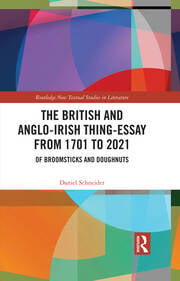
245 14|aThe British and Anglo-Irish thing-essay from 1701 to 2021 :|bof broomsticks and doughnuts /|cDaniel Schneider.
264 1|aNew York, NY :|bRoutledge,|c2024.
300 |a1 online resource.
336 |atext|btxt|2rdacontent
337 |acomputer|bc|2rdamedia
338 |aonline resource|bcr|2rdacarrier
490 0 |aAmong the Victorians and Modernists
520 |a"While the it-narrative, the thing-poem and thing theatre have been around for some time, the essay - which is often considered literature's fourth genre - is still lacking its thing-subgenre. Yet, particularly British and Anglo-Irish literature display a long, albeit so far implicit tradition of texts that can be categorised as 'thing-essays': Starting with Jonathan Swift's "Meditation upon a Broomstick" (1701) and continuing until today, these texts draw broader insights from the contemplation of a material item of daily life. This book provides the first theoretical conceptualisation of this genre. Bringing elements from essay studies and the New Materialisms together, it shows why the essay lends itself particularly well to literarisations of the personal relationships that people foster to everyday objects. While the idiosyncrasies of each essay show the versatility of thing-essays, the study also seeks to unearth changing attitudes towards things - and thus towards people's material surroundings in general - throughout time. In order to account for such synchronic and diachronic differences in thing-essays, this study develops a typology of three modes via which things can be approached essayistically. In the book's second part, this framework will be employed in close readings and historicisations of 14 thing-essays from 1701 until 2021. Ranging from satire to sentimental writing, from religion to consumerism, from class to gender differences, from feelings of nationality to exoticism, from the French Revolution to Freud and from art to everyday life, the stylistic and thematic broadness of these thing-essays ultimately shows the multifarious connections between human life and materiality"--|cProvided by publisher.
588 |aOCLC-licensed vendor bibliographic record.
650 0|aEnglish essays|xHistory and criticism.
650 0|aEnglish essays|xIrish authors|xHistory and criticism.
650 0|aMaterial culture in literature.
650 7|aLITERARY CRITICISM / European / English, Irish, Scottish, Welsh|2bisacsh
650 7|aLITERARY CRITICISM / American / General|2bisacsh
856 40|3Taylor & Francis|uhttps://www.taylorfrancis.com/books/9781003340126
856 42|3OCLC metadata license agreement|uhttp://www.oclc.org/content/dam/oclc/forms/terms/vbrl-201703.pdf
901 |aTaylor & Francis