LEADER 03573cam a22005298i 4500
001 804510
003 TR_AnAIT
005 20260124001424
006 m o d
007 cr |||||||||||
008 230228s2024 nyu ob 001 0 eng
020 |a9781003388296|q(ebook)
020 |a1003388299
020 |a9781000921670|q(electronic bk. : EPUB)
020 |a1000921670|q(electronic bk. : EPUB)
020 |a9781000921649|q(electronic bk. : PDF)
020 |a1000921646|q(electronic bk. : PDF)
020 |z9781032482880|q(hardback)
020 |z9781032482897|q(paperback)
024 7 |a10.4324/9781003388296|2doi
035 |a(OCoLC)1371957034
035 |a(OCoLC-P)1371957034
040 |aOCoLC-P|beng|erda|cOCoLC-P
041 |aeng
049 |aTürk Tarih Kurumu Kütüphanesi
050 00|aD201.4
072 7|aHIS|x037010|2bisacsh
072 7|aHIS|x010000|2bisacsh
072 7|aHBLC|2bicssc
082 00|a940.1|223/eng/20230302
100 1 |aRaffensperger, Christian,|eauthor.
245 10|aRulers and rulership in the arc of medieval Europe, 1000-1200 /|cChristian Raffensperger.
264 1|aNew York :|bRoutledge,|c2024.
300 |a1 online resource
336 |atext|btxt|2rdacontent
337 |acomputer|bc|2rdamedia
338 |aonline resource|bcr|2rdacarrier
505 0 |aAcknowledgements -- Introduction -- Chapter 1 Problems with titulature -- Chapter 2 Corulership -- Chapter 3 Understanding succession -- Chapter 4 Rulers and the Church -- Chapter 5 Monastic legitimation of rulership -- Chapter 6 Weak power polities, claims making, and itinerant rulership -- Conclusion -- Bibliography.
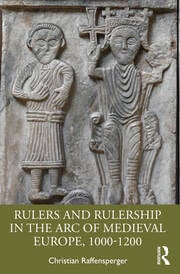
520 |a"Rulers and Rulership in the Arc of Medieval Europe challenges the dominant paradigm of what rulership is and who rulers are by decentering the narrative and providing a broad swath of examples from throughout medieval Europe. Within that territory, the prevalent idea of monarchy and kingship is overturned in favor of a broad definition of rulership. This book will demonstrate to the reader that the way in which medieval Europe has been constructed in both the popular and scholarly imaginations is incorrect. Instead of a king we have multiple rulers, male and female, ruling concurrently. Instead of an independent church or a church striving for supremacy under the Gregorian Reform, we have a pope and ecclesiastical leaders making deals with secular rulers and an in-depth interconnection between the two. Finally, instead of a strong centralizing polity growing into statehood we see weak rulers working hand in glove with weak subordinates to make the polity as a whole function. Medievalists, Byzantinists, and Slavists typically operate in isolation from one another. They do not read each other's books, or engage with each other's work. This book requires engagement from all of them to point out that the medieval Europe that they work in is one and the same and demands collaboration to best understand it"--|cProvided by publisher.
588 |aOCLC-licensed vendor bibliographic record.
650 0|aCivilization, Medieval.
650 0|aPower (Social sciences)|zEurope|xHistory|yTo 1500.
650 7|aHISTORY / Medieval|2bisacsh
650 7|aHISTORY / Europe / General|2bisacsh
651 0|aEurope|xHistory|y476-1492.
651 0|aEurope|xKings and rulers|xHistory.
651 0|aEurope|xPolitics and government|y476-1492.
856 40|3Taylor & Francis|uhttps://www.taylorfrancis.com/books/9781003388296
856 42|3OCLC metadata license agreement|uhttp://www.oclc.org/content/dam/oclc/forms/terms/vbrl-201703.pdf
901 |aTaylor & Francis