

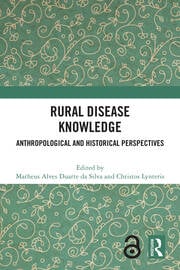
Rural disease knowledge : anthropological and historical perspectives / edited by Matheus Alves Duarte da Silva and Christos Lynteris.
ISBN
9781003438984 (electronic bk.)
1003438989 (electronic bk.)
9781032563251
9781032573557
9781040151549 (electronic bk. : EPUB)
104015154X (electronic bk. : EPUB)
9781040151518 (electronic bk. : PDF)
1040151515 (electronic bk. : PDF)
1003438989 (electronic bk.)
9781032563251
9781032573557
9781040151549 (electronic bk. : EPUB)
104015154X (electronic bk. : EPUB)
9781040151518 (electronic bk. : PDF)
1040151515 (electronic bk. : PDF)
Dil Kodu
İngilizce
Yayın Bilgisi
Abingdon, Oxon ; New York, NY : Routledge, 2025.
Fiziksel Niteleme
1 online resource (x, 252 pages).
İçindekiler Notu
1. Introduction: The Scales, Subjects, and Politics of Rural Disease KnowledgeMatheus Alves Duarte da Silva and Christos Lynteris2. Demarcating the "Field" of Field Epidemiology in Britain: Rurality and the Narration of Epidemics (1850-1950)Jacob Steere-Williams3. Extracting Blood, Flies, and Ideas: David and Mary Bruce, Vernacular Experts, and Unakane in Rural Zululand c. 1880s-1900sJules Skotnes-Brown4. Yaws: Medicine and Propaganda in Rural Java, 1911-1942Maurits Bastiaan Meerwijk 5. Salvador Mazza and Chagas Disease in Argentina: The Epistemic and Political Reshaping of a Controversial Rural Disease, 1926-1946Juan Pablo Zabala6. The Epidemiological and Epistemic Emergence of "Rural Plague" in ArgentinaChristos Lynteris7. A Virus in the Forest: Yellow Fever, West Africa, and the Remaking of Alliances Among Living Things, 1900-1950Gregg Mitman 8. A Global Desert: Plague, Rural Knowledge, and Epidemiological Reasoning in the Brazilian Backlands (1939-1965)Matheus Alves Duarte da Silva9. Unnecessary Adversaries Amidst War: Biomedical and Non-biomedical Approaches to Leishmaniasis in Rural ColombiaLina Pinto-Garcia 10. Local Knowledge, Cattle-Human Relations, and Disease Perceptions of the Agropastoralists in the Kilombero Valley, TanzaniaCaroline Mwihaki Mburu and Kathrin Heitz-TokpaIndex
Özet, vb.
Rural Disease Knowledgeexamines the ways in which knowledge of rural spaces and environments, on the one hand, and infectious diseases, on the other, have become inter-constituted since the late nineteenth century. With contributions by leading anthropologists and historians of medicine, it examines the epistemic co-constitution of the rural and of infectious diseases. Ranging from Brazil, Argentina, and Colombia to Java, Tanzania, West and South Africa,and Britain, the chapters cover diverse geographies, timelines, and diseases, including plague, brucellosis, leishmaniasis, yaws, yellow fever, nagana, sleeping sickness, and Chagas disease. The book considers how human interactions with infectious diseases have impacted ways of knowing and acting on rural spaces and environments, and in turn how human interactions with rural spaces and environments have impacted ways of knowing and acting against infectious diseases. It reflects on how the rural has been configured as a space of either health or sickness over the centuries and around the globe, the role of rural landscapes in the epistemic emergence of microbiology and tropical medicine, and the interaction with global processes such as European imperialism, the emergence of capitalism, and postcolonial nation-building projects. The studies engage with current debates on decolonizing knowledge and highlight how local disease knowledge has troubled and unsettled hegemonic medical perspectives and created new ways of understanding the relationship between diseases and rural spaces and environments. The volume will be of particular interest to scholars of medical anthropology, global health, and the history of medicine.
Konu
Rural health __ History.
Communicable diseases __ History.
Health behavior __ History.
Health attitudes __ History.
SOCIAL SCIENCE / Anthropology / Cultural __ bisacsh
Communicable diseases __ History.
Health behavior __ History.
Health attitudes __ History.
SOCIAL SCIENCE / Anthropology / Cultural __ bisacsh
Diğer Yazarlar
Veritabanı
Eseri Alıntıla
Referansları kullanmadan önce gözden geçirmeniz ve varsa gerekli düzeltmeleri yapmanız önerilir.
Dijital Kaynak
MARC Görünümü
LEADER 04993cam a22005177i 4500
001 804536
003 TR_AnAIT
005 20260124001449
006 m o d
007 cr cnu|||unuuu
008 240930s2025 enk eob 001 0 eng d
020 |a9781003438984|q(electronic bk.)
020 |a1003438989|q(electronic bk.)
020 |z9781032563251
020 |z9781032573557
020 |a9781040151549|q(electronic bk. : EPUB)
020 |a104015154X|q(electronic bk. : EPUB)
020 |a9781040151518|q(electronic bk. : PDF)
020 |a1040151515|q(electronic bk. : PDF)
024 7 |a10.4324/9781003438984|2doi
035 |a(OCoLC)1457983803
035 |a(OCoLC-P)1457983803
040 |aOCoLC-P|beng|erda|epn|cOCoLC-P
041 |aeng
049 |aTürk Tarih Kurumu Kütüphanesi
050 4|aRA643|b.R87 2025
072 7|aSOC|x002010|2bisacsh
072 7|aSOC|x057000|2bisacsh
072 7|aPSXM|2bicssc
082 04|a616.9|223
245 00|aRural disease knowledge :|banthropological and historical perspectives /|cedited by Matheus Alves Duarte da Silva and Christos Lynteris.
264 1|aAbingdon, Oxon ;|aNew York, NY :|bRoutledge,|c2025.
300 |a1 online resource (x, 252 pages).
336 |atext|btxt|2rdacontent
337 |acomputer|bc|2rdamedia
338 |aonline resource|bcr|2rdacarrier
505 0 |a1. Introduction: The Scales, Subjects, and Politics of Rural Disease KnowledgeMatheus Alves Duarte da Silva and Christos Lynteris2. Demarcating the "Field" of Field Epidemiology in Britain: Rurality and the Narration of Epidemics (1850-1950)Jacob Steere-Williams3. Extracting Blood, Flies, and Ideas: David and Mary Bruce, Vernacular Experts, and Unakane in Rural Zululand c. 1880s-1900sJules Skotnes-Brown4. Yaws: Medicine and Propaganda in Rural Java, 1911-1942Maurits Bastiaan Meerwijk 5. Salvador Mazza and Chagas Disease in Argentina: The Epistemic and Political Reshaping of a Controversial Rural Disease, 1926-1946Juan Pablo Zabala6. The Epidemiological and Epistemic Emergence of "Rural Plague" in ArgentinaChristos Lynteris7. A Virus in the Forest: Yellow Fever, West Africa, and the Remaking of Alliances Among Living Things, 1900-1950Gregg Mitman 8. A Global Desert: Plague, Rural Knowledge, and Epidemiological Reasoning in the Brazilian Backlands (1939-1965)Matheus Alves Duarte da Silva9. Unnecessary Adversaries Amidst War: Biomedical and Non-biomedical Approaches to Leishmaniasis in Rural ColombiaLina Pinto-Garcia 10. Local Knowledge, Cattle-Human Relations, and Disease Perceptions of the Agropastoralists in the Kilombero Valley, TanzaniaCaroline Mwihaki Mburu and Kathrin Heitz-TokpaIndex
520 |aRural Disease Knowledgeexamines the ways in which knowledge of rural spaces and environments, on the one hand, and infectious diseases, on the other, have become inter-constituted since the late nineteenth century. With contributions by leading anthropologists and historians of medicine, it examines the epistemic co-constitution of the rural and of infectious diseases. Ranging from Brazil, Argentina, and Colombia to Java, Tanzania, West and South Africa,and Britain, the chapters cover diverse geographies, timelines, and diseases, including plague, brucellosis, leishmaniasis, yaws, yellow fever, nagana, sleeping sickness, and Chagas disease. The book considers how human interactions with infectious diseases have impacted ways of knowing and acting on rural spaces and environments, and in turn how human interactions with rural spaces and environments have impacted ways of knowing and acting against infectious diseases. It reflects on how the rural has been configured as a space of either health or sickness over the centuries and around the globe, the role of rural landscapes in the epistemic emergence of microbiology and tropical medicine, and the interaction with global processes such as European imperialism, the emergence of capitalism, and postcolonial nation-building projects. The studies engage with current debates on decolonizing knowledge and highlight how local disease knowledge has troubled and unsettled hegemonic medical perspectives and created new ways of understanding the relationship between diseases and rural spaces and environments. The volume will be of particular interest to scholars of medical anthropology, global health, and the history of medicine.
588 |aOCLC-licensed vendor bibliographic record.
650 0|aRural health|xHistory.
650 0|aCommunicable diseases|xHistory.
650 0|aHealth behavior|xHistory.
650 0|aHealth attitudes|xHistory.
650 7|aSOCIAL SCIENCE / Anthropology / Cultural|2bisacsh
700 1 |aSilva, Matheus Alves Duarte da,|eeditor.
700 1 |aLynteris, Christos,|eeditor.|1https://id.oclc.org/worldcat/entity/E39PCjtmPmqfkp9vQcgdCFjfjd
856 40|3Taylor & Francis|uhttps://www.taylorfrancis.com/books/9781003438984
856 42|3OCLC metadata license agreement|uhttp://www.oclc.org/content/dam/oclc/forms/terms/vbrl-201703.pdf
901 |aTaylor & Francis
001 804536
003 TR_AnAIT
005 20260124001449
006 m o d
007 cr cnu|||unuuu
008 240930s2025 enk eob 001 0 eng d
020 |a9781003438984|q(electronic bk.)
020 |a1003438989|q(electronic bk.)
020 |z9781032563251
020 |z9781032573557
020 |a9781040151549|q(electronic bk. : EPUB)
020 |a104015154X|q(electronic bk. : EPUB)
020 |a9781040151518|q(electronic bk. : PDF)
020 |a1040151515|q(electronic bk. : PDF)
024 7 |a10.4324/9781003438984|2doi
035 |a(OCoLC)1457983803
035 |a(OCoLC-P)1457983803
040 |aOCoLC-P|beng|erda|epn|cOCoLC-P
041 |aeng
049 |aTürk Tarih Kurumu Kütüphanesi
050 4|aRA643|b.R87 2025
072 7|aSOC|x002010|2bisacsh
072 7|aSOC|x057000|2bisacsh
072 7|aPSXM|2bicssc
082 04|a616.9|223
245 00|aRural disease knowledge :|banthropological and historical perspectives /|cedited by Matheus Alves Duarte da Silva and Christos Lynteris.
264 1|aAbingdon, Oxon ;|aNew York, NY :|bRoutledge,|c2025.
300 |a1 online resource (x, 252 pages).
336 |atext|btxt|2rdacontent
337 |acomputer|bc|2rdamedia
338 |aonline resource|bcr|2rdacarrier
505 0 |a1. Introduction: The Scales, Subjects, and Politics of Rural Disease KnowledgeMatheus Alves Duarte da Silva and Christos Lynteris2. Demarcating the "Field" of Field Epidemiology in Britain: Rurality and the Narration of Epidemics (1850-1950)Jacob Steere-Williams3. Extracting Blood, Flies, and Ideas: David and Mary Bruce, Vernacular Experts, and Unakane in Rural Zululand c. 1880s-1900sJules Skotnes-Brown4. Yaws: Medicine and Propaganda in Rural Java, 1911-1942Maurits Bastiaan Meerwijk 5. Salvador Mazza and Chagas Disease in Argentina: The Epistemic and Political Reshaping of a Controversial Rural Disease, 1926-1946Juan Pablo Zabala6. The Epidemiological and Epistemic Emergence of "Rural Plague" in ArgentinaChristos Lynteris7. A Virus in the Forest: Yellow Fever, West Africa, and the Remaking of Alliances Among Living Things, 1900-1950Gregg Mitman 8. A Global Desert: Plague, Rural Knowledge, and Epidemiological Reasoning in the Brazilian Backlands (1939-1965)Matheus Alves Duarte da Silva9. Unnecessary Adversaries Amidst War: Biomedical and Non-biomedical Approaches to Leishmaniasis in Rural ColombiaLina Pinto-Garcia 10. Local Knowledge, Cattle-Human Relations, and Disease Perceptions of the Agropastoralists in the Kilombero Valley, TanzaniaCaroline Mwihaki Mburu and Kathrin Heitz-TokpaIndex
520 |aRural Disease Knowledgeexamines the ways in which knowledge of rural spaces and environments, on the one hand, and infectious diseases, on the other, have become inter-constituted since the late nineteenth century. With contributions by leading anthropologists and historians of medicine, it examines the epistemic co-constitution of the rural and of infectious diseases. Ranging from Brazil, Argentina, and Colombia to Java, Tanzania, West and South Africa,and Britain, the chapters cover diverse geographies, timelines, and diseases, including plague, brucellosis, leishmaniasis, yaws, yellow fever, nagana, sleeping sickness, and Chagas disease. The book considers how human interactions with infectious diseases have impacted ways of knowing and acting on rural spaces and environments, and in turn how human interactions with rural spaces and environments have impacted ways of knowing and acting against infectious diseases. It reflects on how the rural has been configured as a space of either health or sickness over the centuries and around the globe, the role of rural landscapes in the epistemic emergence of microbiology and tropical medicine, and the interaction with global processes such as European imperialism, the emergence of capitalism, and postcolonial nation-building projects. The studies engage with current debates on decolonizing knowledge and highlight how local disease knowledge has troubled and unsettled hegemonic medical perspectives and created new ways of understanding the relationship between diseases and rural spaces and environments. The volume will be of particular interest to scholars of medical anthropology, global health, and the history of medicine.
588 |aOCLC-licensed vendor bibliographic record.
650 0|aRural health|xHistory.
650 0|aCommunicable diseases|xHistory.
650 0|aHealth behavior|xHistory.
650 0|aHealth attitudes|xHistory.
650 7|aSOCIAL SCIENCE / Anthropology / Cultural|2bisacsh
700 1 |aSilva, Matheus Alves Duarte da,|eeditor.
700 1 |aLynteris, Christos,|eeditor.|1https://id.oclc.org/worldcat/entity/E39PCjtmPmqfkp9vQcgdCFjfjd
856 40|3Taylor & Francis|uhttps://www.taylorfrancis.com/books/9781003438984
856 42|3OCLC metadata license agreement|uhttp://www.oclc.org/content/dam/oclc/forms/terms/vbrl-201703.pdf
901 |aTaylor & Francis
Materyaller
Depodan talep edilen materyal sadece kütüphane içerisinde kullanılmaktadır.
Materyal dışarıya ödünç verilmemektedir.
Materyal dışarıya ödünç verilmemektedir.
