LEADER 04399cam a2200709 i 4500
001 804594
003 TR_AnAIT
005 20260124001540
006 m o d
007 cr cnu---unuuu
008 250929t20262026nyu ob 001 0 eng d
020 |a9781003568001|q(electronic bk.)
020 |a1003568009|q(electronic bk.)
020 |a9781040442203|q(electronic bk. : PDF)
020 |a104044220X|q(electronic bk. : PDF)
020 |a9781040442241|q(electronic bk. : EPUB)
020 |a1040442242|q(electronic bk. : EPUB)
020 |z9781032899718
020 |z1032899719
020 |z9781032938769
020 |z1032938765
024 7 |a10.4324/9781003568001|2doi
035 |a(OCoLC)1541845574
035 |a(OCoLC-P)1541845574
040 |aOCoLC-P|beng|erda|epn|cOCoLC-P
041 |aeng
049 |aTürk Tarih Kurumu Kütüphanesi
050 4|aN72.S6|bW755 2026
072 7|aGM|2bicssc
072 7|aART059000|2bisacsh
072 7|aAB|2bicssc
072 7|aJHM|2bicssc
072 7|aJFCA|2bicssc
072 7|aHBTR|2bicssc
072 7|aHBTQ|2bicssc
072 7|aART000000|2bisacsh
072 7|aART015010|2bisacsh
072 7|aART019000|2bisacsh
082 04|a701.03095195|223/eng/20260113
100 1 |aWright, Kristina Dziedzic,|eauthor.|4aut|4http://id.loc.gov/vocabulary/relators/aut|1https://id.oclc.org/worldcat/entity/E39PCjqJVPX6KgrhwrWQrXVvd3|1http://id.loc.gov/rwo/agents/n2009047806
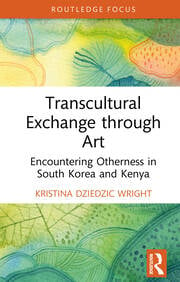
245 10|aTranscultural exchange through art :|bencountering otherness in South Korea and Kenya /|cKristina Dziedzic Wright.
264 1|aNew York :|bRoutledge,|c2026.
264 4|c??2026
300 |a1 online resource
334 |asingle unit|bmono|0http://id.loc.gov/vocabulary/issuance/mono
336 |atext|btxt|2rdacontent
337 |acomputer|bc|2rdamedia
338 |aonline resource|bcr|2rdacarrier
353 |abibliography|bbibliography|0http://id.loc.gov/vocabulary/msupplcont/bibliography
353 |aindex|bindex|0http://id.loc.gov/vocabulary/msupplcont/index
500 |a"Routledge focus."
520 |a"Transcultural Exchange through Art provides an exploration of two countries and their capital cities, two regions and their growing cultural engagement with one another, soft and hard power and their impact on the arts, multiculturalism, museums, globalization, cosmopolitanism and postcoloniality. Drawing on the author's experiences of working in Kenya and living in South Korea, as well as interviews with artists, curators and other practitioners, the book demonstrates that experiencing "otherness" through the imaginative engagement of art can cultivate appreciation of cultural diversity. Various case studies from Nairobi and Seoul are analyzed to unpack narratives about nation, self, and other through the cultural and creative industries. By focusing on two non-Western regional capitals whose urban contemporary development is affected by their colonial pasts, the book explores the larger dynamics of postcolonial nation building and the formulation of cultural identities in the face of rapid economic development and demographic changes. The issues identified in the study are linked to wider debates concerning the role of the arts and art museums in relation to migration, globalization and multiculturalism. Transcultural Exchange through Art will be of great interest to academics and practitioners working in the cultural and creative industries, museum and curatorial studies, visual culture studies, African studies and Asian studies. The book transcends disciplinary boundaries and relates academic research to pragmatic issues such as diversity and inclusion in public cultural spaces"-- Provided by publisher.
588 |aOCLC-licensed vendor bibliographic record.
650 0|aArt and society|zKorea (South)
650 0|aArt and society|zKenya.
650 0|aArt, African.
650 0|aArt, Asian.
650 0|aCultural relations.
651 0|aKorea (South)|xRelations|zKenya.
651 0|aKenya|xRelations|zKorea (South)
758 |1http://id.loc.gov/resources/instances/in00024278021
758 |4http://id.loc.gov/ontologies/bibframe/instanceOf|1http://id.loc.gov/resources/works/in00024278021
856 40|3Taylor & Francis|uhttps://www.taylorfrancis.com/books/9781003568001
856 42|3OCLC metadata license agreement|uhttp://www.oclc.org/content/dam/oclc/forms/terms/vbrl-201703.pdf
901 |aTaylor & Francis