LEADER 03208cam a22005058i 4500
001 804607
003 TR_AnAIT
005 20260124001557
006 m o d
007 cr |||||||||||
008 250220s2025 enk ob 001 0 eng
020 |a9781003594314|q(ebk)
020 |a100359431X
020 |a9781040345207|q(electronic bk. : PDF)
020 |a1040345204|q(electronic bk. : PDF)
020 |a9781040345337|q(electronic bk. : EPUB)
020 |a1040345336|q(electronic bk. : EPUB)
020 |z9781032975610|q(hbk)
020 |z9781032975627|q(pbk)
024 7 |a10.4324/9781003594314|2doi
035 |a(OCoLC)1504690459
035 |a(OCoLC-P)1504690459
040 |aOCoLC-P|beng|erda|cOCoLC-P
041 |aeng
049 |aTürk Tarih Kurumu Kütüphanesi
050 00|aGF51
072 7|aJHMC|2bicssc
072 7|aSOC002010|2bisacsh
072 7|aRNC|2bicssc
072 7|aRGC|2bicssc
072 7|aSOC015000|2bisacsh
082 00|a304.2|223/eng/20250304
100 1 |aDillon, Patrick,|d1950-|eauthor.|1https://id.oclc.org/worldcat/entity/E39PCjCP3FTMctcjvDktB9prRq
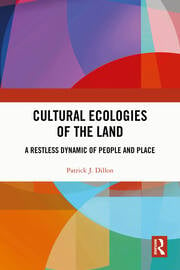
245 10|aCultural ecologies of the land :|ba restless dynamic of people and place /|cPatrick J. Dillon.
264 1|aLondon ;|aNew York, NY :|bRoutledge,|c2025.
300 |a1 online resource
336 |atext|btxt|2rdacontent
337 |acomputer|bc|2rdamedia
338 |aonline resource|bcr|2rdacarrier
505 0 |aFoundations -- Human agency -- Making sense -- Adaptive change -- Making a living -- Making stories -- Making place -- Days of future passed -- Governance -- Education.
520 |a"Cultural Ecologies of the Land is a radical and challenging reassessment of the way we relate to the land and to infrastructure. There was a time when the land defined us. Now, with each passing year, we are increasingly detached from it. It was once the centre stage of humanity, now it is the setting for a technological drama. What has happened, and why does it matter? This book is a multi-layered account of people and environment shaping each other through cumulative, moment-to-moment, day-to-day change, and a template for thinking about place, locality, belonging, and identity. Cultural Ecologies of the Land presents the existential crisis that many believe we now face as a systemic problem, arising from social institutions and forms of behaviour that have been marginalised with our dependency on modern infrastructure. It explains the part people have played in contributing to the crisis, and how regenerating relationships with the land offers a route towards alleviating it. This is not only about acknowledging our impact on Earth, but also understanding ourselves in relation to it, how we engage with our surroundings, make sense of them, live and work in them, and create narratives that connect and sustain us"--|cProvided by publisher.
588 |aOCLC-licensed vendor bibliographic record.
650 0|aHuman beings|xEffect of environment on.
650 0|aHuman ecology.
650 0|aEthnology.
856 40|3Taylor & Francis|uhttps://www.taylorfrancis.com/books/9781003594314
856 42|3OCLC metadata license agreement|uhttp://www.oclc.org/content/dam/oclc/forms/terms/vbrl-201703.pdf
901 |aTaylor & Francis