LEADER 03836cam a2200565 i 4500
001 804692
003 TR_AnAIT
005 20260124001715
006 m o d
007 cr |||||||||||
008 200528s2021 enkab ob 001 0 eng
020 |a9781315231808|qelectronic book
020 |a1315231808|qhardback
020 |a9781351866163|q(electronic bk. : PDF)
020 |a1351866168|q(electronic bk. : PDF)
020 |a9781351866156|q(electronic bk. : EPUB)
020 |a135186615X|q(electronic bk. : EPUB)
020 |a9781351866149|q(electronic bk. : Mobipocket)
020 |a1351866141|q(electronic bk. : Mobipocket)
020 |z9781138293946|q(hardback)
035 |a(OCoLC)1156416873
035 |a(OCoLC-P)1156416873
040 |aOCoLC-P|beng|erda|cOCoLC-P
041 |aeng
049 |aTürk Tarih Kurumu Kütüphanesi
050 00|aHF3640|b.V55 2021eb
072 7|aHIS|x037010|2bisacsh
072 7|aHIS|x010000|2bisacsh
072 7|aHBJD|2bicssc
082 00|a382/.440948|223
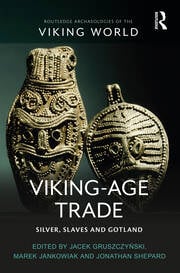
245 00|aViking-age trade :|bsilver, slaves and Gotland /|cedited by Jacek Gruszczyński, Marek Jankowiak and Jonathan Shepard.
264 1|aAbingdon, Oxon ;|aNew York, NY :|bRoutledge,|c2021.
300 |a1 online resource (xxiv, 473 pages) :|billustrations, maps.
336 |atext|btxt|2rdacontent
337 |acomputer|bn|2rdamedia
338 |aonline resource|bnc|2rdacarrier
490 1 |aRoutledge archaeologies of the Viking world
520 |a"That there was an influx of silver dirhams from the Muslim world into eastern and northern Europe in the ninth and tenth centuries is well-known, as is the fact that the largest concentration of hoards is on the Baltic island of Gotland. Recent discoveries have shown that dirhams were reaching the British Isles, too. What brought the dirhams to northern Europe in such large numbers? The fur trade has been proposed as one driver for transactions, but the slave trade offers another - complementary - explanation. This volume does not offer a comprehensive delineation of the hoard finds, or a full answer to the question of what brought the silver north. But it highlights the trade in slaves as driving exchanges on a trans-continental scale. By their very nature, the nexuses were complex, mutable, and unclear even to contemporaries, and they have eluded modern scholarship. Contributions to this volume shed light on processes and key places: the mints of Central Asia; the chronology of the inflows of dirhams to Rus and northern Europe; the reasons why silver was deposited in the ground and why so much ended up on Gotland; the functioning of networks - perhaps comparable to the twenty-first century drug-trade; slave-trading in the British Isles, and the stimulus and additional networks that the Vikings brought into play. This combination of general surveys, presentations of fresh evidence, and regional case-studies sets Gotland and the early medieval slave trade in a firmer framework than has been available before"--|cProvided by publisher.
588 |aOCLC-licensed vendor bibliographic record.
650 0|aSlavery|zScandinavia|xHistory|yTo 1500.
650 0|aSlavery|zSweden|zGotland|xHistory|yTo 1500.
650 0|aSilver|zScandinavia|xHistory|yTo 1500.
650 0|aSilver|zSweden|zGotland|xHistory|yTo 1500.
650 7|aHISTORY / Medieval|2bisacsh
650 7|aHISTORY / Europe / General|2bisacsh
651 0|aScandinavia|xCommerce|xHistory|yTo 1500.
651 0|aGotland (Sweden)|xCommerce|xHistory|yTo 1500.
700 1 |aGruszczynski, Jacek,|d1980-|eeditor.
700 1 |aJankowiak, Marek,|eeditor.
700 1 |aShepard, Jonathan,|eeditor.
856 40|3Taylor & Francis|uhttps://www.taylorfrancis.com/books/9781315231808
856 42|3OCLC metadata license agreement|uhttp://www.oclc.org/content/dam/oclc/forms/terms/vbrl-201703.pdf
901 |aTaylor & Francis