

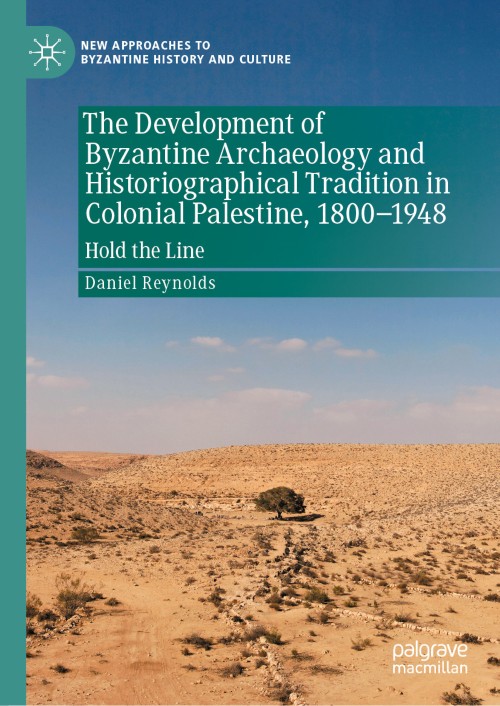
The Development of Byzantine Archaeology and Historiographical Tradition in Colonial Palestine, 1800-1948 [electronic resource] : Hold the Line / by Daniel Reynolds.
Erişim Adresi
ISBN
9783032037848
Dil Kodu
İngilizce
Yer Numarası
DK/6294
Basım Bildirimi
1st ed. 2025.
Yayın Bilgisi
Cham : Springer Nature Switzerland : Imprint: Palgrave Macmillan, 2025.
Fiziksel Niteleme
XXIII, 144 p. 14 illus. online resource.
Dizi
New Approaches to Byzantine History and Culture, 2730-9371
İçindekiler Notu
Ch 1: Hold the Line: Byzantine Palestine and the postcolonial fray -- Ch 2: Drawing lines: Byzantium and the historicization of the Negev frontier -- Ch 3: Making deserts bloom: Britain, Byzantium, and agriculture in the Negev -- Ch 4: Conclusion: holding the line between past and present.
Özet, vb.
“Dr. Daniel Reynolds offers a landmark study that reframes Byzantium’s legacy in the Eastern Mediterranean through the lens of colonial and postcolonial geopolitics. Meticulously documented and analytically rich, it offers essential insights into Byzantine, Levantine, and imperial histories. I strongly endorse this book.” —Anahita Motazed Rad, Visiting Senior Fellow, Department of International Relations, London School of Economics and Political Science, UK This book examines the relationship between the emergence of Byzantine archaeology and British colonialism during the period of the British Mandate in Palestine. Taking a single case study, the Negev Desert (now in southern Israel), this study explores how the development of Byzantine archaeology and historical enquiry in the region after 1800 provided the British government with a political and economic blueprint to secure its strategic interests over the Suez Canal. Several excavations of Byzantine sites during the British Mandate were utilised as an historic proof of concept for scientific programmes of ‘desert greening’, and to advocate for the displacement of Arab populations in favour of British economic development and town planning. Invariably, such contemporary concerns to secure British access to the Suez after 1869 shaped the interpretation of Byzantine history. Ideas of the Negev as a timeless ‘frontier zone’, which benefitted from the imposition of a central imperial government and increased economic immigration from a ‘Hellenised’ western Europe, gained a historical precedent in an imagined Byzantine past. Daniel Reynolds is Associate Professor in Byzantine History at the University of Birmingham, UK.
Konu
Middle East __ History.
Imperialism.
Historiography.
History __ Methodology.
Europe __ History __ 476-1492.
World history.
History of the Middle East.
Imperialism and Colonialism.
Historiography and Method.
History of Medieval Europe.
World History, Global and Transnational History.
Theories of History.
Imperialism.
Historiography.
History __ Methodology.
Europe __ History __ 476-1492.
World history.
History of the Middle East.
Imperialism and Colonialism.
Historiography and Method.
History of Medieval Europe.
World History, Global and Transnational History.
Theories of History.
Kurum Adı
Eseri Alıntıla
Referansları kullanmadan önce gözden geçirmeniz ve varsa gerekli düzeltmeleri yapmanız önerilir.
Dijital Kaynak
MARC Görünümü
LEADER 05545nam a22007335i 4500
001 804967
003 TR_AnAIT
005 20260126235149
007 cr nn 008mamaa
008 260102s2025 sz | s |||| 0|eng d
020 |a9783032037848|9978-3-032-03784-8
024 7 |a10.1007/978-3-032-03784-8|2doi
041 |aeng
049 |aTürk Tarih Kurumu Kütüphanesi
050 4|aDS41-66
072 7|aHBJF|2bicssc
072 7|a1FB|2bicssc
072 7|aHIS026000|2bisacsh
072 7|aNHF|x1FB|2thema
082 04|a956|223
090 |aDK/6294
100 1 |aReynolds, Daniel.|eauthor.|0(orcid)0000-0002-3194-4130|1https://orcid.org/0000-0002-3194-4130|4aut|4http://id.loc.gov/vocabulary/relators/aut
245 14|aThe Development of Byzantine Archaeology and Historiographical Tradition in Colonial Palestine, 1800-1948|h[electronic resource] :|bHold the Line /|cby Daniel Reynolds.
250 |a1st ed. 2025.
264 1|aCham :|bSpringer Nature Switzerland :|bImprint: Palgrave Macmillan,|c2025.
300 |aXXIII, 144 p. 14 illus.|bonline resource.
336 |atext|btxt|2rdacontent
337 |acomputer|bc|2rdamedia
338 |aonline resource|bcr|2rdacarrier
341 0 |bPDF/UA-1|2onix
341 0 |bTable of contents navigation|2onix
341 0 |bSingle logical reading order|2onix
341 0 |bShort alternative textual descriptions|2onix
341 0 |bUse of color is not sole means of conveying information|2onix
341 0 |bUse of high contrast between text and background color|2onix
341 0 |bNext / Previous structural navigation|2onix
341 0 |bAll non-decorative content supports reading without sight|2onix
347 |atext file|bPDF|2rda
490 1 |aNew Approaches to Byzantine History and Culture,|x2730-9371
505 0 |aCh 1: Hold the Line: Byzantine Palestine and the postcolonial fray -- Ch 2: Drawing lines: Byzantium and the historicization of the Negev frontier -- Ch 3: Making deserts bloom: Britain, Byzantium, and agriculture in the Negev -- Ch 4: Conclusion: holding the line between past and present.
520 |a“Dr. Daniel Reynolds offers a landmark study that reframes Byzantium’s legacy in the Eastern Mediterranean through the lens of colonial and postcolonial geopolitics. Meticulously documented and analytically rich, it offers essential insights into Byzantine, Levantine, and imperial histories. I strongly endorse this book.” —Anahita Motazed Rad, Visiting Senior Fellow, Department of International Relations, London School of Economics and Political Science, UK This book examines the relationship between the emergence of Byzantine archaeology and British colonialism during the period of the British Mandate in Palestine. Taking a single case study, the Negev Desert (now in southern Israel), this study explores how the development of Byzantine archaeology and historical enquiry in the region after 1800 provided the British government with a political and economic blueprint to secure its strategic interests over the Suez Canal. Several excavations of Byzantine sites during the British Mandate were utilised as an historic proof of concept for scientific programmes of ‘desert greening’, and to advocate for the displacement of Arab populations in favour of British economic development and town planning. Invariably, such contemporary concerns to secure British access to the Suez after 1869 shaped the interpretation of Byzantine history. Ideas of the Negev as a timeless ‘frontier zone’, which benefitted from the imposition of a central imperial government and increased economic immigration from a ‘Hellenised’ western Europe, gained a historical precedent in an imagined Byzantine past. Daniel Reynolds is Associate Professor in Byzantine History at the University of Birmingham, UK.
532 8 |aAccessibility summary: This PDF has been created in accordance with the PDF/UA-1 standard to enhance accessibility, including screen reader support, described non-text content (images, graphs), bookmarks for easy navigation, keyboard-friendly links and forms and searchable, selectable text. We recognize the importance of accessibility, and we welcome queries about accessibility for any of our products. If you have a question or an access need, please get in touch with us at accessibilitysupport@springernature.com. Please note that a more accessible version of this eBook is available as ePub.
532 8 |aNo reading system accessibility options actively disabled
532 8 |aPublisher contact for further accessibility information: accessibilitysupport@springernature.com
650 0|aMiddle East|xHistory.
650 0|aImperialism.
650 0|aHistoriography.
650 0|aHistory|xMethodology.
650 0|aEurope|xHistory|x476-1492.
650 0|aWorld history.
650 14|aHistory of the Middle East.
650 24|aImperialism and Colonialism.
650 24|aHistoriography and Method.
650 24|aHistory of Medieval Europe.
650 24|aWorld History, Global and Transnational History.
650 24|aTheories of History.
710 2 |aSpringerLink (Online service)
773 0 |tSpringer Nature eBook
776 08|iPrinted edition:|z9783032037831
776 08|iPrinted edition:|z9783032037855
776 08|iPrinted edition:|z9783032037862
830 0|aNew Approaches to Byzantine History and Culture,|x2730-9371
856 40|uhttps://doi.org/10.1007/978-3-032-03784-8
912 |aZDB-2-HTY
912 |aZDB-2-SXH
950 |aHistory (SpringerNature-41172)
950 |aHistory (R0) (SpringerNature-43722)
001 804967
003 TR_AnAIT
005 20260126235149
007 cr nn 008mamaa
008 260102s2025 sz | s |||| 0|eng d
020 |a9783032037848|9978-3-032-03784-8
024 7 |a10.1007/978-3-032-03784-8|2doi
041 |aeng
049 |aTürk Tarih Kurumu Kütüphanesi
050 4|aDS41-66
072 7|aHBJF|2bicssc
072 7|a1FB|2bicssc
072 7|aHIS026000|2bisacsh
072 7|aNHF|x1FB|2thema
082 04|a956|223
090 |aDK/6294
100 1 |aReynolds, Daniel.|eauthor.|0(orcid)0000-0002-3194-4130|1https://orcid.org/0000-0002-3194-4130|4aut|4http://id.loc.gov/vocabulary/relators/aut
245 14|aThe Development of Byzantine Archaeology and Historiographical Tradition in Colonial Palestine, 1800-1948|h[electronic resource] :|bHold the Line /|cby Daniel Reynolds.
250 |a1st ed. 2025.
264 1|aCham :|bSpringer Nature Switzerland :|bImprint: Palgrave Macmillan,|c2025.
300 |aXXIII, 144 p. 14 illus.|bonline resource.
336 |atext|btxt|2rdacontent
337 |acomputer|bc|2rdamedia
338 |aonline resource|bcr|2rdacarrier
341 0 |bPDF/UA-1|2onix
341 0 |bTable of contents navigation|2onix
341 0 |bSingle logical reading order|2onix
341 0 |bShort alternative textual descriptions|2onix
341 0 |bUse of color is not sole means of conveying information|2onix
341 0 |bUse of high contrast between text and background color|2onix
341 0 |bNext / Previous structural navigation|2onix
341 0 |bAll non-decorative content supports reading without sight|2onix
347 |atext file|bPDF|2rda
490 1 |aNew Approaches to Byzantine History and Culture,|x2730-9371
505 0 |aCh 1: Hold the Line: Byzantine Palestine and the postcolonial fray -- Ch 2: Drawing lines: Byzantium and the historicization of the Negev frontier -- Ch 3: Making deserts bloom: Britain, Byzantium, and agriculture in the Negev -- Ch 4: Conclusion: holding the line between past and present.
520 |a“Dr. Daniel Reynolds offers a landmark study that reframes Byzantium’s legacy in the Eastern Mediterranean through the lens of colonial and postcolonial geopolitics. Meticulously documented and analytically rich, it offers essential insights into Byzantine, Levantine, and imperial histories. I strongly endorse this book.” —Anahita Motazed Rad, Visiting Senior Fellow, Department of International Relations, London School of Economics and Political Science, UK This book examines the relationship between the emergence of Byzantine archaeology and British colonialism during the period of the British Mandate in Palestine. Taking a single case study, the Negev Desert (now in southern Israel), this study explores how the development of Byzantine archaeology and historical enquiry in the region after 1800 provided the British government with a political and economic blueprint to secure its strategic interests over the Suez Canal. Several excavations of Byzantine sites during the British Mandate were utilised as an historic proof of concept for scientific programmes of ‘desert greening’, and to advocate for the displacement of Arab populations in favour of British economic development and town planning. Invariably, such contemporary concerns to secure British access to the Suez after 1869 shaped the interpretation of Byzantine history. Ideas of the Negev as a timeless ‘frontier zone’, which benefitted from the imposition of a central imperial government and increased economic immigration from a ‘Hellenised’ western Europe, gained a historical precedent in an imagined Byzantine past. Daniel Reynolds is Associate Professor in Byzantine History at the University of Birmingham, UK.
532 8 |aAccessibility summary: This PDF has been created in accordance with the PDF/UA-1 standard to enhance accessibility, including screen reader support, described non-text content (images, graphs), bookmarks for easy navigation, keyboard-friendly links and forms and searchable, selectable text. We recognize the importance of accessibility, and we welcome queries about accessibility for any of our products. If you have a question or an access need, please get in touch with us at accessibilitysupport@springernature.com. Please note that a more accessible version of this eBook is available as ePub.
532 8 |aNo reading system accessibility options actively disabled
532 8 |aPublisher contact for further accessibility information: accessibilitysupport@springernature.com
650 0|aMiddle East|xHistory.
650 0|aImperialism.
650 0|aHistoriography.
650 0|aHistory|xMethodology.
650 0|aEurope|xHistory|x476-1492.
650 0|aWorld history.
650 14|aHistory of the Middle East.
650 24|aImperialism and Colonialism.
650 24|aHistoriography and Method.
650 24|aHistory of Medieval Europe.
650 24|aWorld History, Global and Transnational History.
650 24|aTheories of History.
710 2 |aSpringerLink (Online service)
773 0 |tSpringer Nature eBook
776 08|iPrinted edition:|z9783032037831
776 08|iPrinted edition:|z9783032037855
776 08|iPrinted edition:|z9783032037862
830 0|aNew Approaches to Byzantine History and Culture,|x2730-9371
856 40|uhttps://doi.org/10.1007/978-3-032-03784-8
912 |aZDB-2-HTY
912 |aZDB-2-SXH
950 |aHistory (SpringerNature-41172)
950 |aHistory (R0) (SpringerNature-43722)
Materyaller
Depodan talep edilen materyal sadece kütüphane içerisinde kullanılmaktadır.
Materyal dışarıya ödünç verilmemektedir.
Materyal dışarıya ödünç verilmemektedir.
