

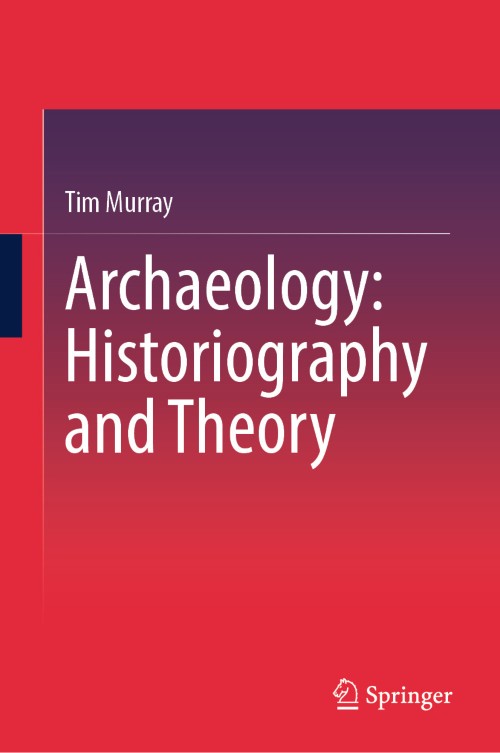
Archaeology: Historiography and Theory [electronic resource] / by Tim Murray.
Erişim Adresi
ISBN
9783032118462
Dil Kodu
İngilizce
Yer Numarası
DK/6313
Basım Bildirimi
1st ed. 2025.
Yayın Bilgisi
Cham : Springer Nature Switzerland : Imprint: Springer, 2025.
Fiziksel Niteleme
XIII, 336 p. 1 illus. online resource.
İçindekiler Notu
Chapter 1. Introduction -- Chapter 2. Themes and Goals -- Chapter 3. Methodology and Structure -- Chapter 4. Some Aspects of Antiquarianism Before the Three Age System -- Chapter 5. Prehistoric Archaeology and the Development of Ethnology -- Chapter 6. The Consequences of High Human Antiquity -- Chapter 7. National and Ethnic Prehistory -- Chapter 8. Prehistoric Archaeology in the ‘Parliament of Science’ -- Chapter 9. Archaeology from 1960: Transformation, Continuity and Divergence -- Chapter 10. Expanding the Theoretical: Processual and Post-Processual Archaeologies 1960-1990 -- Chapter 11. Expanding the Empirical: Transforming Time, Process and Duration -- Chapter 12. Expanding the Significance of Social and Cultural Context -- Chapter 13. Archaeological Epistemology, Middle Range Theory, and the Prospect of Intractable Problems?- Chapter 14. Historiography and Archaeological Theory.
Özet, vb.
This book examines our understanding of the ways in which we produce and consume archaeological knowledge and proposes that this should play a greater role in our attempts to describe and comprehend the nature and purpose of archaeology, and the nature of archaeological knowledge. During the past fifty years prehistoric archaeologists have sought to promote or oppose several redefinitions of archaeological goals and approaches that have emphasized, variously, the liberating or constraining power of critical self-reflection. While practitioners have continued to expand the storehouse of archaeological data, they have also been engaged in active investigation of archaeological goals and approaches, and in intensifying debate over what it is proper or relevant for practitioners to do. Prehistoric archaeology is now much more than a method of data collection and analysis which is transformed into culture history (or exemplifications of material culture theory) by the acts of comparison and interpretation. The central premise of this book is that the kind of understanding sought here should significantly improve our ability to work towards convincing solutions to many of the practical puzzles and problems with which we currently concern ourselves. The author also argues that this understanding will help to redefine the terms under which the collectivity of archaeological practitioners can be considered to be a functioning community.
Konu
Historiography.
History __ Methodology.
Archaeology __ Philosophy.
Philosophical anthropology.
Science __ History.
Historiography and Method.
Theoretical Archaeology.
Philosophy of Anthropology.
History of Science.
History __ Methodology.
Archaeology __ Philosophy.
Philosophical anthropology.
Science __ History.
Historiography and Method.
Theoretical Archaeology.
Philosophy of Anthropology.
History of Science.
Kurum Adı
Eseri Alıntıla
Referansları kullanmadan önce gözden geçirmeniz ve varsa gerekli düzeltmeleri yapmanız önerilir.
Dijital Kaynak
MARC Görünümü
LEADER 05493nam a22006735i 4500
001 804986
003 TR_AnAIT
005 20260126235215
007 cr nn 008mamaa
008 260102s2025 sz | s |||| 0|eng d
020 |a9783032118462|9978-3-032-11846-2
024 7 |a10.1007/978-3-032-11846-2|2doi
041 |aeng
049 |aTürk Tarih Kurumu Kütüphanesi
050 4|aD13-15
050 4|aD16-16.18
072 7|aHBAH|2bicssc
072 7|aHIS016000|2bisacsh
072 7|aNHAH|2thema
082 04|a907.2|223
090 |aDK/6313
100 1 |aMurray, Tim.|eauthor.|0(orcid)0000-0003-3075-1393|1https://orcid.org/0000-0003-3075-1393|4aut|4http://id.loc.gov/vocabulary/relators/aut
245 10|aArchaeology: Historiography and Theory|h[electronic resource] /|cby Tim Murray.
250 |a1st ed. 2025.
264 1|aCham :|bSpringer Nature Switzerland :|bImprint: Springer,|c2025.
300 |aXIII, 336 p. 1 illus.|bonline resource.
336 |atext|btxt|2rdacontent
337 |acomputer|bc|2rdamedia
338 |aonline resource|bcr|2rdacarrier
341 0 |bPDF/UA-1|2onix
341 0 |bTable of contents navigation|2onix
341 0 |bSingle logical reading order|2onix
341 0 |bShort alternative textual descriptions|2onix
341 0 |bUse of color is not sole means of conveying information|2onix
341 0 |bUse of high contrast between text and background color|2onix
341 0 |bNext / Previous structural navigation|2onix
341 0 |bAll non-decorative content supports reading without sight|2onix
347 |atext file|bPDF|2rda
505 0 |aChapter 1. Introduction -- Chapter 2. Themes and Goals -- Chapter 3. Methodology and Structure -- Chapter 4. Some Aspects of Antiquarianism Before the Three Age System -- Chapter 5. Prehistoric Archaeology and the Development of Ethnology -- Chapter 6. The Consequences of High Human Antiquity -- Chapter 7. National and Ethnic Prehistory -- Chapter 8. Prehistoric Archaeology in the ‘Parliament of Science’ -- Chapter 9. Archaeology from 1960: Transformation, Continuity and Divergence -- Chapter 10. Expanding the Theoretical: Processual and Post-Processual Archaeologies 1960-1990 -- Chapter 11. Expanding the Empirical: Transforming Time, Process and Duration -- Chapter 12. Expanding the Significance of Social and Cultural Context -- Chapter 13. Archaeological Epistemology, Middle Range Theory, and the Prospect of Intractable Problems?- Chapter 14. Historiography and Archaeological Theory.
520 |aThis book examines our understanding of the ways in which we produce and consume archaeological knowledge and proposes that this should play a greater role in our attempts to describe and comprehend the nature and purpose of archaeology, and the nature of archaeological knowledge. During the past fifty years prehistoric archaeologists have sought to promote or oppose several redefinitions of archaeological goals and approaches that have emphasized, variously, the liberating or constraining power of critical self-reflection. While practitioners have continued to expand the storehouse of archaeological data, they have also been engaged in active investigation of archaeological goals and approaches, and in intensifying debate over what it is proper or relevant for practitioners to do. Prehistoric archaeology is now much more than a method of data collection and analysis which is transformed into culture history (or exemplifications of material culture theory) by the acts of comparison and interpretation. The central premise of this book is that the kind of understanding sought here should significantly improve our ability to work towards convincing solutions to many of the practical puzzles and problems with which we currently concern ourselves. The author also argues that this understanding will help to redefine the terms under which the collectivity of archaeological practitioners can be considered to be a functioning community.
532 8 |aAccessibility summary: This PDF has been created in accordance with the PDF/UA-1 standard to enhance accessibility, including screen reader support, described non-text content (images, graphs), bookmarks for easy navigation, keyboard-friendly links and forms and searchable, selectable text. We recognize the importance of accessibility, and we welcome queries about accessibility for any of our products. If you have a question or an access need, please get in touch with us at accessibilitysupport@springernature.com. Please note that a more accessible version of this eBook is available as ePub.
532 8 |aNo reading system accessibility options actively disabled
532 8 |aPublisher contact for further accessibility information: accessibilitysupport@springernature.com
650 0|aHistoriography.
650 0|aHistory|xMethodology.
650 0|aArchaeology|xPhilosophy.
650 0|aPhilosophical anthropology.
650 0|aScience|xHistory.
650 14|aHistoriography and Method.
650 24|aTheoretical Archaeology.
650 24|aPhilosophy of Anthropology.
650 24|aHistory of Science.
710 2 |aSpringerLink (Online service)
773 0 |tSpringer Nature eBook
776 08|iPrinted edition:|z9783032118455
776 08|iPrinted edition:|z9783032118479
776 08|iPrinted edition:|z9783032118486
856 40|uhttps://doi.org/10.1007/978-3-032-11846-2
912 |aZDB-2-HTY
912 |aZDB-2-SXH
950 |aHistory (SpringerNature-41172)
950 |aHistory (R0) (SpringerNature-43722)
001 804986
003 TR_AnAIT
005 20260126235215
007 cr nn 008mamaa
008 260102s2025 sz | s |||| 0|eng d
020 |a9783032118462|9978-3-032-11846-2
024 7 |a10.1007/978-3-032-11846-2|2doi
041 |aeng
049 |aTürk Tarih Kurumu Kütüphanesi
050 4|aD13-15
050 4|aD16-16.18
072 7|aHBAH|2bicssc
072 7|aHIS016000|2bisacsh
072 7|aNHAH|2thema
082 04|a907.2|223
090 |aDK/6313
100 1 |aMurray, Tim.|eauthor.|0(orcid)0000-0003-3075-1393|1https://orcid.org/0000-0003-3075-1393|4aut|4http://id.loc.gov/vocabulary/relators/aut
245 10|aArchaeology: Historiography and Theory|h[electronic resource] /|cby Tim Murray.
250 |a1st ed. 2025.
264 1|aCham :|bSpringer Nature Switzerland :|bImprint: Springer,|c2025.
300 |aXIII, 336 p. 1 illus.|bonline resource.
336 |atext|btxt|2rdacontent
337 |acomputer|bc|2rdamedia
338 |aonline resource|bcr|2rdacarrier
341 0 |bPDF/UA-1|2onix
341 0 |bTable of contents navigation|2onix
341 0 |bSingle logical reading order|2onix
341 0 |bShort alternative textual descriptions|2onix
341 0 |bUse of color is not sole means of conveying information|2onix
341 0 |bUse of high contrast between text and background color|2onix
341 0 |bNext / Previous structural navigation|2onix
341 0 |bAll non-decorative content supports reading without sight|2onix
347 |atext file|bPDF|2rda
505 0 |aChapter 1. Introduction -- Chapter 2. Themes and Goals -- Chapter 3. Methodology and Structure -- Chapter 4. Some Aspects of Antiquarianism Before the Three Age System -- Chapter 5. Prehistoric Archaeology and the Development of Ethnology -- Chapter 6. The Consequences of High Human Antiquity -- Chapter 7. National and Ethnic Prehistory -- Chapter 8. Prehistoric Archaeology in the ‘Parliament of Science’ -- Chapter 9. Archaeology from 1960: Transformation, Continuity and Divergence -- Chapter 10. Expanding the Theoretical: Processual and Post-Processual Archaeologies 1960-1990 -- Chapter 11. Expanding the Empirical: Transforming Time, Process and Duration -- Chapter 12. Expanding the Significance of Social and Cultural Context -- Chapter 13. Archaeological Epistemology, Middle Range Theory, and the Prospect of Intractable Problems?- Chapter 14. Historiography and Archaeological Theory.
520 |aThis book examines our understanding of the ways in which we produce and consume archaeological knowledge and proposes that this should play a greater role in our attempts to describe and comprehend the nature and purpose of archaeology, and the nature of archaeological knowledge. During the past fifty years prehistoric archaeologists have sought to promote or oppose several redefinitions of archaeological goals and approaches that have emphasized, variously, the liberating or constraining power of critical self-reflection. While practitioners have continued to expand the storehouse of archaeological data, they have also been engaged in active investigation of archaeological goals and approaches, and in intensifying debate over what it is proper or relevant for practitioners to do. Prehistoric archaeology is now much more than a method of data collection and analysis which is transformed into culture history (or exemplifications of material culture theory) by the acts of comparison and interpretation. The central premise of this book is that the kind of understanding sought here should significantly improve our ability to work towards convincing solutions to many of the practical puzzles and problems with which we currently concern ourselves. The author also argues that this understanding will help to redefine the terms under which the collectivity of archaeological practitioners can be considered to be a functioning community.
532 8 |aAccessibility summary: This PDF has been created in accordance with the PDF/UA-1 standard to enhance accessibility, including screen reader support, described non-text content (images, graphs), bookmarks for easy navigation, keyboard-friendly links and forms and searchable, selectable text. We recognize the importance of accessibility, and we welcome queries about accessibility for any of our products. If you have a question or an access need, please get in touch with us at accessibilitysupport@springernature.com. Please note that a more accessible version of this eBook is available as ePub.
532 8 |aNo reading system accessibility options actively disabled
532 8 |aPublisher contact for further accessibility information: accessibilitysupport@springernature.com
650 0|aHistoriography.
650 0|aHistory|xMethodology.
650 0|aArchaeology|xPhilosophy.
650 0|aPhilosophical anthropology.
650 0|aScience|xHistory.
650 14|aHistoriography and Method.
650 24|aTheoretical Archaeology.
650 24|aPhilosophy of Anthropology.
650 24|aHistory of Science.
710 2 |aSpringerLink (Online service)
773 0 |tSpringer Nature eBook
776 08|iPrinted edition:|z9783032118455
776 08|iPrinted edition:|z9783032118479
776 08|iPrinted edition:|z9783032118486
856 40|uhttps://doi.org/10.1007/978-3-032-11846-2
912 |aZDB-2-HTY
912 |aZDB-2-SXH
950 |aHistory (SpringerNature-41172)
950 |aHistory (R0) (SpringerNature-43722)
Materyaller
Depodan talep edilen materyal sadece kütüphane içerisinde kullanılmaktadır.
Materyal dışarıya ödünç verilmemektedir.
Materyal dışarıya ödünç verilmemektedir.
