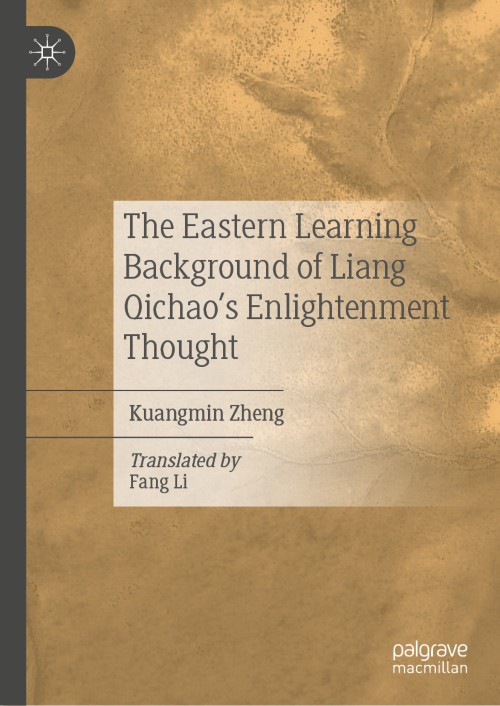
The Eastern Learning Background of Liang Qichao’s Enlightenment Thought [electronic resource] / by Kuangmin Zheng.
Erişim Adresi
ISBN
9789819633456
Dil Kodu
İngilizce
Yer Numarası
DK/6344
Yazar
Basım Bildirimi
1st ed. 2025.
Yayın Bilgisi
Singapore : Springer Nature Singapore : Imprint: Palgrave Macmillan, 2025.
Fiziksel Niteleme
XX, 385 p. 14 illus. online resource.
İçindekiler Notu
1. Liang Qichao’s View of Japan during the Hundred Days’ Reform Period and the Situation after Exile in Japan -- 2. Fukuzawa Yukichi's Enlightenment Thought and Liang Qichao -- 3. Nakamura Masanao's Self Help and On Liberty and Liang Qichao's Thought of “Renewing the People” -- 4. Japanese Civil Rights Thought and Liang Qichao -- 5. Japanese Nationalism and Liang Qichao -- 6. The Theory of the State as an Organic Entity and Liang Qichao -- 7. Conclusion.
Özet, vb.
This book provides an in-depth exploration of how Liang Qichao's political and intellectual thought was shaped by Japanese influences during his exile, offering a fresh perspective on modern Chinese intellectual history. It examines Liang’s engagement with Japan’s enlightenment thinkers, such as Fukuzawa Yukichi and Nakamura Masanao, and explores how their concepts of individual independence, civil rights, and nationalism informed Liang’s ideas on modernization, “renewing the people", and building a nation-state. The book adopts a comparative and interdisciplinary approach, combining historical analysis with intellectual history, which brings a new dimension to understanding the cross-cultural exchange between China and Japan. By tracing Liang’s adoption and reinterpretation of key ideas, such as the distinction between the form and spirit of civilization and the organic theory of the state, this study highlights his unique synthesis of traditional Chinese thought with modern global ideologies. Key features include its focus on underexplored Japanese influences on Liang Qichao and its detailed examination of the intellectual exchange between East Asian modernities. Rich in original sources and comparative insights, the book sheds light on Liang’s pivotal role in shaping modern Chinese thought. This book is intended for scholars, students, and general readers interested in East Asian studies, modern Chinese history, and intellectual history. Its accessible content level and interdisciplinary focus make it an essential resource for understanding the cultural and intellectual currents that defined modern East Asia. Kuangmin Zheng, a Ph.D. in literature, is a researcher in the Institute of Modern History CASS. He studies the Sino-Japan political history in the end of the Qing dynasty and the beginning of the Republic of China, the academic history, and the intellectual and cultural history. He graduated from Renmin University of China, and then he went to Japan for study and was awarded the Ph.D. in literature in the Daito Bunka University.
Konu
Asia __ History.
China __ History.
Japan __ History.
Philosophy __ History.
Civilization __ History.
Asian History.
History of China.
History of Japan.
History of Philosophy.
Cultural History.
China __ History.
Japan __ History.
Philosophy __ History.
Civilization __ History.
Asian History.
History of China.
History of Japan.
History of Philosophy.
Cultural History.
Kurum Adı

Eseri Alıntıla
Referansları kullanmadan önce gözden geçirmeniz ve varsa gerekli düzeltmeleri yapmanız önerilir.
Dijital Kaynak
MARC Görünümü
LEADER 05582nam a22006615i 4500
001 805021
003 TR_AnAIT
005 20260126235257
007 cr nn 008mamaa
008 250430s2025 si | s |||| 0|eng d
020 |a9789819633456|9978-981-96-3345-6
024 7 |a10.1007/978-981-96-3345-6|2doi
041 |aeng
049 |aTürk Tarih Kurumu Kütüphanesi
050 4|aDS1-937
072 7|aHBJF|2bicssc
072 7|aHIS003000|2bisacsh
072 7|aNHF|2thema
082 04|a950|223
090 |aDK/6344
100 1 |aZheng, Kuangmin.|eauthor.|4aut|4http://id.loc.gov/vocabulary/relators/aut
245 14|aThe Eastern Learning Background of Liang Qichao’s Enlightenment Thought|h[electronic resource] /|cby Kuangmin Zheng.
250 |a1st ed. 2025.
264 1|aSingapore :|bSpringer Nature Singapore :|bImprint: Palgrave Macmillan,|c2025.
300 |aXX, 385 p. 14 illus.|bonline resource.
336 |atext|btxt|2rdacontent
337 |acomputer|bc|2rdamedia
338 |aonline resource|bcr|2rdacarrier
341 0 |bTable of contents navigation|2onix
341 0 |bSingle logical reading order|2onix
341 0 |bShort alternative textual descriptions|2onix
341 0 |bUse of color is not sole means of conveying information|2onix
341 0 |bUse of high contrast between text and background color|2onix
341 0 |bNext / Previous structural navigation|2onix
341 0 |bAll non-decorative content supports reading without sight|2onix
347 |atext file|bPDF|2rda
505 0 |a1. Liang Qichao’s View of Japan during the Hundred Days’ Reform Period and the Situation after Exile in Japan -- 2. Fukuzawa Yukichi's Enlightenment Thought and Liang Qichao -- 3. Nakamura Masanao's Self Help and On Liberty and Liang Qichao's Thought of “Renewing the People” -- 4. Japanese Civil Rights Thought and Liang Qichao -- 5. Japanese Nationalism and Liang Qichao -- 6. The Theory of the State as an Organic Entity and Liang Qichao -- 7. Conclusion.
520 |aThis book provides an in-depth exploration of how Liang Qichao's political and intellectual thought was shaped by Japanese influences during his exile, offering a fresh perspective on modern Chinese intellectual history. It examines Liang’s engagement with Japan’s enlightenment thinkers, such as Fukuzawa Yukichi and Nakamura Masanao, and explores how their concepts of individual independence, civil rights, and nationalism informed Liang’s ideas on modernization, “renewing the people", and building a nation-state. The book adopts a comparative and interdisciplinary approach, combining historical analysis with intellectual history, which brings a new dimension to understanding the cross-cultural exchange between China and Japan. By tracing Liang’s adoption and reinterpretation of key ideas, such as the distinction between the form and spirit of civilization and the organic theory of the state, this study highlights his unique synthesis of traditional Chinese thought with modern global ideologies. Key features include its focus on underexplored Japanese influences on Liang Qichao and its detailed examination of the intellectual exchange between East Asian modernities. Rich in original sources and comparative insights, the book sheds light on Liang’s pivotal role in shaping modern Chinese thought. This book is intended for scholars, students, and general readers interested in East Asian studies, modern Chinese history, and intellectual history. Its accessible content level and interdisciplinary focus make it an essential resource for understanding the cultural and intellectual currents that defined modern East Asia. Kuangmin Zheng, a Ph.D. in literature, is a researcher in the Institute of Modern History CASS. He studies the Sino-Japan political history in the end of the Qing dynasty and the beginning of the Republic of China, the academic history, and the intellectual and cultural history. He graduated from Renmin University of China, and then he went to Japan for study and was awarded the Ph.D. in literature in the Daito Bunka University.
532 8 |aAccessibility summary: This PDF does not fully comply with PDF/UA standards, but does feature limited screen reader support, described non-text content (images, graphs), bookmarks for easy navigation and searchable, selectable text. Users of assistive technologies may experience difficulty navigating or interpreting content in this document. We recognize the importance of accessibility, and we welcome queries about accessibility for any of our products. If you have a question or an access need, please get in touch with us at accessibilitysupport@springernature.com.
532 8 |aNo reading system accessibility options actively disabled
532 8 |aPublisher contact for further accessibility information: accessibilitysupport@springernature.com
650 0|aAsia|xHistory.
650 0|aChina|xHistory.
650 0|aJapan|xHistory.
650 0|aPhilosophy|xHistory.
650 0|aCivilization|xHistory.
650 14|aAsian History.
650 24|aHistory of China.
650 24|aHistory of Japan.
650 24|aHistory of Philosophy.
650 24|aCultural History.
710 2 |aSpringerLink (Online service)
773 0 |tSpringer Nature eBook
776 08|iPrinted edition:|z9789819633449
776 08|iPrinted edition:|z9789819633463
776 08|iPrinted edition:|z9789819633470
856 40|uhttps://doi.org/10.1007/978-981-96-3345-6
912 |aZDB-2-HTY
912 |aZDB-2-SXH
950 |aHistory (SpringerNature-41172)
950 |aHistory (R0) (SpringerNature-43722)
001 805021
003 TR_AnAIT
005 20260126235257
007 cr nn 008mamaa
008 250430s2025 si | s |||| 0|eng d
020 |a9789819633456|9978-981-96-3345-6
024 7 |a10.1007/978-981-96-3345-6|2doi
041 |aeng
049 |aTürk Tarih Kurumu Kütüphanesi
050 4|aDS1-937
072 7|aHBJF|2bicssc
072 7|aHIS003000|2bisacsh
072 7|aNHF|2thema
082 04|a950|223
090 |aDK/6344
100 1 |aZheng, Kuangmin.|eauthor.|4aut|4http://id.loc.gov/vocabulary/relators/aut
245 14|aThe Eastern Learning Background of Liang Qichao’s Enlightenment Thought|h[electronic resource] /|cby Kuangmin Zheng.
250 |a1st ed. 2025.
264 1|aSingapore :|bSpringer Nature Singapore :|bImprint: Palgrave Macmillan,|c2025.
300 |aXX, 385 p. 14 illus.|bonline resource.
336 |atext|btxt|2rdacontent
337 |acomputer|bc|2rdamedia
338 |aonline resource|bcr|2rdacarrier
341 0 |bTable of contents navigation|2onix
341 0 |bSingle logical reading order|2onix
341 0 |bShort alternative textual descriptions|2onix
341 0 |bUse of color is not sole means of conveying information|2onix
341 0 |bUse of high contrast between text and background color|2onix
341 0 |bNext / Previous structural navigation|2onix
341 0 |bAll non-decorative content supports reading without sight|2onix
347 |atext file|bPDF|2rda
505 0 |a1. Liang Qichao’s View of Japan during the Hundred Days’ Reform Period and the Situation after Exile in Japan -- 2. Fukuzawa Yukichi's Enlightenment Thought and Liang Qichao -- 3. Nakamura Masanao's Self Help and On Liberty and Liang Qichao's Thought of “Renewing the People” -- 4. Japanese Civil Rights Thought and Liang Qichao -- 5. Japanese Nationalism and Liang Qichao -- 6. The Theory of the State as an Organic Entity and Liang Qichao -- 7. Conclusion.
520 |aThis book provides an in-depth exploration of how Liang Qichao's political and intellectual thought was shaped by Japanese influences during his exile, offering a fresh perspective on modern Chinese intellectual history. It examines Liang’s engagement with Japan’s enlightenment thinkers, such as Fukuzawa Yukichi and Nakamura Masanao, and explores how their concepts of individual independence, civil rights, and nationalism informed Liang’s ideas on modernization, “renewing the people", and building a nation-state. The book adopts a comparative and interdisciplinary approach, combining historical analysis with intellectual history, which brings a new dimension to understanding the cross-cultural exchange between China and Japan. By tracing Liang’s adoption and reinterpretation of key ideas, such as the distinction between the form and spirit of civilization and the organic theory of the state, this study highlights his unique synthesis of traditional Chinese thought with modern global ideologies. Key features include its focus on underexplored Japanese influences on Liang Qichao and its detailed examination of the intellectual exchange between East Asian modernities. Rich in original sources and comparative insights, the book sheds light on Liang’s pivotal role in shaping modern Chinese thought. This book is intended for scholars, students, and general readers interested in East Asian studies, modern Chinese history, and intellectual history. Its accessible content level and interdisciplinary focus make it an essential resource for understanding the cultural and intellectual currents that defined modern East Asia. Kuangmin Zheng, a Ph.D. in literature, is a researcher in the Institute of Modern History CASS. He studies the Sino-Japan political history in the end of the Qing dynasty and the beginning of the Republic of China, the academic history, and the intellectual and cultural history. He graduated from Renmin University of China, and then he went to Japan for study and was awarded the Ph.D. in literature in the Daito Bunka University.
532 8 |aAccessibility summary: This PDF does not fully comply with PDF/UA standards, but does feature limited screen reader support, described non-text content (images, graphs), bookmarks for easy navigation and searchable, selectable text. Users of assistive technologies may experience difficulty navigating or interpreting content in this document. We recognize the importance of accessibility, and we welcome queries about accessibility for any of our products. If you have a question or an access need, please get in touch with us at accessibilitysupport@springernature.com.
532 8 |aNo reading system accessibility options actively disabled
532 8 |aPublisher contact for further accessibility information: accessibilitysupport@springernature.com
650 0|aAsia|xHistory.
650 0|aChina|xHistory.
650 0|aJapan|xHistory.
650 0|aPhilosophy|xHistory.
650 0|aCivilization|xHistory.
650 14|aAsian History.
650 24|aHistory of China.
650 24|aHistory of Japan.
650 24|aHistory of Philosophy.
650 24|aCultural History.
710 2 |aSpringerLink (Online service)
773 0 |tSpringer Nature eBook
776 08|iPrinted edition:|z9789819633449
776 08|iPrinted edition:|z9789819633463
776 08|iPrinted edition:|z9789819633470
856 40|uhttps://doi.org/10.1007/978-981-96-3345-6
912 |aZDB-2-HTY
912 |aZDB-2-SXH
950 |aHistory (SpringerNature-41172)
950 |aHistory (R0) (SpringerNature-43722)
Materyaller
Depodan talep edilen materyal sadece kütüphane içerisinde kullanılmaktadır.
Materyal dışarıya ödünç verilmemektedir.
