

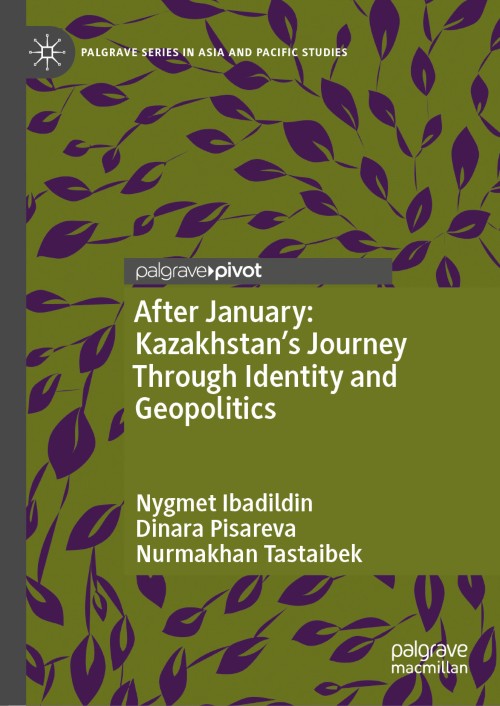
After January: Kazakhstan's Journey Through Identity and Geopolitics [electronic resource] / by Nygmet Ibadildin, Dinara Pisareva, Nurmakhan Tastaibek.
Erişim Adresi
ISBN
9789819687381
Dil Kodu
İngilizce
Yer Numarası
DK/6436
Yazar
Basım Bildirimi
1st ed. 2025.
Yayın Bilgisi
Singapore : Springer Nature Singapore : Imprint: Palgrave Macmillan, 2025.
Fiziksel Niteleme
V, 101 p. online resource.
Dizi
Palgrave Series in Asia and Pacific Studies, 2662-7930
İçindekiler Notu
Chapter 1. Introduction -- Chapter 2: Conflicting Narratives: Two Approaches To Understanding Kazakhstan's Soviet Past -- Chapter 3: Shifting Dynamics: Kazakhstan And Russia In The Post-2022 Landscape -- Chapter 4: Soviet Nostalgia And Attitudes Toward Russia Before And After 2022 -- Chapter 5: In Pursuit Of Eurasian And Pan-Turkic Alliances.
Özet, vb.
This book examines Kazakhstan's evolving identity and geopolitical positioning following the January 2022 protests and the Russia-Ukraine conflict. Tracing Kazakhstan’s complex ties with Russia from Tsarist colonization to Soviet legacies, we analyze how national memory, economic governance, and foreign policy are shaped by postcolonial dynamics. The “social contract” under Nazarbayev and Tokayev emphasized stability over reform, but recent crises have forced recalibration. Using postcolonial theory, we explore Kazakhstan’s diplomatic balancing act between Russia, the West, and emerging Turkic alliances. From the trauma of the Asharshylyk famine to reforms after Qandy Qantar, this book offers a comprehensive account of Kazakhstan’s redefined identity, growing regional assertiveness, and the long shadow of empire in its domestic and foreign policy choices. Nygmet Ibadildin is Assistant Professor of Political Science at KIMEP University. He earned his PhD from the University of Tampere and previously worked in journalism, including as editor-in-chief of Energy of Kazakhstan. His research focuses on post-Soviet institutional development, resource politics, and authoritarian resilience. Dinara Pisareva is Assistant Professor at Nazarbayev University. She holds a PhD from the Australian National University. Her research investigates citizen-state relations in authoritarian regimes, especially during crises. She is currently studying public responses to the January 2022 events and state-led narratives in Kazakhstan. Nurmakhan Tastaibek holds an MA from Nazarbayev University. His research examines authoritarian governance, public opinion, and identity in Central Asia. He co-authored a chapter on state framing of the January 2022 unrest and is conducting research on LGBTQI+ attitudes in Kazakhstan.
Konu
Russia __ History.
Europe, Eastern __ History.
Soviet Union __ History.
Poststructuralism.
Political science.
Russian, Soviet, and East European History.
Poststructuralism.
Political Theory.
Europe, Eastern __ History.
Soviet Union __ History.
Poststructuralism.
Political science.
Russian, Soviet, and East European History.
Poststructuralism.
Political Theory.
Diğer Yazarlar
Kurum Adı
Eseri Alıntıla
Referansları kullanmadan önce gözden geçirmeniz ve varsa gerekli düzeltmeleri yapmanız önerilir.
Dijital Kaynak
MARC Görünümü
LEADER 05616nam a22007095i 4500
001 805113
003 TR_AnAIT
005 20260126235458
007 cr nn 008mamaa
008 251001s2025 si | s |||| 0|eng d
020 |a9789819687381|9978-981-96-8738-1
024 7 |a10.1007/978-981-96-8738-1|2doi
041 |aeng
049 |aTürk Tarih Kurumu Kütüphanesi
050 4|aDK1-949.5
050 4|aDJK1-77
072 7|aHBJ|2bicssc
072 7|aHIS032000|2bisacsh
072 7|aNHQ|2thema
082 04|a947|223
090 |aDK/6436
100 1 |aIbadildin, Nygmet.|eauthor.|4aut|4http://id.loc.gov/vocabulary/relators/aut
245 10|aAfter January: Kazakhstan's Journey Through Identity and Geopolitics|h[electronic resource] /|cby Nygmet Ibadildin, Dinara Pisareva, Nurmakhan Tastaibek.
250 |a1st ed. 2025.
264 1|aSingapore :|bSpringer Nature Singapore :|bImprint: Palgrave Macmillan,|c2025.
300 |aV, 101 p.|bonline resource.
336 |atext|btxt|2rdacontent
337 |acomputer|bc|2rdamedia
338 |aonline resource|bcr|2rdacarrier
341 0 |bPDF/UA-1|2onix
341 0 |bTable of contents navigation|2onix
341 0 |bSingle logical reading order|2onix
341 0 |bShort alternative textual descriptions|2onix
341 0 |bUse of color is not sole means of conveying information|2onix
341 0 |bUse of high contrast between text and background color|2onix
341 0 |bNext / Previous structural navigation|2onix
341 0 |bAll non-decorative content supports reading without sight|2onix
347 |atext file|bPDF|2rda
490 1 |aPalgrave Series in Asia and Pacific Studies,|x2662-7930
505 0 |aChapter 1. Introduction -- Chapter 2: Conflicting Narratives: Two Approaches To Understanding Kazakhstan's Soviet Past -- Chapter 3: Shifting Dynamics: Kazakhstan And Russia In The Post-2022 Landscape -- Chapter 4: Soviet Nostalgia And Attitudes Toward Russia Before And After 2022 -- Chapter 5: In Pursuit Of Eurasian And Pan-Turkic Alliances.
520 |aThis book examines Kazakhstan's evolving identity and geopolitical positioning following the January 2022 protests and the Russia-Ukraine conflict. Tracing Kazakhstan’s complex ties with Russia from Tsarist colonization to Soviet legacies, we analyze how national memory, economic governance, and foreign policy are shaped by postcolonial dynamics. The “social contract” under Nazarbayev and Tokayev emphasized stability over reform, but recent crises have forced recalibration. Using postcolonial theory, we explore Kazakhstan’s diplomatic balancing act between Russia, the West, and emerging Turkic alliances. From the trauma of the Asharshylyk famine to reforms after Qandy Qantar, this book offers a comprehensive account of Kazakhstan’s redefined identity, growing regional assertiveness, and the long shadow of empire in its domestic and foreign policy choices. Nygmet Ibadildin is Assistant Professor of Political Science at KIMEP University. He earned his PhD from the University of Tampere and previously worked in journalism, including as editor-in-chief of Energy of Kazakhstan. His research focuses on post-Soviet institutional development, resource politics, and authoritarian resilience. Dinara Pisareva is Assistant Professor at Nazarbayev University. She holds a PhD from the Australian National University. Her research investigates citizen-state relations in authoritarian regimes, especially during crises. She is currently studying public responses to the January 2022 events and state-led narratives in Kazakhstan. Nurmakhan Tastaibek holds an MA from Nazarbayev University. His research examines authoritarian governance, public opinion, and identity in Central Asia. He co-authored a chapter on state framing of the January 2022 unrest and is conducting research on LGBTQI+ attitudes in Kazakhstan.
532 8 |aAccessibility summary: This PDF has been created in accordance with the PDF/UA-1 standard to enhance accessibility, including screen reader support, described non-text content (images, graphs), bookmarks for easy navigation, keyboard-friendly links and forms and searchable, selectable text. We recognize the importance of accessibility, and we welcome queries about accessibility for any of our products. If you have a question or an access need, please get in touch with us at accessibilitysupport@springernature.com. Please note that a more accessible version of this eBook is available as ePub.
532 8 |aNo reading system accessibility options actively disabled
532 8 |aPublisher contact for further accessibility information: accessibilitysupport@springernature.com
650 0|aRussia|xHistory.
650 0|aEurope, Eastern|xHistory.
650 0|aSoviet Union|xHistory.
650 0|aPoststructuralism.
650 0|aPolitical science.
650 14|aRussian, Soviet, and East European History.
650 24|aPoststructuralism.
650 24|aPolitical Theory.
700 1 |aPisareva, Dinara.|eauthor.|4aut|4http://id.loc.gov/vocabulary/relators/aut
700 1 |aTastaibek, Nurmakhan.|eauthor.|4aut|4http://id.loc.gov/vocabulary/relators/aut
710 2 |aSpringerLink (Online service)
773 0 |tSpringer Nature eBook
776 08|iPrinted edition:|z9789819687374
776 08|iPrinted edition:|z9789819687398
776 08|iPrinted edition:|z9789819687404
830 0|aPalgrave Series in Asia and Pacific Studies,|x2662-7930
856 40|uhttps://doi.org/10.1007/978-981-96-8738-1
912 |aZDB-2-HTY
912 |aZDB-2-SXH
950 |aHistory (SpringerNature-41172)
950 |aHistory (R0) (SpringerNature-43722)
001 805113
003 TR_AnAIT
005 20260126235458
007 cr nn 008mamaa
008 251001s2025 si | s |||| 0|eng d
020 |a9789819687381|9978-981-96-8738-1
024 7 |a10.1007/978-981-96-8738-1|2doi
041 |aeng
049 |aTürk Tarih Kurumu Kütüphanesi
050 4|aDK1-949.5
050 4|aDJK1-77
072 7|aHBJ|2bicssc
072 7|aHIS032000|2bisacsh
072 7|aNHQ|2thema
082 04|a947|223
090 |aDK/6436
100 1 |aIbadildin, Nygmet.|eauthor.|4aut|4http://id.loc.gov/vocabulary/relators/aut
245 10|aAfter January: Kazakhstan's Journey Through Identity and Geopolitics|h[electronic resource] /|cby Nygmet Ibadildin, Dinara Pisareva, Nurmakhan Tastaibek.
250 |a1st ed. 2025.
264 1|aSingapore :|bSpringer Nature Singapore :|bImprint: Palgrave Macmillan,|c2025.
300 |aV, 101 p.|bonline resource.
336 |atext|btxt|2rdacontent
337 |acomputer|bc|2rdamedia
338 |aonline resource|bcr|2rdacarrier
341 0 |bPDF/UA-1|2onix
341 0 |bTable of contents navigation|2onix
341 0 |bSingle logical reading order|2onix
341 0 |bShort alternative textual descriptions|2onix
341 0 |bUse of color is not sole means of conveying information|2onix
341 0 |bUse of high contrast between text and background color|2onix
341 0 |bNext / Previous structural navigation|2onix
341 0 |bAll non-decorative content supports reading without sight|2onix
347 |atext file|bPDF|2rda
490 1 |aPalgrave Series in Asia and Pacific Studies,|x2662-7930
505 0 |aChapter 1. Introduction -- Chapter 2: Conflicting Narratives: Two Approaches To Understanding Kazakhstan's Soviet Past -- Chapter 3: Shifting Dynamics: Kazakhstan And Russia In The Post-2022 Landscape -- Chapter 4: Soviet Nostalgia And Attitudes Toward Russia Before And After 2022 -- Chapter 5: In Pursuit Of Eurasian And Pan-Turkic Alliances.
520 |aThis book examines Kazakhstan's evolving identity and geopolitical positioning following the January 2022 protests and the Russia-Ukraine conflict. Tracing Kazakhstan’s complex ties with Russia from Tsarist colonization to Soviet legacies, we analyze how national memory, economic governance, and foreign policy are shaped by postcolonial dynamics. The “social contract” under Nazarbayev and Tokayev emphasized stability over reform, but recent crises have forced recalibration. Using postcolonial theory, we explore Kazakhstan’s diplomatic balancing act between Russia, the West, and emerging Turkic alliances. From the trauma of the Asharshylyk famine to reforms after Qandy Qantar, this book offers a comprehensive account of Kazakhstan’s redefined identity, growing regional assertiveness, and the long shadow of empire in its domestic and foreign policy choices. Nygmet Ibadildin is Assistant Professor of Political Science at KIMEP University. He earned his PhD from the University of Tampere and previously worked in journalism, including as editor-in-chief of Energy of Kazakhstan. His research focuses on post-Soviet institutional development, resource politics, and authoritarian resilience. Dinara Pisareva is Assistant Professor at Nazarbayev University. She holds a PhD from the Australian National University. Her research investigates citizen-state relations in authoritarian regimes, especially during crises. She is currently studying public responses to the January 2022 events and state-led narratives in Kazakhstan. Nurmakhan Tastaibek holds an MA from Nazarbayev University. His research examines authoritarian governance, public opinion, and identity in Central Asia. He co-authored a chapter on state framing of the January 2022 unrest and is conducting research on LGBTQI+ attitudes in Kazakhstan.
532 8 |aAccessibility summary: This PDF has been created in accordance with the PDF/UA-1 standard to enhance accessibility, including screen reader support, described non-text content (images, graphs), bookmarks for easy navigation, keyboard-friendly links and forms and searchable, selectable text. We recognize the importance of accessibility, and we welcome queries about accessibility for any of our products. If you have a question or an access need, please get in touch with us at accessibilitysupport@springernature.com. Please note that a more accessible version of this eBook is available as ePub.
532 8 |aNo reading system accessibility options actively disabled
532 8 |aPublisher contact for further accessibility information: accessibilitysupport@springernature.com
650 0|aRussia|xHistory.
650 0|aEurope, Eastern|xHistory.
650 0|aSoviet Union|xHistory.
650 0|aPoststructuralism.
650 0|aPolitical science.
650 14|aRussian, Soviet, and East European History.
650 24|aPoststructuralism.
650 24|aPolitical Theory.
700 1 |aPisareva, Dinara.|eauthor.|4aut|4http://id.loc.gov/vocabulary/relators/aut
700 1 |aTastaibek, Nurmakhan.|eauthor.|4aut|4http://id.loc.gov/vocabulary/relators/aut
710 2 |aSpringerLink (Online service)
773 0 |tSpringer Nature eBook
776 08|iPrinted edition:|z9789819687374
776 08|iPrinted edition:|z9789819687398
776 08|iPrinted edition:|z9789819687404
830 0|aPalgrave Series in Asia and Pacific Studies,|x2662-7930
856 40|uhttps://doi.org/10.1007/978-981-96-8738-1
912 |aZDB-2-HTY
912 |aZDB-2-SXH
950 |aHistory (SpringerNature-41172)
950 |aHistory (R0) (SpringerNature-43722)
Materyaller
Depodan talep edilen materyal sadece kütüphane içerisinde kullanılmaktadır.
Materyal dışarıya ödünç verilmemektedir.
Materyal dışarıya ödünç verilmemektedir.
