LEADER 04066nam a22005175i 4500
001 805335
003 TR_AnAIT
005 20260126235928
007 cr nn 008mamaa
008 121227s1979 ne | s |||| 0|eng d
020 |a9789400988262|9978-94-009-8826-2
024 7 |a10.1007/978-94-009-8826-2|2doi
041 |aeng
049 |aTürk Tarih Kurumu Kütüphanesi
050 4|aD1-2027
072 7|aHB|2bicssc
072 7|aHBAH|2bicssc
072 7|aHIS000000|2bisacsh
072 7|aNH|2thema
072 7|aNHAH|2thema
082 04|a900|223
090 |aDK/6655
100 1 |aWilson, Charles.|eauthor.|4aut|4http://id.loc.gov/vocabulary/relators/aut
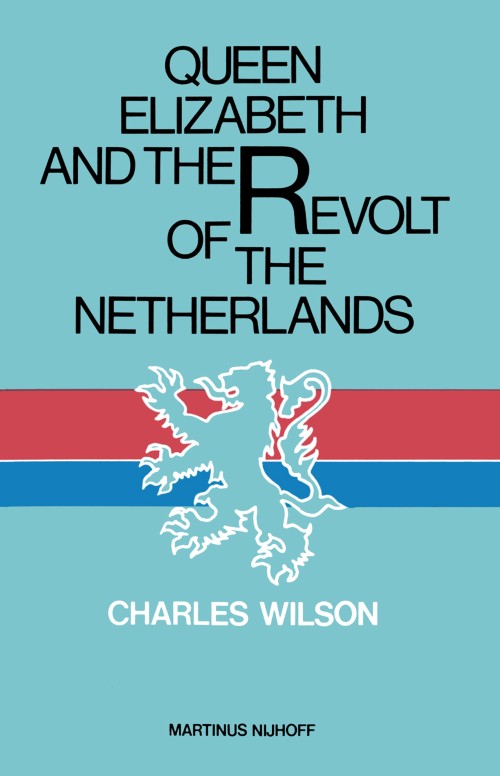
245 10|aQueen Elizabeth and the Revolt of the Netherlands|h[electronic resource] /|cby Charles Wilson.
250 |a1st ed. 1979.
264 1|aDordrecht :|bSpringer Netherlands :|bImprint: Springer,|c1979.
300 |aXX, 168 p. 4 illus.|bonline resource.
336 |atext|btxt|2rdacontent
337 |acomputer|bc|2rdamedia
338 |aonline resource|bcr|2rdacarrier
347 |atext file|bPDF|2rda
505 0 |a1. English Intervention and the Pattern of Revolt -- 2. International Peace and Civil War -- 3. The Queen, the Prince and the Crisis of the Nobility -- 4. The Loss of the South -- 5. The North Preserved -- 6. Relations Transformed -- Conclusion -- Notes -- A Note on Sources.
520 |aMy first thanks must go to the Electors to Ford's Lectureship in English History in the University of Oxford, who honoured me with the invitation to discharge that formidable responsibility in 1969, generously interpreting the statute so as to allow me to deal with a subject which contained nearly as much Netherlands as it did English history. To Hugh Trevor-Roper, Regius Professor of Modern History in the University of Oxford, and his fellow Electors, I am grateful for much encouragement, guidance and hospitality. The colleagues and pupils upon whom I have from time to time inflicted discussion of problems arising from my subject are far too numerous to be thanked individually. Two must nevertheless be singled out. Vivian Fisher of Jesus College, Cambridge, very kindly read the completed manuscript, and I have benefited by a number of characteristically penetrating comments and suggestions which he made. Geoffrey Parker, Fellow of Christ's College, generously allowed me to make use of his unique knowledge of the Spanish, French and Italian archives to check and supplement my own information. I am deeply grateful to both. Finally, it will be evident that quite apart from my own researches these lectures owe a heavy debt to many scholars, Dutch, Belgian, American and British especially, who have worked in this or related fields of inquiry. I am not less indebted to those from whose interpretations I have ventured to differ than to those with whom I have found myself in agreement.
532 8 |aAccessibility summary: This PDF is not accessible. It is based on scanned pages and does not support features such as screen reader compatibility or described non-text content (images, graphs etc). However, it likely supports searchable and selectable text based on OCR (Optical Character Recognition). Users with accessibility needs may not be able to use this content effectively. Please contact us at accessibilitysupport@springernature.com if you require assistance or an alternative format.
532 8 |aInaccessible, or known limited accessibility
532 8 |aNo reading system accessibility options actively disabled
532 8 |aPublisher contact for further accessibility information: accessibilitysupport@springernature.com
650 0|aHistory.
650 14|aHistory.
710 2 |aSpringerLink (Online service)
773 0 |tSpringer Nature eBook
776 08|iPrinted edition:|z9789024722730
776 08|iPrinted edition:|z9789400988279
856 40|uhttps://doi.org/10.1007/978-94-009-8826-2
912 |aZDB-2-SHU
912 |aZDB-2-SXH
912 |aZDB-2-BAE
950 |aHumanities, Social Sciences and Law (SpringerNature-11648)
950 |aHistory (R0) (SpringerNature-43722)