LEADER 04558nam a22005895i 4500
001 805338
003 TR_AnAIT
005 20260126235931
007 cr nn 008mamaa
008 121227s1993 xxu| s |||| 0|eng d
020 |a9781461383123|9978-1-4613-8312-3
024 7 |a10.1007/978-1-4613-8312-3|2doi
041 |aeng
049 |aTürk Tarih Kurumu Kütüphanesi
050 4|aHM623
072 7|aJFC|2bicssc
072 7|aSOC002010|2bisacsh
072 7|aJBCC|2thema
082 04|a306|223
090 |aDK/6658
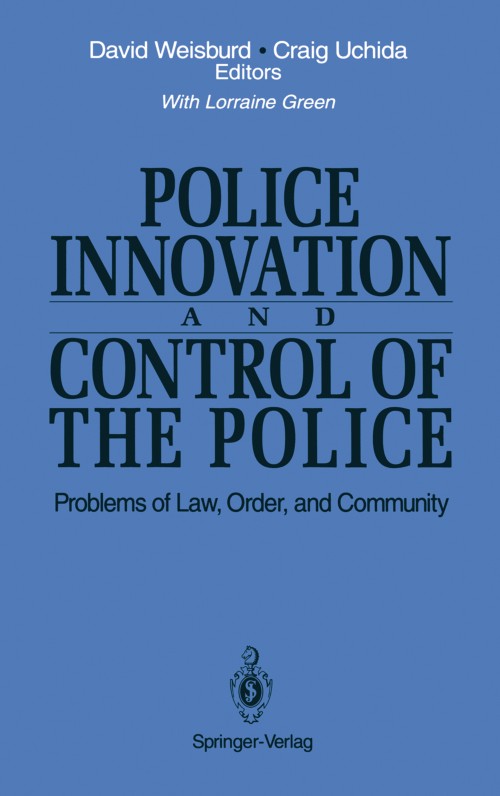
245 10|aPolice Innovation and Control of the Police|h[electronic resource] :|bProblems of Law, Order, and Community /|cedited by David Weisburd, Craig Uchida.
250 |a1st ed. 1993.
264 1|aNew York, NY :|bSpringer New York :|bImprint: Springer,|c1993.
300 |aX, 223 p.|bonline resource.
336 |atext|btxt|2rdacontent
337 |acomputer|bc|2rdamedia
338 |aonline resource|bcr|2rdacarrier
347 |atext file|bPDF|2rda
505 0 |aI Introduction -- 1. Raising Questions of Law and Order -- II The Development of Legal Control of the Police -- 2. Justice Without Trial -- 3. Historical Roots of the Legal Control of Police Behavior -- III Changing Trends in Police Innovation: Toward Community-Based Policies of Crime Control -- 4. Alternative Futures for Policing -- 5. Community Policing and the Rule of Law -- 6. The Challenge of Reinventing Police and Community -- IV Problems of Law, Order, and Community in Comparative Context -- 7. The Soviet Police and the Rule of Law -- 8. Law Enforcement Innovation and the Rule of Law: Comparative and Historical Perspectives -- V Crime Control and Police Control: Future Trends and Problems -- 9. Why Crime Control is Not Reactionary -- 10. Justice Without Trial Revisited -- Author Index.
520 |aPolice Innovation and Control of the Police: Problems of Law, Order and Community brings together an impressive array of scholars and analysts to examine the impact of the development of crime control strategies on problems of police corruption and abuse. The text provides an historical overview of the development of legal control of the police, and examines the challenges that recent innovations, such as community or problem oriented policing present to the traditional, historical mechanisms for maintaining control of the police. Additionally, a comparative perspective is featured that draws upon the experiences of the Gorbachev era in the Soviet Union as well as on the history of European law enforcement over the last century. This book is instrumental for encouraging discussion and debate of police innovation and its impact on the ability of society to control the police abuse. In light of the Los Angeles riots of the Spring of 1992, scholars, practitioners, and students of crime prevention studies, criminology, and psychology will find this volume timely, topical, and provocative.
532 8 |aAccessibility summary: This PDF is not accessible. It is based on scanned pages and does not support features such as screen reader compatibility or described non-text content (images, graphs etc). However, it likely supports searchable and selectable text based on OCR (Optical Character Recognition). Users with accessibility needs may not be able to use this content effectively. Please contact us at accessibilitysupport@springernature.com if you require assistance or an alternative format.
532 8 |aInaccessible, or known limited accessibility
532 8 |aNo reading system accessibility options actively disabled
532 8 |aPublisher contact for further accessibility information: accessibilitysupport@springernature.com
650 0|aCulture|xStudy and teaching.
650 0|aMedical sciences.
650 0|aPsychology.
650 0|aLaw.
650 14|aCultural Studies.
650 24|aHealth Sciences.
650 24|aBehavioral Sciences and Psychology.
650 24|aFundamentals of Law.
700 1 |aWeisburd, David.|eeditor.|4edt|4http://id.loc.gov/vocabulary/relators/edt
700 1 |aUchida, Craig.|eeditor.|4edt|4http://id.loc.gov/vocabulary/relators/edt
710 2 |aSpringerLink (Online service)
773 0 |tSpringer Nature eBook
776 08|iPrinted edition:|z9780387940137
776 08|iPrinted edition:|z9781461383130
776 08|iPrinted edition:|z9781461383147
856 40|uhttps://doi.org/10.1007/978-1-4613-8312-3
912 |aZDB-2-SHU
912 |aZDB-2-SXS
912 |aZDB-2-BAE
950 |aHumanities, Social Sciences and Law (SpringerNature-11648)
950 |aSocial Sciences (R0) (SpringerNature-43726)