LEADER 04117nam a22004575i 4500
001 805692
003 TR_AnAIT
005 20260127000625
007 cr nn 008mamaa
008 130420s2013 ne | s |||| 0|eng d
020 |a9789462092037|9978-94-6209-203-7
024 7 |a10.1007/978-94-6209-203-7|2doi
041 |aeng
049 |aTürk Tarih Kurumu Kütüphanesi
050 4|aL1-991
072 7|aJN|2bicssc
072 7|aEDU000000|2bisacsh
072 7|aJN|2thema
082 04|a370|223
090 |aDK/7007
245 10|aConstructing Representations to Learn in Science|h[electronic resource] /|cedited by Russell Tytler, Vaughan Prain, Peter Hubber, Bruce Waldrip.
250 |a1st ed. 2013.
264 1|aRotterdam :|bSensePublishers :|bImprint: SensePublishers,|c2013.
300 |aVIII, 210 p.|bonline resource.
336 |atext|btxt|2rdacontent
337 |acomputer|bc|2rdamedia
338 |aonline resource|bcr|2rdacarrier
347 |atext file|bPDF|2rda
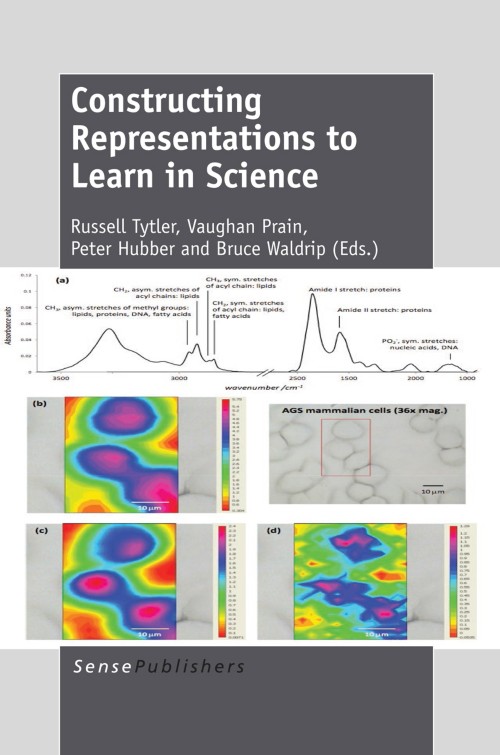
520 |aConstructing Representations to Learn in Science Current research into student learning in science has shifted attention from the traditional cognitivist perspectives of conceptual change to socio-cultural and semiotic perspectives that characterize learning in terms of induction into disciplinary literacy practices. This book builds on recent interest in the role of representations in learning to argue for a pedagogical practice based on students actively generating and exploring representations. The book describes a sustained inquiry in which the authors worked with primary and secondary teachers of science, on key topics identified as problematic in the research literature. Data from classroom video, teacher interviews and student artifacts were used to develop and validate a set of pedagogical principles and explore student learning and teacher change issues. The authors argue the theoretical and practical case for a representational focus. The pedagogical approach is illustrated and explored in terms of the role of representation to support quality student learning in science. Separate chapters address the implications of this perspective and practice for structuring sequences around different concepts, reasoning and inquiry in science, models and model based reasoning, the nature of concepts and learning, teacher change, and assessment. The authors argue that this representational focus leads to significantly enhanced student learning, and has the effect of offering new and productive perspectives and approaches for a number of contemporary strands of thinking in science education including conceptual change, inquiry, scientific literacy, and a focus on the epistemic nature of science.
532 8 |aAccessibility summary: This PDF eBook is produced by a third-party. We have requested that the file be made accessible and compliant with the European Accessibility Act (EAA). However, we have not been able to fully verify its compliance with recognized accessibility standards (such as PDF/UA or WCAG). For detailed accessibility information, please refer to the original publisher’s website. If you require an accessible version of this content, please contact accessibilitysupport@springernature.com. We are committed to improving accessibility and will work with the publisher to meet your needs wherever possible.
532 8 |aPublisher contact for further accessibility information: accessibilitysupport@springernature.com
650 0|aEducation.
650 14|aEducation.
700 1 |aTytler, Russell.|eeditor.|4edt|4http://id.loc.gov/vocabulary/relators/edt
700 1 |aPrain, Vaughan.|eeditor.|4edt|4http://id.loc.gov/vocabulary/relators/edt
700 1 |aHubber, Peter.|eeditor.|4edt|4http://id.loc.gov/vocabulary/relators/edt
700 1 |aWaldrip, Bruce.|eeditor.|4edt|4http://id.loc.gov/vocabulary/relators/edt
710 2 |aSpringerLink (Online service)
773 0 |tSpringer Nature eBook
856 40|uhttps://doi.org/10.1007/978-94-6209-203-7
912 |aZDB-2-SHU
912 |aZDB-2-SXED
950 |aHumanities, Social Sciences and Law (SpringerNature-11648)
950 |aEducation (R0) (SpringerNature-43721)