LEADER 03866nam a22004455i 4500
001 805732
003 TR_AnAIT
005 20260127000711
007 cr nn 008mamaa
008 140924s2014 ne | s |||| 0|eng d
020 |a9789462098060|9978-94-6209-806-0
024 7 |a10.1007/978-94-6209-806-0|2doi
041 |aeng
049 |aTürk Tarih Kurumu Kütüphanesi
050 4|aL1-991
072 7|aJN|2bicssc
072 7|aEDU000000|2bisacsh
072 7|aJN|2thema
082 04|a370|223
090 |aDK/7047
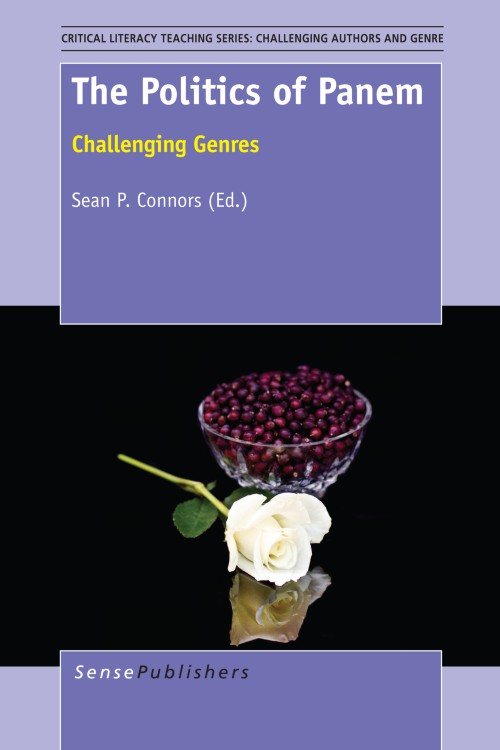
245 14|aThe Politics of Panem|h[electronic resource] :|bChallenging Genres /|cedited by Sean P. Connors.
250 |a1st ed. 2014.
264 1|aRotterdam :|bSensePublishers :|bImprint: SensePublishers,|c2014.
300 |aX, 227 p.|bonline resource.
336 |atext|btxt|2rdacontent
337 |acomputer|bc|2rdamedia
338 |aonline resource|bcr|2rdacarrier
347 |atext file|bPDF|2rda
490 1 |aCritical Literacy Teaching Series: Challenging Authors and Genre
520 |aThe Hunger Games trilogy is a popular culture success. Embraced by adults as well as adolescents, Suzanne Collins’s bestselling books have inspired an equally popular film franchise. But what, if anything, can reading the Hunger Games tell us about what it means to be human in the world today? What complex social and political issues does the trilogy invite readers to explore? Does it merely entertain, or does it also instruct? Bringing together scholars in literacy education and the humanities, The Politics of Panem: Challenging Genres examines how the Hunger Games books and films, when approached from the standpoint of theory, can challenge readers and viewers intellectually. At the same time, by subjecting Collins’s trilogy to literary criticism, this collection of essays challenges its complexity as an example of dystopian literature for adolescents. How can applying philosophic frameworks such as those attributable to Socrates and Foucault to the Hunger Games trilogy deepen our appreciation for the issues it raises? What, if anything, can we learn from considering fan responses to the Hunger Games? How might adapting the trilogy for film complicate its ability to engage in sharp-edged social criticism? By exploring these and other questions, The Politics of Panem: Challenging Genres invites teachers, students, and fans of the Hunger Games to consider how Collins’s trilogy, as a representative of young adult dystopian fiction, functions as a complex narrative. In doing so, it highlights questions and issues that lend themselves to critical exploration in secondary and college classrooms.
532 8 |aAccessibility summary: This PDF eBook is produced by a third-party. We have requested that the file be made accessible and compliant with the European Accessibility Act (EAA). However, we have not been able to fully verify its compliance with recognized accessibility standards (such as PDF/UA or WCAG). For detailed accessibility information, please refer to the original publisher’s website. If you require an accessible version of this content, please contact accessibilitysupport@springernature.com. We are committed to improving accessibility and will work with the publisher to meet your needs wherever possible.
532 8 |aPublisher contact for further accessibility information: accessibilitysupport@springernature.com
650 0|aEducation.
650 14|aEducation.
700 1 |aConnors, Sean P.|eeditor.|4edt|4http://id.loc.gov/vocabulary/relators/edt
710 2 |aSpringerLink (Online service)
773 0 |tSpringer Nature eBook
830 0|aCritical Literacy Teaching Series: Challenging Authors and Genre
856 40|uhttps://doi.org/10.1007/978-94-6209-806-0
912 |aZDB-2-SHU
912 |aZDB-2-SXED
950 |aHumanities, Social Sciences and Law (SpringerNature-11648)
950 |aEducation (R0) (SpringerNature-43721)