

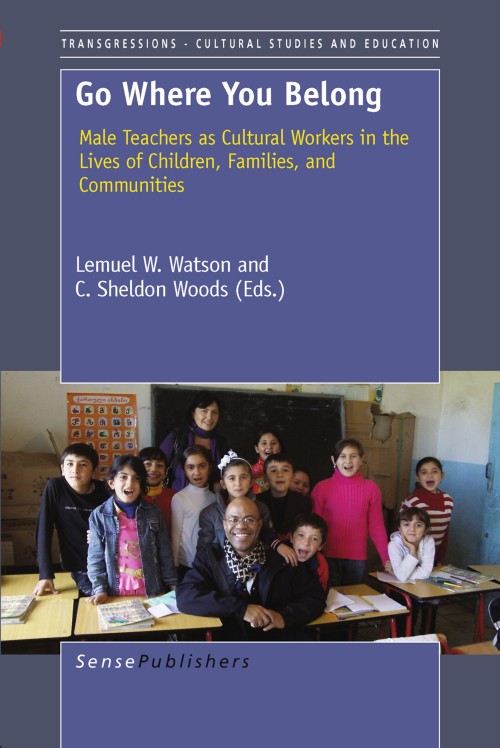
Go Where You Belong [electronic resource] : Male Teachers as Cultural Workers in the Lives of Children, Families, and Communities / edited by Lemuel W. Watson, C. Sheldon Woods.
Erişim Adresi
ISBN
9789460914065
Dil Kodu
İngilizce
Yer Numarası
DK/7048
Basım Bildirimi
1st ed. 2011.
Yayın Bilgisi
Rotterdam : SensePublishers : Imprint: SensePublishers, 2011.
Fiziksel Niteleme
XVIII, 123 p. online resource.
Dizi
Transgressions, Cultural Studies and Education , 2214-9740 ; 67
Özet, vb.
The narratives in this book engage the reader and take him or her on a journey to understanding of what it means to be a male teacher who works in early childhood education or with young children. They passionately share of their challenges to be involved in children’s lives because they are called to do so; this work is part of their life purpose. Their narratives details interactions between the teacher and the day-to-day lives of students, parents, peers and supervisors while sharing what it takes to survive as a man in what is perceived, very often in our post-modern world as women’s work. In the bigger scheme of things, the men teachers serve as cultural workers with their female peers to educate not only our children but our community and eventually ourselves about gender roles in our society and the need to have more role models during the first years of schooling. A fascinating book and a must read for parents, teachers, administrators, and other human service professionals who want to learn more about how to engage men in the lives of children.
Konu
Educational sociology.
Sociology of Education.
Sociology of Education.
Diğer Yazarlar
Kurum Adı
