

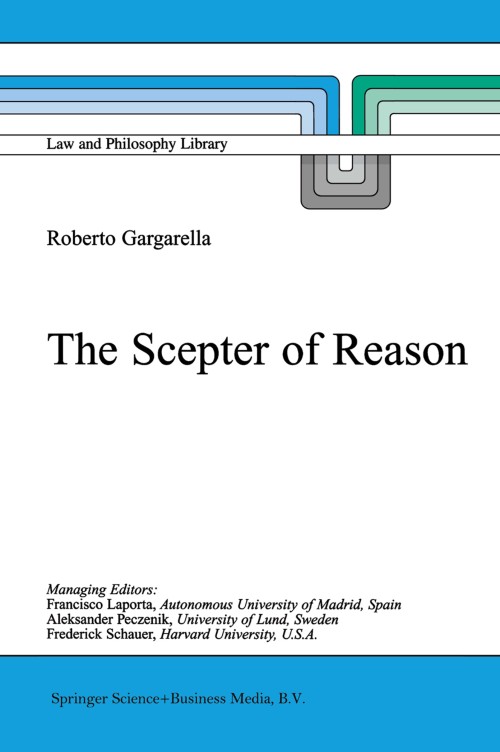
The Scepter of Reason [electronic resource] : Public Discussion and Political Radicalism in the Origins of Constitutionalism / by R. Gargarella.
Erişim Adresi
ISBN
9789401139458
Dil Kodu
İngilizce
Yer Numarası
DK/7099
Yazar
Basım Bildirimi
1st ed. 2000.
Yayın Bilgisi
Dordrecht : Springer Netherlands : Imprint: Springer, 2000.
Fiziksel Niteleme
XXVIII, 143 p. online resource.
Dizi
Law and Philosophy Library, 2215-0315 ; 48
İçindekiler Notu
1 Radicalism and Conservatism in England -- The Authority of the People Outside the Parliament -- The Crisis of Political Representation -- The “Radical Societies” in England -- The Radicals’ Epistemic View, and their Egalitarianism -- The Radicals’ Institutional Proposals -- The Conservative Challenge -- When Thomas Paine Confronted Edmund Burke -- 2 Radicalism and Populism in the U.S. -- A Government for the Majority -- Town Meetings and County Conventions 29 The Constitution of Pennsylvania: The Experiment of “Unchecked Majorities” -- The Constitution of Pennsylvania in Motion -- The “Critical Period” of American History -- The Context of the Crisis -- The Demand for Paper Money and Counter-Institutional Reactions -- Institutional Responses to the Majority Claims -- The Paper-Money Crisis in Rhode Island -- The Critics of Radicalism/Populism -- 3 The Conservative Reaction. James Madison: Institutional Reforms Against The Power of Factions -- The Evolution of Madison’s Ideas of Factions. Earlier Approaches -- Defining the “Vices of the Political System” -- Analyzing the Madisonian Definition of Factions -- Representation -- Minorities -- Checks and Balances -- The Problems of the System of Checks and Balances -- 4 The Conservative Reaction II. Defending the New Institutions in the Federal Convention -- The “Conservative” Antifederalists -- The Federalists -- The North American Constitution and Epistemic Elitism -- About Popular Assemblies and the House of Representatives -- Some Basic Tools -- The Executive -- The Senate -- The Judiciary -- 5 The Conservative Model of Deliberation -- Why Deliberation? What Kind of Deliberation? -- The Elitist Character of the Conservative Model of Deliberation -- Why Restricted Deliberation? -- Radicalism and Public Deliberation -- Why PublicDeliberation? -- Appendix Contemporary Political Institutions and Deliberation -- The Possibility of Deliberation -- The Judiciary and Public Dialogue -- The Political Branches of Government and Deliberation -- We the People and Interbranch Dialogue -- Final Notes.
Özet, vb.
It is not unusual that formal and informal discussions about the political system, its virtues, and its many defects, conclude in a discussion about impartiality. In fact, we all discuss impartiality when we talk about the best way to equally consider all viewpoints. We show our concerns with impartiality when, facing a particular problem, we try to figure out the best solution for all of us, given our conflicting interests. Thus, the quest for impartiality tends to be a common objective for most of us, although we normally disagree on its particular contents. Generally, these formal and informal discussions about impartiality conclude in a dispute between different "epistemic" conceptions. That is to say, simply, that in these situations we begin to disagree about best procedure to defme the more neutral, impartial solution for all of us.! Basically, trying to answer this question we tend to fluctuate between two opposite positions. According to some, the best way to know which is the more impartial solution is to resort to a process of collective reflection: in those situations we have to consider the opinions of all those who are possibly affected.
Konu
Law __ Philosophy.
Constitutional law.
Law __ History.
Political science.
Philosophy.
Philosophy of Law.
Constitutional Law.
Theories of Law, Philosophy of Law, Legal History.
Political Science.
Philosophy.
Constitutional law.
Law __ History.
Political science.
Philosophy.
Philosophy of Law.
Constitutional Law.
Theories of Law, Philosophy of Law, Legal History.
Political Science.
Philosophy.
Kurum Adı
Eseri Alıntıla
Referansları kullanmadan önce gözden geçirmeniz ve varsa gerekli düzeltmeleri yapmanız önerilir.
Dijital Kaynak
MARC Görünümü
LEADER 06048nam a22006255i 4500
001 805785
003 TR_AnAIT
005 20260127000815
007 cr nn 008mamaa
008 121227s2000 ne | s |||| 0|eng d
020 |a9789401139458|9978-94-011-3945-8
024 7 |a10.1007/978-94-011-3945-8|2doi
041 |aeng
049 |aTürk Tarih Kurumu Kütüphanesi
050 4|aK201-487
072 7|aLAB|2bicssc
072 7|aPHI000000|2bisacsh
072 7|aLAB|2thema
082 04|a340.1|223
090 |aDK/7099
100 1 |aGargarella, R.|eauthor.|4aut|4http://id.loc.gov/vocabulary/relators/aut
245 14|aThe Scepter of Reason|h[electronic resource] :|bPublic Discussion and Political Radicalism in the Origins of Constitutionalism /|cby R. Gargarella.
250 |a1st ed. 2000.
264 1|aDordrecht :|bSpringer Netherlands :|bImprint: Springer,|c2000.
300 |aXXVIII, 143 p.|bonline resource.
336 |atext|btxt|2rdacontent
337 |acomputer|bc|2rdamedia
338 |aonline resource|bcr|2rdacarrier
347 |atext file|bPDF|2rda
490 1 |aLaw and Philosophy Library,|x2215-0315 ;|v48
505 0 |a1 Radicalism and Conservatism in England -- The Authority of the People Outside the Parliament -- The Crisis of Political Representation -- The “Radical Societies” in England -- The Radicals’ Epistemic View, and their Egalitarianism -- The Radicals’ Institutional Proposals -- The Conservative Challenge -- When Thomas Paine Confronted Edmund Burke -- 2 Radicalism and Populism in the U.S. -- A Government for the Majority -- Town Meetings and County Conventions 29 The Constitution of Pennsylvania: The Experiment of “Unchecked Majorities” -- The Constitution of Pennsylvania in Motion -- The “Critical Period” of American History -- The Context of the Crisis -- The Demand for Paper Money and Counter-Institutional Reactions -- Institutional Responses to the Majority Claims -- The Paper-Money Crisis in Rhode Island -- The Critics of Radicalism/Populism -- 3 The Conservative Reaction. James Madison: Institutional Reforms Against The Power of Factions -- The Evolution of Madison’s Ideas of Factions. Earlier Approaches -- Defining the “Vices of the Political System” -- Analyzing the Madisonian Definition of Factions -- Representation -- Minorities -- Checks and Balances -- The Problems of the System of Checks and Balances -- 4 The Conservative Reaction II. Defending the New Institutions in the Federal Convention -- The “Conservative” Antifederalists -- The Federalists -- The North American Constitution and Epistemic Elitism -- About Popular Assemblies and the House of Representatives -- Some Basic Tools -- The Executive -- The Senate -- The Judiciary -- 5 The Conservative Model of Deliberation -- Why Deliberation? What Kind of Deliberation? -- The Elitist Character of the Conservative Model of Deliberation -- Why Restricted Deliberation? -- Radicalism and Public Deliberation -- Why PublicDeliberation? -- Appendix Contemporary Political Institutions and Deliberation -- The Possibility of Deliberation -- The Judiciary and Public Dialogue -- The Political Branches of Government and Deliberation -- We the People and Interbranch Dialogue -- Final Notes.
520 |aIt is not unusual that formal and informal discussions about the political system, its virtues, and its many defects, conclude in a discussion about impartiality. In fact, we all discuss impartiality when we talk about the best way to equally consider all viewpoints. We show our concerns with impartiality when, facing a particular problem, we try to figure out the best solution for all of us, given our conflicting interests. Thus, the quest for impartiality tends to be a common objective for most of us, although we normally disagree on its particular contents. Generally, these formal and informal discussions about impartiality conclude in a dispute between different "epistemic" conceptions. That is to say, simply, that in these situations we begin to disagree about best procedure to defme the more neutral, impartial solution for all of us.! Basically, trying to answer this question we tend to fluctuate between two opposite positions. According to some, the best way to know which is the more impartial solution is to resort to a process of collective reflection: in those situations we have to consider the opinions of all those who are possibly affected.
532 8 |aAccessibility summary: This PDF is not accessible. It is based on scanned pages and does not support features such as screen reader compatibility or described non-text content (images, graphs etc). However, it likely supports searchable and selectable text based on OCR (Optical Character Recognition). Users with accessibility needs may not be able to use this content effectively. Please contact us at accessibilitysupport@springernature.com if you require assistance or an alternative format.
532 8 |aInaccessible, or known limited accessibility
532 8 |aNo reading system accessibility options actively disabled
532 8 |aPublisher contact for further accessibility information: accessibilitysupport@springernature.com
650 0|aLaw|xPhilosophy.
650 0|aConstitutional law.
650 0|aLaw|xHistory.
650 0|aPolitical science.
650 0|aPhilosophy.
650 14|aPhilosophy of Law.
650 24|aConstitutional Law.
650 24|aTheories of Law, Philosophy of Law, Legal History.
650 24|aPolitical Science.
650 24|aPhilosophy.
710 2 |aSpringerLink (Online service)
773 0 |tSpringer Nature eBook
776 08|iPrinted edition:|z9780792365082
776 08|iPrinted edition:|z9781402002861
776 08|iPrinted edition:|z9789401139465
830 0|aLaw and Philosophy Library,|x2215-0315 ;|v48
856 40|uhttps://doi.org/10.1007/978-94-011-3945-8
912 |aZDB-2-SHU
912 |aZDB-2-SXPR
912 |aZDB-2-BAE
950 |aHumanities, Social Sciences and Law (SpringerNature-11648)
950 |aPhilosophy and Religion (R0) (SpringerNature-43725)
001 805785
003 TR_AnAIT
005 20260127000815
007 cr nn 008mamaa
008 121227s2000 ne | s |||| 0|eng d
020 |a9789401139458|9978-94-011-3945-8
024 7 |a10.1007/978-94-011-3945-8|2doi
041 |aeng
049 |aTürk Tarih Kurumu Kütüphanesi
050 4|aK201-487
072 7|aLAB|2bicssc
072 7|aPHI000000|2bisacsh
072 7|aLAB|2thema
082 04|a340.1|223
090 |aDK/7099
100 1 |aGargarella, R.|eauthor.|4aut|4http://id.loc.gov/vocabulary/relators/aut
245 14|aThe Scepter of Reason|h[electronic resource] :|bPublic Discussion and Political Radicalism in the Origins of Constitutionalism /|cby R. Gargarella.
250 |a1st ed. 2000.
264 1|aDordrecht :|bSpringer Netherlands :|bImprint: Springer,|c2000.
300 |aXXVIII, 143 p.|bonline resource.
336 |atext|btxt|2rdacontent
337 |acomputer|bc|2rdamedia
338 |aonline resource|bcr|2rdacarrier
347 |atext file|bPDF|2rda
490 1 |aLaw and Philosophy Library,|x2215-0315 ;|v48
505 0 |a1 Radicalism and Conservatism in England -- The Authority of the People Outside the Parliament -- The Crisis of Political Representation -- The “Radical Societies” in England -- The Radicals’ Epistemic View, and their Egalitarianism -- The Radicals’ Institutional Proposals -- The Conservative Challenge -- When Thomas Paine Confronted Edmund Burke -- 2 Radicalism and Populism in the U.S. -- A Government for the Majority -- Town Meetings and County Conventions 29 The Constitution of Pennsylvania: The Experiment of “Unchecked Majorities” -- The Constitution of Pennsylvania in Motion -- The “Critical Period” of American History -- The Context of the Crisis -- The Demand for Paper Money and Counter-Institutional Reactions -- Institutional Responses to the Majority Claims -- The Paper-Money Crisis in Rhode Island -- The Critics of Radicalism/Populism -- 3 The Conservative Reaction. James Madison: Institutional Reforms Against The Power of Factions -- The Evolution of Madison’s Ideas of Factions. Earlier Approaches -- Defining the “Vices of the Political System” -- Analyzing the Madisonian Definition of Factions -- Representation -- Minorities -- Checks and Balances -- The Problems of the System of Checks and Balances -- 4 The Conservative Reaction II. Defending the New Institutions in the Federal Convention -- The “Conservative” Antifederalists -- The Federalists -- The North American Constitution and Epistemic Elitism -- About Popular Assemblies and the House of Representatives -- Some Basic Tools -- The Executive -- The Senate -- The Judiciary -- 5 The Conservative Model of Deliberation -- Why Deliberation? What Kind of Deliberation? -- The Elitist Character of the Conservative Model of Deliberation -- Why Restricted Deliberation? -- Radicalism and Public Deliberation -- Why PublicDeliberation? -- Appendix Contemporary Political Institutions and Deliberation -- The Possibility of Deliberation -- The Judiciary and Public Dialogue -- The Political Branches of Government and Deliberation -- We the People and Interbranch Dialogue -- Final Notes.
520 |aIt is not unusual that formal and informal discussions about the political system, its virtues, and its many defects, conclude in a discussion about impartiality. In fact, we all discuss impartiality when we talk about the best way to equally consider all viewpoints. We show our concerns with impartiality when, facing a particular problem, we try to figure out the best solution for all of us, given our conflicting interests. Thus, the quest for impartiality tends to be a common objective for most of us, although we normally disagree on its particular contents. Generally, these formal and informal discussions about impartiality conclude in a dispute between different "epistemic" conceptions. That is to say, simply, that in these situations we begin to disagree about best procedure to defme the more neutral, impartial solution for all of us.! Basically, trying to answer this question we tend to fluctuate between two opposite positions. According to some, the best way to know which is the more impartial solution is to resort to a process of collective reflection: in those situations we have to consider the opinions of all those who are possibly affected.
532 8 |aAccessibility summary: This PDF is not accessible. It is based on scanned pages and does not support features such as screen reader compatibility or described non-text content (images, graphs etc). However, it likely supports searchable and selectable text based on OCR (Optical Character Recognition). Users with accessibility needs may not be able to use this content effectively. Please contact us at accessibilitysupport@springernature.com if you require assistance or an alternative format.
532 8 |aInaccessible, or known limited accessibility
532 8 |aNo reading system accessibility options actively disabled
532 8 |aPublisher contact for further accessibility information: accessibilitysupport@springernature.com
650 0|aLaw|xPhilosophy.
650 0|aConstitutional law.
650 0|aLaw|xHistory.
650 0|aPolitical science.
650 0|aPhilosophy.
650 14|aPhilosophy of Law.
650 24|aConstitutional Law.
650 24|aTheories of Law, Philosophy of Law, Legal History.
650 24|aPolitical Science.
650 24|aPhilosophy.
710 2 |aSpringerLink (Online service)
773 0 |tSpringer Nature eBook
776 08|iPrinted edition:|z9780792365082
776 08|iPrinted edition:|z9781402002861
776 08|iPrinted edition:|z9789401139465
830 0|aLaw and Philosophy Library,|x2215-0315 ;|v48
856 40|uhttps://doi.org/10.1007/978-94-011-3945-8
912 |aZDB-2-SHU
912 |aZDB-2-SXPR
912 |aZDB-2-BAE
950 |aHumanities, Social Sciences and Law (SpringerNature-11648)
950 |aPhilosophy and Religion (R0) (SpringerNature-43725)
Materyaller
Depodan talep edilen materyal sadece kütüphane içerisinde kullanılmaktadır.
Materyal dışarıya ödünç verilmemektedir.
Materyal dışarıya ödünç verilmemektedir.
