

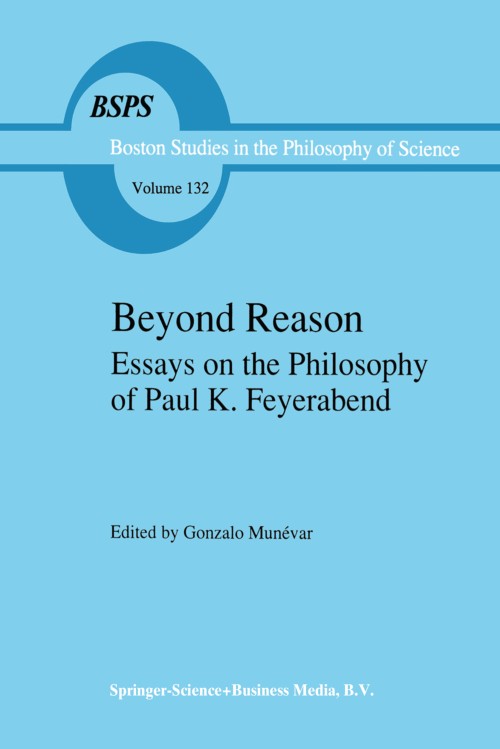
Beyond Reason [electronic resource] : Essays on the Philosophy of Paul Feyerabend / edited by Gonzalo Munévar.
Erişim Adresi
ISBN
9789401131889
Dil Kodu
İngilizce
Yer Numarası
DK/7100
Basım Bildirimi
1st ed. 1991.
Yayın Bilgisi
Dordrecht : Springer Netherlands : Imprint: Springer, 1991.
Fiziksel Niteleme
XXI, 538 p. online resource.
Dizi
Boston Studies in the Philosophy and History of Science, 2214-7942 ; 132
İçindekiler Notu
1. A Deeper Unity: Some Feyerabendian Themes in Neurocomputational Form -- 2. How to Be a Good Realist -- 3. Between Formalism and Anarchism: A Reasonable Middle Way -- 4. Free of Prejudice and Wholly Critical -- 5. Speculation, Calculation and the Creation of Phenomena -- 6. Reason and Practice -- 7. Science in Feyerabend’s Free Society -- 8. Letter to an Anti-Liberal Liberal -- 9. Obituary on the “Anarchist” Paul Feyerabend -- 10. Ideology, Science and a Free Society -- 11. The Myth of Astronomical Instrumentalism -- 12. Feyerabend on Falsifications, Galileo, and Lady Reason -- 13. The Observational Origins of Feyerabend’s Anarchistic Epistemology -- 14. Incommensurability, its Varieties and its Ontological Consequences -- 15. Feyerabend and the Facts -- 16. Ideological Commitments in the Philosophy of Science -- 17. As You Like It -- 18. Perceptions and Maturity: Reflections on Feyerabend’s Point of View -- 19. Paul Feyerabend — a Green Hero? -- 20. Ecology as a Challenge to Philosophy -- 21. Against Feyerabend -- 22. A New Slant on the Tower Experiment -- 23. Feyerabend’s Materialism -- 24. Scientific Methods and Feyerabend’s Advocacy of Anarchism -- 25. Concluding Unphilosophical Conversation.
Özet, vb.
Some philosophers think that Paul Feyerabend is a clown, a great many others think that he is one of the most exciting philosophers of science of this century. For me the truth does not lie somewhere in between, for I am decidedly of the second opinion, an opinion that is becoming general around the world as this century comes to an end and history begins to cast its appraising eye upon the intellectual harvest of our era. A good example of this opinion may be found in the admiration for Feyerabend's philosophy of science expressed by Grover Maxwell in his contribution to this volume. Maxwell, recalling his own intellectual transformation, says also that it was Feyerabend who "confirmed my then incipient suspicions that most of the foundations of currently fashionable philosophy and even a great deal of the methodology to which many scientists pay enthusiastic lip service are based on simple mistake- assumptions whose absurdity becomes obvious once attention is directed at them". And lest the reader thinks, as many still do, that however sharp Feyerabend's attacks upon the philosophical establishment may have been, he does not offer a positive philosophy (a complain made by C.A. Hooker and some of the other contributors), Paul Churchland argues otherwise.
Konu
Science __ Philosophy.
History.
Education __ Philosophy.
Logic.
Philosophy of Science.
History.
Philosophy of Education.
Logic.
History.
Education __ Philosophy.
Logic.
Philosophy of Science.
History.
Philosophy of Education.
Logic.
Diğer Yazarlar
Kurum Adı
Eseri Alıntıla
Referansları kullanmadan önce gözden geçirmeniz ve varsa gerekli düzeltmeleri yapmanız önerilir.
Dijital Kaynak
MARC Görünümü
LEADER 05225nam a22006135i 4500
001 805786
003 TR_AnAIT
005 20260127000816
007 cr nn 008mamaa
008 121227s1991 ne | s |||| 0|eng d
020 |a9789401131889|9978-94-011-3188-9
024 7 |a10.1007/978-94-011-3188-9|2doi
041 |aeng
049 |aTürk Tarih Kurumu Kütüphanesi
050 4|aQ174-175.3
050 4|aB67
072 7|aPDA|2bicssc
072 7|aSCI075000|2bisacsh
072 7|aPDA|2thema
082 04|a501|223
090 |aDK/7100
245 10|aBeyond Reason|h[electronic resource] :|bEssays on the Philosophy of Paul Feyerabend /|cedited by Gonzalo Munévar.
250 |a1st ed. 1991.
264 1|aDordrecht :|bSpringer Netherlands :|bImprint: Springer,|c1991.
300 |aXXI, 538 p.|bonline resource.
336 |atext|btxt|2rdacontent
337 |acomputer|bc|2rdamedia
338 |aonline resource|bcr|2rdacarrier
347 |atext file|bPDF|2rda
490 1 |aBoston Studies in the Philosophy and History of Science,|x2214-7942 ;|v132
505 0 |a1. A Deeper Unity: Some Feyerabendian Themes in Neurocomputational Form -- 2. How to Be a Good Realist -- 3. Between Formalism and Anarchism: A Reasonable Middle Way -- 4. Free of Prejudice and Wholly Critical -- 5. Speculation, Calculation and the Creation of Phenomena -- 6. Reason and Practice -- 7. Science in Feyerabend’s Free Society -- 8. Letter to an Anti-Liberal Liberal -- 9. Obituary on the “Anarchist” Paul Feyerabend -- 10. Ideology, Science and a Free Society -- 11. The Myth of Astronomical Instrumentalism -- 12. Feyerabend on Falsifications, Galileo, and Lady Reason -- 13. The Observational Origins of Feyerabend’s Anarchistic Epistemology -- 14. Incommensurability, its Varieties and its Ontological Consequences -- 15. Feyerabend and the Facts -- 16. Ideological Commitments in the Philosophy of Science -- 17. As You Like It -- 18. Perceptions and Maturity: Reflections on Feyerabend’s Point of View -- 19. Paul Feyerabend — a Green Hero? -- 20. Ecology as a Challenge to Philosophy -- 21. Against Feyerabend -- 22. A New Slant on the Tower Experiment -- 23. Feyerabend’s Materialism -- 24. Scientific Methods and Feyerabend’s Advocacy of Anarchism -- 25. Concluding Unphilosophical Conversation.
520 |aSome philosophers think that Paul Feyerabend is a clown, a great many others think that he is one of the most exciting philosophers of science of this century. For me the truth does not lie somewhere in between, for I am decidedly of the second opinion, an opinion that is becoming general around the world as this century comes to an end and history begins to cast its appraising eye upon the intellectual harvest of our era. A good example of this opinion may be found in the admiration for Feyerabend's philosophy of science expressed by Grover Maxwell in his contribution to this volume. Maxwell, recalling his own intellectual transformation, says also that it was Feyerabend who "confirmed my then incipient suspicions that most of the foundations of currently fashionable philosophy and even a great deal of the methodology to which many scientists pay enthusiastic lip service are based on simple mistake- assumptions whose absurdity becomes obvious once attention is directed at them". And lest the reader thinks, as many still do, that however sharp Feyerabend's attacks upon the philosophical establishment may have been, he does not offer a positive philosophy (a complain made by C.A. Hooker and some of the other contributors), Paul Churchland argues otherwise.
532 8 |aAccessibility summary: This PDF is not accessible. It is based on scanned pages and does not support features such as screen reader compatibility or described non-text content (images, graphs etc). However, it likely supports searchable and selectable text based on OCR (Optical Character Recognition). Users with accessibility needs may not be able to use this content effectively. Please contact us at accessibilitysupport@springernature.com if you require assistance or an alternative format.
532 8 |aInaccessible, or known limited accessibility
532 8 |aNo reading system accessibility options actively disabled
532 8 |aPublisher contact for further accessibility information: accessibilitysupport@springernature.com
650 0|aScience|xPhilosophy.
650 0|aHistory.
650 0|aEducation|xPhilosophy.
650 0|aLogic.
650 14|aPhilosophy of Science.
650 24|aHistory.
650 24|aPhilosophy of Education.
650 24|aLogic.
700 1 |aMunévar, Gonzalo.|eeditor.|4edt|4http://id.loc.gov/vocabulary/relators/edt
710 2 |aSpringerLink (Online service)
773 0 |tSpringer Nature eBook
776 08|iPrinted edition:|z9780792312727
776 08|iPrinted edition:|z9789401131896
776 08|iPrinted edition:|z9789401054065
830 0|aBoston Studies in the Philosophy and History of Science,|x2214-7942 ;|v132
856 40|uhttps://doi.org/10.1007/978-94-011-3188-9
912 |aZDB-2-SHU
912 |aZDB-2-SXPR
912 |aZDB-2-BAE
950 |aHumanities, Social Sciences and Law (SpringerNature-11648)
950 |aPhilosophy and Religion (R0) (SpringerNature-43725)
001 805786
003 TR_AnAIT
005 20260127000816
007 cr nn 008mamaa
008 121227s1991 ne | s |||| 0|eng d
020 |a9789401131889|9978-94-011-3188-9
024 7 |a10.1007/978-94-011-3188-9|2doi
041 |aeng
049 |aTürk Tarih Kurumu Kütüphanesi
050 4|aQ174-175.3
050 4|aB67
072 7|aPDA|2bicssc
072 7|aSCI075000|2bisacsh
072 7|aPDA|2thema
082 04|a501|223
090 |aDK/7100
245 10|aBeyond Reason|h[electronic resource] :|bEssays on the Philosophy of Paul Feyerabend /|cedited by Gonzalo Munévar.
250 |a1st ed. 1991.
264 1|aDordrecht :|bSpringer Netherlands :|bImprint: Springer,|c1991.
300 |aXXI, 538 p.|bonline resource.
336 |atext|btxt|2rdacontent
337 |acomputer|bc|2rdamedia
338 |aonline resource|bcr|2rdacarrier
347 |atext file|bPDF|2rda
490 1 |aBoston Studies in the Philosophy and History of Science,|x2214-7942 ;|v132
505 0 |a1. A Deeper Unity: Some Feyerabendian Themes in Neurocomputational Form -- 2. How to Be a Good Realist -- 3. Between Formalism and Anarchism: A Reasonable Middle Way -- 4. Free of Prejudice and Wholly Critical -- 5. Speculation, Calculation and the Creation of Phenomena -- 6. Reason and Practice -- 7. Science in Feyerabend’s Free Society -- 8. Letter to an Anti-Liberal Liberal -- 9. Obituary on the “Anarchist” Paul Feyerabend -- 10. Ideology, Science and a Free Society -- 11. The Myth of Astronomical Instrumentalism -- 12. Feyerabend on Falsifications, Galileo, and Lady Reason -- 13. The Observational Origins of Feyerabend’s Anarchistic Epistemology -- 14. Incommensurability, its Varieties and its Ontological Consequences -- 15. Feyerabend and the Facts -- 16. Ideological Commitments in the Philosophy of Science -- 17. As You Like It -- 18. Perceptions and Maturity: Reflections on Feyerabend’s Point of View -- 19. Paul Feyerabend — a Green Hero? -- 20. Ecology as a Challenge to Philosophy -- 21. Against Feyerabend -- 22. A New Slant on the Tower Experiment -- 23. Feyerabend’s Materialism -- 24. Scientific Methods and Feyerabend’s Advocacy of Anarchism -- 25. Concluding Unphilosophical Conversation.
520 |aSome philosophers think that Paul Feyerabend is a clown, a great many others think that he is one of the most exciting philosophers of science of this century. For me the truth does not lie somewhere in between, for I am decidedly of the second opinion, an opinion that is becoming general around the world as this century comes to an end and history begins to cast its appraising eye upon the intellectual harvest of our era. A good example of this opinion may be found in the admiration for Feyerabend's philosophy of science expressed by Grover Maxwell in his contribution to this volume. Maxwell, recalling his own intellectual transformation, says also that it was Feyerabend who "confirmed my then incipient suspicions that most of the foundations of currently fashionable philosophy and even a great deal of the methodology to which many scientists pay enthusiastic lip service are based on simple mistake- assumptions whose absurdity becomes obvious once attention is directed at them". And lest the reader thinks, as many still do, that however sharp Feyerabend's attacks upon the philosophical establishment may have been, he does not offer a positive philosophy (a complain made by C.A. Hooker and some of the other contributors), Paul Churchland argues otherwise.
532 8 |aAccessibility summary: This PDF is not accessible. It is based on scanned pages and does not support features such as screen reader compatibility or described non-text content (images, graphs etc). However, it likely supports searchable and selectable text based on OCR (Optical Character Recognition). Users with accessibility needs may not be able to use this content effectively. Please contact us at accessibilitysupport@springernature.com if you require assistance or an alternative format.
532 8 |aInaccessible, or known limited accessibility
532 8 |aNo reading system accessibility options actively disabled
532 8 |aPublisher contact for further accessibility information: accessibilitysupport@springernature.com
650 0|aScience|xPhilosophy.
650 0|aHistory.
650 0|aEducation|xPhilosophy.
650 0|aLogic.
650 14|aPhilosophy of Science.
650 24|aHistory.
650 24|aPhilosophy of Education.
650 24|aLogic.
700 1 |aMunévar, Gonzalo.|eeditor.|4edt|4http://id.loc.gov/vocabulary/relators/edt
710 2 |aSpringerLink (Online service)
773 0 |tSpringer Nature eBook
776 08|iPrinted edition:|z9780792312727
776 08|iPrinted edition:|z9789401131896
776 08|iPrinted edition:|z9789401054065
830 0|aBoston Studies in the Philosophy and History of Science,|x2214-7942 ;|v132
856 40|uhttps://doi.org/10.1007/978-94-011-3188-9
912 |aZDB-2-SHU
912 |aZDB-2-SXPR
912 |aZDB-2-BAE
950 |aHumanities, Social Sciences and Law (SpringerNature-11648)
950 |aPhilosophy and Religion (R0) (SpringerNature-43725)
Materyaller
Depodan talep edilen materyal sadece kütüphane içerisinde kullanılmaktadır.
Materyal dışarıya ödünç verilmemektedir.
Materyal dışarıya ödünç verilmemektedir.
