

Gender Lessons [electronic resource] : Patriarchy, Sextyping & Schools / by Scott Richardson.
Erişim Adresi
ISBN
9789463000314
Dil Kodu
İngilizce
Yer Numarası
DK/7222
Yazar
Basım Bildirimi
1st ed. 2015.
Yayın Bilgisi
Rotterdam : SensePublishers : Imprint: SensePublishers, 2015.
Fiziksel Niteleme
XX, 220 p. online resource.
Dizi
Teaching Gender
Özet, vb.
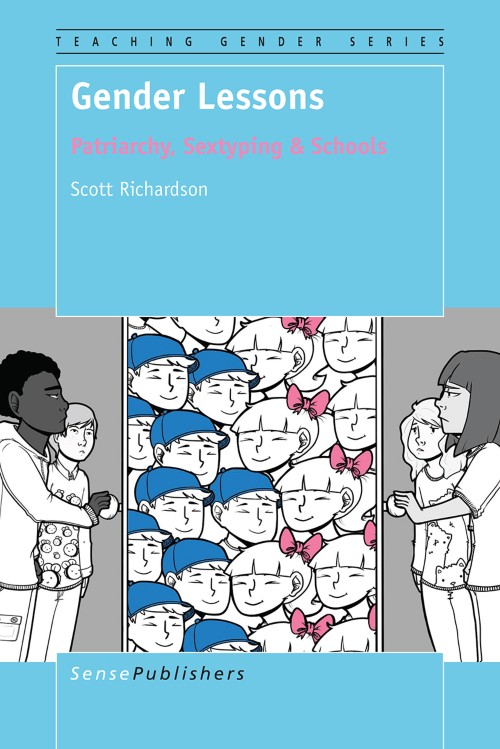
Public schools in early America were designed to ensure the reproduction of Eurocentric social values. It could be argued that little has changed. Gender Lessons takes an in-depth look at how schools institutionalize gender—how kids are taught the rules and expectations of performing masculinity and femininity. This work provides extensive examples of how elementary, middle, and high schools: sextype; defend and preserve patriarchy; weave gendered expectations in all things school related; promote inequity; and limit their students’ potential by explicitly and implicitly teaching that they must fit into only one of two boxes…“girl” or “boy.” Richardson argues that schools—a powerful and wide reaching publicly funded mechanism—should be engaged in social (re)imagination that disbands the antiquated girl/boy and feminine/masculine binary so that kids might have a chance at being themselves. This book is sure to provoke conversation in courses and professional communities interested in education, gender studies, social work, sociology, counseling and guidance. “In the 1970s, feminists fought to reform sexist school curricula and challenged taken-for-granted tracking of boys and girls. Forty years later, drawing from personal experiences and insightful research in schools, Scott Richardson shows us that the job is far from finished. Informal interactions and stubborn sexist beliefs about gender difference still press girls and boys in primary, middle and high schools into different—and highly constraining—gender boxes. Anyone who cares about taking the next steps toward gender equality in schools will find in Gender Lessons a useful and hopeful map to a better future for our kids.” – Michael A. Messner, Ph.D., Professor of Sociology and Gender Studies at the University of California, Berkeley and author of Some Men: Feminist Allies and the Movement to End Violence Against Women “This book is unique in that it includes data from elementary,middle, and high schools from both students’ and teachers’ perspectives. These examples are familiar to anyone working in K-12 schools, but his analysis offers a new lens for many that can expose the frustrating and often heartbreaking nature of these taken-for-granted cultural norms.” – Elizabeth J. Meyer, Ph.D., Assistant Professor of Education at California Polytechnic State University and author of Gender and Sexual Diversity in Schools.
Konu
Education.
Education.
Education.
Kurum Adı
Eseri Alıntıla
Referansları kullanmadan önce gözden geçirmeniz ve varsa gerekli düzeltmeleri yapmanız önerilir.
Dijital Kaynak
MARC Görünümü
LEADER 04599nam a22004455i 4500
001 805909
003 TR_AnAIT
005 20260127001038
007 cr nn 008mamaa
008 150617s2015 ne | s |||| 0|eng d
020 |a9789463000314|9978-94-6300-031-4
024 7 |a10.1007/978-94-6300-031-4|2doi
041 |aeng
049 |aTürk Tarih Kurumu Kütüphanesi
050 4|aL1-991
072 7|aJN|2bicssc
072 7|aEDU000000|2bisacsh
072 7|aJN|2thema
082 04|a370|223
090 |aDK/7222
100 1 |aRichardson, Scott.|eauthor.|4aut|4http://id.loc.gov/vocabulary/relators/aut
245 10|aGender Lessons|h[electronic resource] :|bPatriarchy, Sextyping & Schools /|cby Scott Richardson.
250 |a1st ed. 2015.
264 1|aRotterdam :|bSensePublishers :|bImprint: SensePublishers,|c2015.
300 |aXX, 220 p.|bonline resource.
336 |atext|btxt|2rdacontent
337 |acomputer|bc|2rdamedia
338 |aonline resource|bcr|2rdacarrier
347 |atext file|bPDF|2rda
490 1 |aTeaching Gender
520 |aPublic schools in early America were designed to ensure the reproduction of Eurocentric social values. It could be argued that little has changed. Gender Lessons takes an in-depth look at how schools institutionalize gender—how kids are taught the rules and expectations of performing masculinity and femininity. This work provides extensive examples of how elementary, middle, and high schools: sextype; defend and preserve patriarchy; weave gendered expectations in all things school related; promote inequity; and limit their students’ potential by explicitly and implicitly teaching that they must fit into only one of two boxes…“girl” or “boy.” Richardson argues that schools—a powerful and wide reaching publicly funded mechanism—should be engaged in social (re)imagination that disbands the antiquated girl/boy and feminine/masculine binary so that kids might have a chance at being themselves. This book is sure to provoke conversation in courses and professional communities interested in education, gender studies, social work, sociology, counseling and guidance. “In the 1970s, feminists fought to reform sexist school curricula and challenged taken-for-granted tracking of boys and girls. Forty years later, drawing from personal experiences and insightful research in schools, Scott Richardson shows us that the job is far from finished. Informal interactions and stubborn sexist beliefs about gender difference still press girls and boys in primary, middle and high schools into different—and highly constraining—gender boxes. Anyone who cares about taking the next steps toward gender equality in schools will find in Gender Lessons a useful and hopeful map to a better future for our kids.” – Michael A. Messner, Ph.D., Professor of Sociology and Gender Studies at the University of California, Berkeley and author of Some Men: Feminist Allies and the Movement to End Violence Against Women “This book is unique in that it includes data from elementary,middle, and high schools from both students’ and teachers’ perspectives. These examples are familiar to anyone working in K-12 schools, but his analysis offers a new lens for many that can expose the frustrating and often heartbreaking nature of these taken-for-granted cultural norms.” – Elizabeth J. Meyer, Ph.D., Assistant Professor of Education at California Polytechnic State University and author of Gender and Sexual Diversity in Schools.
532 8 |aAccessibility summary: This PDF eBook is produced by a third-party. We have requested that the file be made accessible and compliant with the European Accessibility Act (EAA). However, we have not been able to fully verify its compliance with recognized accessibility standards (such as PDF/UA or WCAG). For detailed accessibility information, please refer to the original publisher’s website. If you require an accessible version of this content, please contact accessibilitysupport@springernature.com. We are committed to improving accessibility and will work with the publisher to meet your needs wherever possible.
532 8 |aPublisher contact for further accessibility information: accessibilitysupport@springernature.com
650 0|aEducation.
650 14|aEducation.
710 2 |aSpringerLink (Online service)
773 0 |tSpringer Nature eBook
830 0|aTeaching Gender
856 40|uhttps://doi.org/10.1007/978-94-6300-031-4
912 |aZDB-2-SHU
912 |aZDB-2-SXED
950 |aHumanities, Social Sciences and Law (SpringerNature-11648)
950 |aEducation (R0) (SpringerNature-43721)
001 805909
003 TR_AnAIT
005 20260127001038
007 cr nn 008mamaa
008 150617s2015 ne | s |||| 0|eng d
020 |a9789463000314|9978-94-6300-031-4
024 7 |a10.1007/978-94-6300-031-4|2doi
041 |aeng
049 |aTürk Tarih Kurumu Kütüphanesi
050 4|aL1-991
072 7|aJN|2bicssc
072 7|aEDU000000|2bisacsh
072 7|aJN|2thema
082 04|a370|223
090 |aDK/7222
100 1 |aRichardson, Scott.|eauthor.|4aut|4http://id.loc.gov/vocabulary/relators/aut
245 10|aGender Lessons|h[electronic resource] :|bPatriarchy, Sextyping & Schools /|cby Scott Richardson.
250 |a1st ed. 2015.
264 1|aRotterdam :|bSensePublishers :|bImprint: SensePublishers,|c2015.
300 |aXX, 220 p.|bonline resource.
336 |atext|btxt|2rdacontent
337 |acomputer|bc|2rdamedia
338 |aonline resource|bcr|2rdacarrier
347 |atext file|bPDF|2rda
490 1 |aTeaching Gender
520 |aPublic schools in early America were designed to ensure the reproduction of Eurocentric social values. It could be argued that little has changed. Gender Lessons takes an in-depth look at how schools institutionalize gender—how kids are taught the rules and expectations of performing masculinity and femininity. This work provides extensive examples of how elementary, middle, and high schools: sextype; defend and preserve patriarchy; weave gendered expectations in all things school related; promote inequity; and limit their students’ potential by explicitly and implicitly teaching that they must fit into only one of two boxes…“girl” or “boy.” Richardson argues that schools—a powerful and wide reaching publicly funded mechanism—should be engaged in social (re)imagination that disbands the antiquated girl/boy and feminine/masculine binary so that kids might have a chance at being themselves. This book is sure to provoke conversation in courses and professional communities interested in education, gender studies, social work, sociology, counseling and guidance. “In the 1970s, feminists fought to reform sexist school curricula and challenged taken-for-granted tracking of boys and girls. Forty years later, drawing from personal experiences and insightful research in schools, Scott Richardson shows us that the job is far from finished. Informal interactions and stubborn sexist beliefs about gender difference still press girls and boys in primary, middle and high schools into different—and highly constraining—gender boxes. Anyone who cares about taking the next steps toward gender equality in schools will find in Gender Lessons a useful and hopeful map to a better future for our kids.” – Michael A. Messner, Ph.D., Professor of Sociology and Gender Studies at the University of California, Berkeley and author of Some Men: Feminist Allies and the Movement to End Violence Against Women “This book is unique in that it includes data from elementary,middle, and high schools from both students’ and teachers’ perspectives. These examples are familiar to anyone working in K-12 schools, but his analysis offers a new lens for many that can expose the frustrating and often heartbreaking nature of these taken-for-granted cultural norms.” – Elizabeth J. Meyer, Ph.D., Assistant Professor of Education at California Polytechnic State University and author of Gender and Sexual Diversity in Schools.
532 8 |aAccessibility summary: This PDF eBook is produced by a third-party. We have requested that the file be made accessible and compliant with the European Accessibility Act (EAA). However, we have not been able to fully verify its compliance with recognized accessibility standards (such as PDF/UA or WCAG). For detailed accessibility information, please refer to the original publisher’s website. If you require an accessible version of this content, please contact accessibilitysupport@springernature.com. We are committed to improving accessibility and will work with the publisher to meet your needs wherever possible.
532 8 |aPublisher contact for further accessibility information: accessibilitysupport@springernature.com
650 0|aEducation.
650 14|aEducation.
710 2 |aSpringerLink (Online service)
773 0 |tSpringer Nature eBook
830 0|aTeaching Gender
856 40|uhttps://doi.org/10.1007/978-94-6300-031-4
912 |aZDB-2-SHU
912 |aZDB-2-SXED
950 |aHumanities, Social Sciences and Law (SpringerNature-11648)
950 |aEducation (R0) (SpringerNature-43721)
Materyaller
Depodan talep edilen materyal sadece kütüphane içerisinde kullanılmaktadır.
Materyal dışarıya ödünç verilmemektedir.
Materyal dışarıya ödünç verilmemektedir.
