LEADER 03449nam a22004695i 4500
001 805933
003 TR_AnAIT
005 20260127001107
007 cr nn 008mamaa
008 140923s2014 ne | s |||| 0|eng d
020 |a9789462098213|9978-94-6209-821-3
024 7 |a10.1007/978-94-6209-821-3|2doi
041 |aeng
049 |aTürk Tarih Kurumu Kütüphanesi
050 4|aL1-991
072 7|aJN|2bicssc
072 7|aEDU000000|2bisacsh
072 7|aJN|2thema
082 04|a370|223
090 |aDK/7246
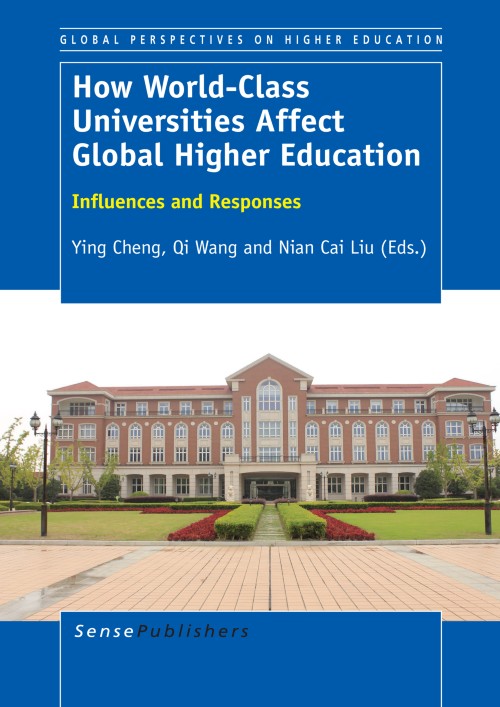
245 10|aHow World-Class Universities Affect Global Higher Education|h[electronic resource] :|bInfluences and Responses /|cedited by Ying Cheng, Qi Wang, Nian Cai Liu.
250 |a1st ed. 2014.
264 1|aRotterdam :|bSensePublishers :|bImprint: SensePublishers,|c2014.
300 |aVIII, 204 p.|bonline resource.
336 |atext|btxt|2rdacontent
337 |acomputer|bc|2rdamedia
338 |aonline resource|bcr|2rdacarrier
347 |atext file|bPDF|2rda
490 1 |aGlobal Perspectives on Higher Education ;|v26
520 |aWorld-class universities, commonly recognized as global research universities or flagship universities, are cornerstone institutions embedded in any academic system and play an important role in developing a nation’s competitiveness in the global knowledge economy. The development of world-class universities is high on the policy agenda of various stakeholders across the globe. In the past few years, an increasing number of nations, regions and higher education institutions in both developed and developing countries have joined the same race for academic excellence and have adopted a range of development strategies and implemented various reforms. From a comparative perspective, How World-Class Universities Affect Global Higher Education intends to provide an in-depth picture of excellence initiatives and relevant policies adopted in various nations and regions, and to reflect opportunities and challenges of developing excellence.
532 8 |aAccessibility summary: This PDF eBook is produced by a third-party. We have requested that the file be made accessible and compliant with the European Accessibility Act (EAA). However, we have not been able to fully verify its compliance with recognized accessibility standards (such as PDF/UA or WCAG). For detailed accessibility information, please refer to the original publisher’s website. If you require an accessible version of this content, please contact accessibilitysupport@springernature.com. We are committed to improving accessibility and will work with the publisher to meet your needs wherever possible.
532 8 |aPublisher contact for further accessibility information: accessibilitysupport@springernature.com
650 0|aEducation.
650 14|aEducation.
700 1 |aCheng, Ying.|eeditor.|4edt|4http://id.loc.gov/vocabulary/relators/edt
700 1 |aWang, Qi.|eeditor.|4edt|4http://id.loc.gov/vocabulary/relators/edt
700 1 |aLiu, Nian Cai.|eeditor.|0(orcid)0000-0002-3014-1483|1https://orcid.org/0000-0002-3014-1483|4edt|4http://id.loc.gov/vocabulary/relators/edt
710 2 |aSpringerLink (Online service)
773 0 |tSpringer Nature eBook
830 0|aGlobal Perspectives on Higher Education ;|v26
856 40|uhttps://doi.org/10.1007/978-94-6209-821-3
912 |aZDB-2-SHU
912 |aZDB-2-SXED
950 |aHumanities, Social Sciences and Law (SpringerNature-11648)
950 |aEducation (R0) (SpringerNature-43721)
