

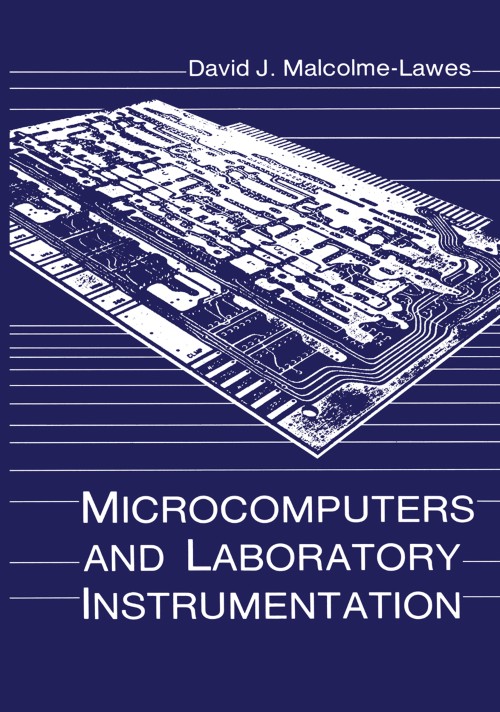
Microcomputers and Laboratory Instrumentation [electronic resource] / by David J. Malcolme-Lawes.
Erişim Adresi
ISBN
9781461574316
Dil Kodu
İngilizce
Yer Numarası
DK/7249
Yazar
Basım Bildirimi
1st ed. 1984.
Yayın Bilgisi
New York, NY : Springer US : Imprint: Springer, 1984.
Fiziksel Niteleme
X, 246 p. online resource.
İçindekiler Notu
1 Introduction -- 1.1 Laboratory instrumentation and microcomputers -- 1.2 Measurement systems -- 1.3 Electronic black boxes -- 1.4 A practical footnote -- 2 The Basics of Laboratory Signals -- 2.1 Transducers -- 2.2 Measurement signals -- 2.3 The transducer connection -- 2.4 Noise and interference -- 2.5 Minimising interference -- 2.6 Signal-to-noise ratio -- 2.7 Control signals -- 3 The Elements of Analog Signal Handling -- 3.1 Op-amps -- 3.2 Feedback systems -- 3.3 Basic amplifier configurations -- 3.4 Bandwidth and slew rate -- 3.5 Practical dc signal circuits -- 3.6 Ac signal circuits -- 3.7 Integrators -- 3.8 Differentiators -- 3.9 Pulse amplifiers -- 3.10 Filters -- 4 The Elements of Digital Signal Handling -- 4.1 Logic gates -- 4.2 TTL families -- 4.3 CMOS families -- 4.4 CMOS and TTL together -- 4.5 MSI circuits -- 4.6 Generating logic levels -- 4.7 Analog/digital interconversion -- 4.8 Serial digital signals -- 5 The Modern Microcomputer -- 5.1 The eight bit micro -- 5.2 The programming language -- 5.3 The operating system -- 5.4 Peripherals -- 5.5 Byte handling busses -- 5.6 The video display -- 5.7 Bit manipulation -- 5.8 Timing and addressing -- 5.9 Interrupts and interrupt flags -- 5.10 The 16 bit micro -- 6 Interfacing Microcomputers with Laboratory Instrumentation -- 6.1 Basic instrumental interface types -- 6.2 Multiplexing -- 6.3 Multiple byte interfaces -- 6.4 Interface control -- 6.5 Handshaking -- 6.6 Synchronous byte transfers -- 6.7 Dynamic interfaces -- 7 Standard Interface Systems -- 7.1 Introduction -- 7.2 The IEEE 488 standard -- 7.3 The RS232C link -- 8 System Design -- 8.1 An approach to system design / Case study -- Appendices -- Appendix 1 Decimal-hexadecimal conversion tables -- Appendix 2 The ASCII code -- Appendix 3 Sample assembler routine for GPIB adaptor -- Device index.
Özet, vb.
The invention of the microcomputer in the mid-1970s and its subsequent low-cost proliferation has opened up a new world for the laboratory scientist. Tedious data collection can now be automated relatively cheaply and with an enormous increase in reliability. New techniques of measurement are accessible with the "intelligent" instrumentation made possible by these programmable devices, and the ease of use of even standard measurement techniques may be improved by the data processing capabilities of the humblest micro. The latest items of commercial laboratory instrumentation are invariably "computer controlled", although this is more likely to mean that a microprocessor is involved than that a versatile microcomputer is provided along with the instrument. It is clear that all scientists of the future will need some knowledge of computers, if only to aid them in mastering the button pushing associated with gleaming new instruments. However, to be able to exploit this newly accessible computing power to the full the practising laboratory scientist must gain sufficient understanding to utilise the communication channels between apparatus on the laboratory bench and program within the computer. This book attempts to provide an introduction to those communication channels in a manner which is understandable for scientists who do not specialise in electronics or computers.
Konu
Social sciences.
Humanities.
Humanities and Social Sciences.
Humanities.
Humanities and Social Sciences.
Kurum Adı
Eseri Alıntıla
Referansları kullanmadan önce gözden geçirmeniz ve varsa gerekli düzeltmeleri yapmanız önerilir.
Dijital Kaynak
MARC Görünümü
LEADER 05611nam a22005415i 4500
001 805936
003 TR_AnAIT
005 20260127001110
007 cr nn 008mamaa
008 121227s1984 xxu| s |||| 0|eng d
020 |a9781461574316|9978-1-4615-7431-6
024 7 |a10.1007/978-1-4615-7431-6|2doi
041 |aeng
049 |aTürk Tarih Kurumu Kütüphanesi
050 4|aH1-99
050 4|aAZ19.2-999
072 7|aGT|2bicssc
072 7|aNON000000|2bisacsh
072 7|aGT|2thema
082 04|a300|223
082 04|a001.3|223
090 |aDK/7249
100 1 |aMalcolme-Lawes, David J.|eauthor.|4aut|4http://id.loc.gov/vocabulary/relators/aut
245 10|aMicrocomputers and Laboratory Instrumentation|h[electronic resource] /|cby David J. Malcolme-Lawes.
250 |a1st ed. 1984.
264 1|aNew York, NY :|bSpringer US :|bImprint: Springer,|c1984.
300 |aX, 246 p.|bonline resource.
336 |atext|btxt|2rdacontent
337 |acomputer|bc|2rdamedia
338 |aonline resource|bcr|2rdacarrier
347 |atext file|bPDF|2rda
505 0 |a1 Introduction -- 1.1 Laboratory instrumentation and microcomputers -- 1.2 Measurement systems -- 1.3 Electronic black boxes -- 1.4 A practical footnote -- 2 The Basics of Laboratory Signals -- 2.1 Transducers -- 2.2 Measurement signals -- 2.3 The transducer connection -- 2.4 Noise and interference -- 2.5 Minimising interference -- 2.6 Signal-to-noise ratio -- 2.7 Control signals -- 3 The Elements of Analog Signal Handling -- 3.1 Op-amps -- 3.2 Feedback systems -- 3.3 Basic amplifier configurations -- 3.4 Bandwidth and slew rate -- 3.5 Practical dc signal circuits -- 3.6 Ac signal circuits -- 3.7 Integrators -- 3.8 Differentiators -- 3.9 Pulse amplifiers -- 3.10 Filters -- 4 The Elements of Digital Signal Handling -- 4.1 Logic gates -- 4.2 TTL families -- 4.3 CMOS families -- 4.4 CMOS and TTL together -- 4.5 MSI circuits -- 4.6 Generating logic levels -- 4.7 Analog/digital interconversion -- 4.8 Serial digital signals -- 5 The Modern Microcomputer -- 5.1 The eight bit micro -- 5.2 The programming language -- 5.3 The operating system -- 5.4 Peripherals -- 5.5 Byte handling busses -- 5.6 The video display -- 5.7 Bit manipulation -- 5.8 Timing and addressing -- 5.9 Interrupts and interrupt flags -- 5.10 The 16 bit micro -- 6 Interfacing Microcomputers with Laboratory Instrumentation -- 6.1 Basic instrumental interface types -- 6.2 Multiplexing -- 6.3 Multiple byte interfaces -- 6.4 Interface control -- 6.5 Handshaking -- 6.6 Synchronous byte transfers -- 6.7 Dynamic interfaces -- 7 Standard Interface Systems -- 7.1 Introduction -- 7.2 The IEEE 488 standard -- 7.3 The RS232C link -- 8 System Design -- 8.1 An approach to system design / Case study -- Appendices -- Appendix 1 Decimal-hexadecimal conversion tables -- Appendix 2 The ASCII code -- Appendix 3 Sample assembler routine for GPIB adaptor -- Device index.
520 |aThe invention of the microcomputer in the mid-1970s and its subsequent low-cost proliferation has opened up a new world for the laboratory scientist. Tedious data collection can now be automated relatively cheaply and with an enormous increase in reliability. New techniques of measurement are accessible with the "intelligent" instrumentation made possible by these programmable devices, and the ease of use of even standard measurement techniques may be improved by the data processing capabilities of the humblest micro. The latest items of commercial laboratory instrumentation are invariably "computer controlled", although this is more likely to mean that a microprocessor is involved than that a versatile microcomputer is provided along with the instrument. It is clear that all scientists of the future will need some knowledge of computers, if only to aid them in mastering the button pushing associated with gleaming new instruments. However, to be able to exploit this newly accessible computing power to the full the practising laboratory scientist must gain sufficient understanding to utilise the communication channels between apparatus on the laboratory bench and program within the computer. This book attempts to provide an introduction to those communication channels in a manner which is understandable for scientists who do not specialise in electronics or computers.
532 8 |aAccessibility summary: This PDF is not accessible. It is based on scanned pages and does not support features such as screen reader compatibility or described non-text content (images, graphs etc). However, it likely supports searchable and selectable text based on OCR (Optical Character Recognition). Users with accessibility needs may not be able to use this content effectively. Please contact us at accessibilitysupport@springernature.com if you require assistance or an alternative format.
532 8 |aInaccessible, or known limited accessibility
532 8 |aNo reading system accessibility options actively disabled
532 8 |aPublisher contact for further accessibility information: accessibilitysupport@springernature.com
650 0|aSocial sciences.
650 0|aHumanities.
650 14|aHumanities and Social Sciences.
710 2 |aSpringerLink (Online service)
773 0 |tSpringer Nature eBook
776 08|iPrinted edition:|z9780306416682
776 08|iPrinted edition:|z9781461574323
776 08|iPrinted edition:|z9781461574330
856 40|uhttps://doi.org/10.1007/978-1-4615-7431-6
912 |aZDB-2-SHU
912 |aZDB-2-SXH
912 |aZDB-2-BAE
950 |aHumanities, Social Sciences and Law (SpringerNature-11648)
950 |aHistory (R0) (SpringerNature-43722)
001 805936
003 TR_AnAIT
005 20260127001110
007 cr nn 008mamaa
008 121227s1984 xxu| s |||| 0|eng d
020 |a9781461574316|9978-1-4615-7431-6
024 7 |a10.1007/978-1-4615-7431-6|2doi
041 |aeng
049 |aTürk Tarih Kurumu Kütüphanesi
050 4|aH1-99
050 4|aAZ19.2-999
072 7|aGT|2bicssc
072 7|aNON000000|2bisacsh
072 7|aGT|2thema
082 04|a300|223
082 04|a001.3|223
090 |aDK/7249
100 1 |aMalcolme-Lawes, David J.|eauthor.|4aut|4http://id.loc.gov/vocabulary/relators/aut
245 10|aMicrocomputers and Laboratory Instrumentation|h[electronic resource] /|cby David J. Malcolme-Lawes.
250 |a1st ed. 1984.
264 1|aNew York, NY :|bSpringer US :|bImprint: Springer,|c1984.
300 |aX, 246 p.|bonline resource.
336 |atext|btxt|2rdacontent
337 |acomputer|bc|2rdamedia
338 |aonline resource|bcr|2rdacarrier
347 |atext file|bPDF|2rda
505 0 |a1 Introduction -- 1.1 Laboratory instrumentation and microcomputers -- 1.2 Measurement systems -- 1.3 Electronic black boxes -- 1.4 A practical footnote -- 2 The Basics of Laboratory Signals -- 2.1 Transducers -- 2.2 Measurement signals -- 2.3 The transducer connection -- 2.4 Noise and interference -- 2.5 Minimising interference -- 2.6 Signal-to-noise ratio -- 2.7 Control signals -- 3 The Elements of Analog Signal Handling -- 3.1 Op-amps -- 3.2 Feedback systems -- 3.3 Basic amplifier configurations -- 3.4 Bandwidth and slew rate -- 3.5 Practical dc signal circuits -- 3.6 Ac signal circuits -- 3.7 Integrators -- 3.8 Differentiators -- 3.9 Pulse amplifiers -- 3.10 Filters -- 4 The Elements of Digital Signal Handling -- 4.1 Logic gates -- 4.2 TTL families -- 4.3 CMOS families -- 4.4 CMOS and TTL together -- 4.5 MSI circuits -- 4.6 Generating logic levels -- 4.7 Analog/digital interconversion -- 4.8 Serial digital signals -- 5 The Modern Microcomputer -- 5.1 The eight bit micro -- 5.2 The programming language -- 5.3 The operating system -- 5.4 Peripherals -- 5.5 Byte handling busses -- 5.6 The video display -- 5.7 Bit manipulation -- 5.8 Timing and addressing -- 5.9 Interrupts and interrupt flags -- 5.10 The 16 bit micro -- 6 Interfacing Microcomputers with Laboratory Instrumentation -- 6.1 Basic instrumental interface types -- 6.2 Multiplexing -- 6.3 Multiple byte interfaces -- 6.4 Interface control -- 6.5 Handshaking -- 6.6 Synchronous byte transfers -- 6.7 Dynamic interfaces -- 7 Standard Interface Systems -- 7.1 Introduction -- 7.2 The IEEE 488 standard -- 7.3 The RS232C link -- 8 System Design -- 8.1 An approach to system design / Case study -- Appendices -- Appendix 1 Decimal-hexadecimal conversion tables -- Appendix 2 The ASCII code -- Appendix 3 Sample assembler routine for GPIB adaptor -- Device index.
520 |aThe invention of the microcomputer in the mid-1970s and its subsequent low-cost proliferation has opened up a new world for the laboratory scientist. Tedious data collection can now be automated relatively cheaply and with an enormous increase in reliability. New techniques of measurement are accessible with the "intelligent" instrumentation made possible by these programmable devices, and the ease of use of even standard measurement techniques may be improved by the data processing capabilities of the humblest micro. The latest items of commercial laboratory instrumentation are invariably "computer controlled", although this is more likely to mean that a microprocessor is involved than that a versatile microcomputer is provided along with the instrument. It is clear that all scientists of the future will need some knowledge of computers, if only to aid them in mastering the button pushing associated with gleaming new instruments. However, to be able to exploit this newly accessible computing power to the full the practising laboratory scientist must gain sufficient understanding to utilise the communication channels between apparatus on the laboratory bench and program within the computer. This book attempts to provide an introduction to those communication channels in a manner which is understandable for scientists who do not specialise in electronics or computers.
532 8 |aAccessibility summary: This PDF is not accessible. It is based on scanned pages and does not support features such as screen reader compatibility or described non-text content (images, graphs etc). However, it likely supports searchable and selectable text based on OCR (Optical Character Recognition). Users with accessibility needs may not be able to use this content effectively. Please contact us at accessibilitysupport@springernature.com if you require assistance or an alternative format.
532 8 |aInaccessible, or known limited accessibility
532 8 |aNo reading system accessibility options actively disabled
532 8 |aPublisher contact for further accessibility information: accessibilitysupport@springernature.com
650 0|aSocial sciences.
650 0|aHumanities.
650 14|aHumanities and Social Sciences.
710 2 |aSpringerLink (Online service)
773 0 |tSpringer Nature eBook
776 08|iPrinted edition:|z9780306416682
776 08|iPrinted edition:|z9781461574323
776 08|iPrinted edition:|z9781461574330
856 40|uhttps://doi.org/10.1007/978-1-4615-7431-6
912 |aZDB-2-SHU
912 |aZDB-2-SXH
912 |aZDB-2-BAE
950 |aHumanities, Social Sciences and Law (SpringerNature-11648)
950 |aHistory (R0) (SpringerNature-43722)
Materyaller
Depodan talep edilen materyal sadece kütüphane içerisinde kullanılmaktadır.
Materyal dışarıya ödünç verilmemektedir.
Materyal dışarıya ödünç verilmemektedir.
