LEADER 03895nam a22005415i 4500
001 805986
003 TR_AnAIT
005 20260127001207
007 cr nn 008mamaa
008 100301s2002 xxu| s |||| 0|eng d
020 |a9780306471681|9978-0-306-47168-1
024 7 |a10.1007/b110115|2doi
041 |aeng
049 |aTürk Tarih Kurumu Kütüphanesi
050 4|aCC1-960
072 7|aHD|2bicssc
072 7|aSOC003000|2bisacsh
072 7|aNK|2thema
082 04|a930.1|223
090 |aDK/7299
100 1 |aO'Brien, Michael J.|eauthor.|4aut|4http://id.loc.gov/vocabulary/relators/aut
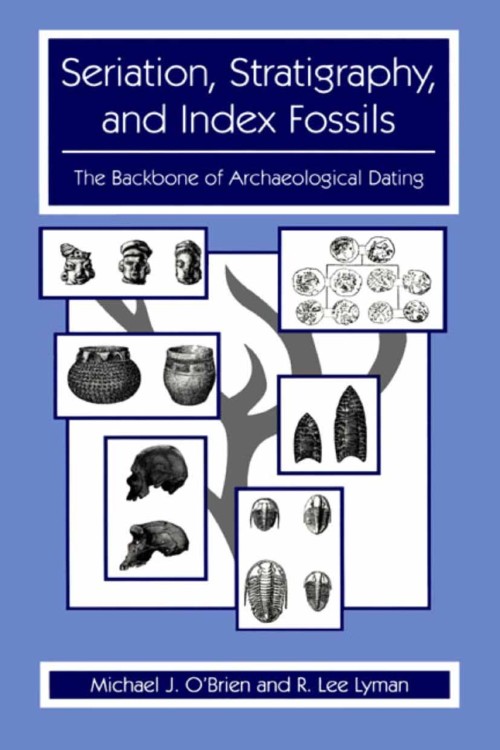
245 10|aSeriation, Stratigraphy, and Index Fossils|h[electronic resource] :|bThe Backbone of Archaeological Dating /|cby Michael J. O'Brien, R. Lee Lyman.
250 |a1st ed. 2002.
264 1|aNew York, NY :|bSpringer US :|bImprint: Springer,|c2002.
300 |aXIII, 253 p.|bonline resource.
336 |atext|btxt|2rdacontent
337 |acomputer|bc|2rdamedia
338 |aonline resource|bcr|2rdacarrier
347 |atext file|bPDF|2rda
505 0 |aAn Introduction to Time and Dating -- The Creation of Archaeological Types -- Seriation I -- Seriation II -- Superposition and Stratigraphy -- Cross Dating -- Final Thoughts on Archaeological Time.
520 |aIt is difficult for today's students of archaeology to imagine an era when chronometric dating methods were unavailable. However, even a casual perusal of the large body of literature that arose during the first half of the twentieth century reveals a battery of clever methods used to determine the relative ages of archaeological phenomena, often with considerable precision. Stratigraphic excavation is perhaps the best known of the various relative-dating methods used by prehistorians. Although there are several techniques of using artifacts from superposed strata to measure time, these are rarely if ever differentiated. Rather, common practice is to categorize them under the heading `stratigraphic excavation'. This text distinguishes among the several techniques and argues that stratigraphic excavation tends to result in discontinuous measures of time - a point little appreciated by modern archaeologists. Although not as well known as stratigraphic excavation, two other methods of relative dating have figured important in Americanist archaeology: seriation and the use of index fossils. The latter (like stratigraphic excavation) measures time discontinuously, while the former - in various guises - measures time continuously. Perhaps no other method used in archaeology is as misunderstood as seriation, and the authors provide detailed descriptions and examples of each of its three different techniques. Each method and technique of relative dating is placed in historical perspective, with particular focus on developments in North America, an approach that allows a more complete understanding of the methods described, both in terms of analytical technique and disciplinary history. This text will appeal to all archaeologists, from graduate students to seasoned professionals, who want to learn more about the backbone of archaeological dating.
650 0|aArchaeology.
650 0|aAnthropology.
650 0|aSedimentology.
650 0|aPaleontology .
650 14|aArchaeology.
650 24|aAnthropology.
650 24|aSedimentology.
650 24|aPaleontology.
700 1 |aLyman, R. Lee.|eauthor.|4aut|4http://id.loc.gov/vocabulary/relators/aut
710 2 |aSpringerLink (Online service)
773 0 |tSpringer Nature eBook
776 08|iPrinted edition:|z9780306461521
776 08|iPrinted edition:|z9781475781915
776 08|iPrinted edition:|z9781475781922
856 40|uhttps://doi.org/10.1007/b110115
912 |aZDB-2-SHU
912 |aZDB-2-SXS
912 |aZDB-2-BAE
950 |aHumanities, Social Sciences and Law (SpringerNature-11648)
950 |aSocial Sciences (R0) (SpringerNature-43726)