LEADER 03593nam a22005535i 4500
001 805987
003 TR_AnAIT
005 20260127001209
007 cr nn 008mamaa
008 100301s2002 xxu| s |||| 0|eng d
020 |a9780306471704|9978-0-306-47170-4
024 7 |a10.1007/b110417|2doi
041 |aeng
049 |aTürk Tarih Kurumu Kütüphanesi
050 4|aD1-2027
072 7|aHB|2bicssc
072 7|aHBAH|2bicssc
072 7|aHIS000000|2bisacsh
072 7|aNH|2thema
072 7|aNHAH|2thema
082 04|a900|223
090 |aDK/7300
100 1 |aGoodwin, Lorinda B.R.|eauthor.|4aut|4http://id.loc.gov/vocabulary/relators/aut
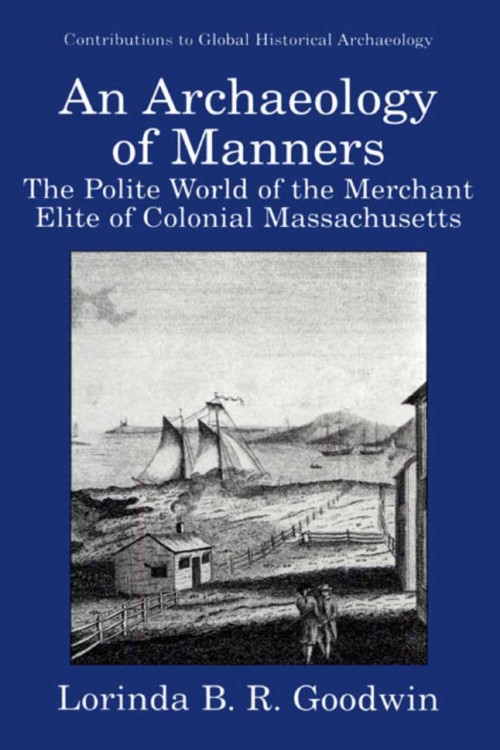
245 13|aAn Archaeology of Manners|h[electronic resource] :|bThe Polite World of the Merchant Elite of Colonial Massachusetts /|cby Lorinda B.R. Goodwin.
250 |a1st ed. 2002.
264 1|aNew York, NY :|bSpringer US :|bImprint: Springer,|c2002.
300 |aXX, 234 p.|bonline resource.
336 |atext|btxt|2rdacontent
337 |acomputer|bc|2rdamedia
338 |aonline resource|bcr|2rdacarrier
347 |atext file|bPDF|2rda
490 1 |aContributions To Global Historical Archaeology
505 0 |aThe Polite World of the Merchant Elite of Colonial Massachusetts -- History, Archaeology, and the Ideal World of Manners -- The Merchant Community in Massachusetts and England -- Material Expressions of Mannerly Behavior -- Manners and Women’s Roles in Merchant Society -- Conclusion An Archaeology of Manners.
520 |aA glance at the title of this book might well beg the question “What in heaven’s name does archaeology have to do with manners? We cannot dig up manners or mannerly behavior—or can we?” One might also ask “Why is mannerly behavior important?” and “What can archaeology contribute to our understanding of the role of manners in the devel- ment of social relations and cultural identity in early America?” English colonists in America and elsewhere sought to replicate English notions of gentility and social structure, but of necessity div- ged from the English model. The first generation of elites in colonial America did not spring from the landed gentry of old England. Rather, they were self-made, newly rich, and newly possessed of land and other trappings of England’s genteel classes. The result was a new model of gentry culture that overcame the contradiction between a value system in which gentility was conferred by birth, and the new values of bo- geois materialism and commercialism among the emerging colonial elites. Manners played a critical role in the struggle for the cultural legitimacy of gentility; mannerly behavior—along with exhibition of refined taste in architecture, fashionable clothing, elegant furnishings, and literature—provided the means through which the new-sprung colonial elites defined themselves and validated their claims on power and prestige to accompany their newfound wealth.
650 0|aHistory.
650 0|aArchaeology.
650 0|aAnthropology.
650 14|aHistory.
650 24|aArchaeology.
650 24|aAnthropology.
710 2 |aSpringerLink (Online service)
773 0 |tSpringer Nature eBook
776 08|iPrinted edition:|z9780306461569
776 08|iPrinted edition:|z9781441933218
776 08|iPrinted edition:|z9781475772487
830 0|aContributions To Global Historical Archaeology
856 40|uhttps://doi.org/10.1007/b110417
912 |aZDB-2-SHU
912 |aZDB-2-SXH
912 |aZDB-2-BAE
950 |aHumanities, Social Sciences and Law (SpringerNature-11648)
950 |aHistory (R0) (SpringerNature-43722)