

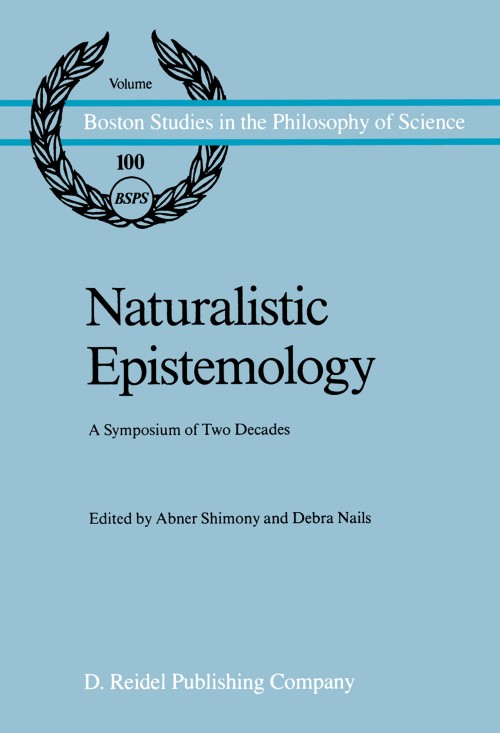
Naturalistic Epistemology [electronic resource] : A Symposium of Two Decades / edited by A. Shimony, Debra Nails.
Erişim Adresi
ISBN
9789400937352
Dil Kodu
İngilizce
Yer Numarası
DK/7313
Basım Bildirimi
1st ed. 1987.
Yayın Bilgisi
Dordrecht : Springer Netherlands : Imprint: Springer, 1987.
Fiziksel Niteleme
VI, 388 p. online resource.
Dizi
Boston Studies in the Philosophy and History of Science, 2214-7942 ; 100
İçindekiler Notu
I / Historical Figures -- Immanuel Kant and the Greater Glory of Geometry -- Comment -- Peirce’s Conception of Truth: A Framework for Naturalistic Epistemology? -- The Philosophical Significance of Piaget’s Researches on the Genesis of the Concept of Time -- Comment -- Reply -- Konrad Lorenz as Evolutionary Epistemologist: The Problem of Intentionality -- Wilfrid Sellars on the Nature of Thought -- II / The Use of Cognitive Psychology in Epistemology -- Neurological Embodiments of Belief and the Gaps in the Fit of Phenomena to Noumena -- Causal Relations in Visual Perception -- Why Ideas are Not in the Mind: An Introduction to Ecological Epistemology -- Comment -- Naturalized Epistemology and the Study of Language -- Quine on Psychology -- Comment -- Comment -- Integral Epistemology -- III / Criticisms of Naturalistic Epistemology -- Naturalistic Epistemology and the Harakiri of Philosophy -- Comment -- Comment -- Naturalistic Epistemology: The Case of Abner Shimony -- Comment: -- Epistemology Historicized -- Comment -- Index of Names.
Özet, vb.
1. AIMS OF THE INTRODUCTION The systematic assessment of claims to knowledge is the central task of epistemology. According to naturalistic epistemologists, this task cannot be well performed unless proper attention is paid to the place of the knowing subject in nature. All philosophers who can appropriately be called 'naturalistic epistemologists' subscribe to two theses: (a) human beings, including their cognitive faculties, are entities in nature, inter acting with other entities studied by the natural sciences; and (b) the results of natural scientific investigations of human beings, particularly of biology and empirical psychology, are relevant and probably crucial to the epistemological enterprise. Naturalistic epistemologists differ in their explications of theses (a) and (b) and also in their conceptions of the proper admixture of other components needed for an adequate treatment of human knowledg- e.g., linguistic analysis, logic, decision theory, and theory of value. Those contributors to this volume who consider themselves to be naturalistic epistemologists (the majority) differ greatly in these respects. It is not my intention in this introduction to give a taxonomy of naturalistic epistemologies. I intend only to provide an overview which will stimulate a critical reading of the articles in the body of this volume, by facilitating a recognition of the authors' assumptions, emphases, and omissions.
Konu
Science __ Philosophy.
Psycholinguistics.
Biology __ Philosophy.
Philosophy of Science.
Psycholinguistics and Cognitive Lingusitics.
Philosophy of Biology.
Psycholinguistics.
Biology __ Philosophy.
Philosophy of Science.
Psycholinguistics and Cognitive Lingusitics.
Philosophy of Biology.
Diğer Yazarlar
Kurum Adı
Eseri Alıntıla
Referansları kullanmadan önce gözden geçirmeniz ve varsa gerekli düzeltmeleri yapmanız önerilir.
Dijital Kaynak
MARC Görünümü
LEADER 05284nam a22006015i 4500
001 806000
003 TR_AnAIT
005 20260127001225
007 cr nn 008mamaa
008 121227s1987 ne | s |||| 0|eng d
020 |a9789400937352|9978-94-009-3735-2
024 7 |a10.1007/978-94-009-3735-2|2doi
041 |aeng
049 |aTürk Tarih Kurumu Kütüphanesi
050 4|aQ174-175.3
050 4|aB67
072 7|aPDA|2bicssc
072 7|aSCI075000|2bisacsh
072 7|aPDA|2thema
082 04|a501|223
090 |aDK/7313
245 10|aNaturalistic Epistemology|h[electronic resource] :|bA Symposium of Two Decades /|cedited by A. Shimony, Debra Nails.
250 |a1st ed. 1987.
264 1|aDordrecht :|bSpringer Netherlands :|bImprint: Springer,|c1987.
300 |aVI, 388 p.|bonline resource.
336 |atext|btxt|2rdacontent
337 |acomputer|bc|2rdamedia
338 |aonline resource|bcr|2rdacarrier
347 |atext file|bPDF|2rda
490 1 |aBoston Studies in the Philosophy and History of Science,|x2214-7942 ;|v100
505 0 |aI / Historical Figures -- Immanuel Kant and the Greater Glory of Geometry -- Comment -- Peirce’s Conception of Truth: A Framework for Naturalistic Epistemology? -- The Philosophical Significance of Piaget’s Researches on the Genesis of the Concept of Time -- Comment -- Reply -- Konrad Lorenz as Evolutionary Epistemologist: The Problem of Intentionality -- Wilfrid Sellars on the Nature of Thought -- II / The Use of Cognitive Psychology in Epistemology -- Neurological Embodiments of Belief and the Gaps in the Fit of Phenomena to Noumena -- Causal Relations in Visual Perception -- Why Ideas are Not in the Mind: An Introduction to Ecological Epistemology -- Comment -- Naturalized Epistemology and the Study of Language -- Quine on Psychology -- Comment -- Comment -- Integral Epistemology -- III / Criticisms of Naturalistic Epistemology -- Naturalistic Epistemology and the Harakiri of Philosophy -- Comment -- Comment -- Naturalistic Epistemology: The Case of Abner Shimony -- Comment: -- Epistemology Historicized -- Comment -- Index of Names.
520 |a1. AIMS OF THE INTRODUCTION The systematic assessment of claims to knowledge is the central task of epistemology. According to naturalistic epistemologists, this task cannot be well performed unless proper attention is paid to the place of the knowing subject in nature. All philosophers who can appropriately be called 'naturalistic epistemologists' subscribe to two theses: (a) human beings, including their cognitive faculties, are entities in nature, inter acting with other entities studied by the natural sciences; and (b) the results of natural scientific investigations of human beings, particularly of biology and empirical psychology, are relevant and probably crucial to the epistemological enterprise. Naturalistic epistemologists differ in their explications of theses (a) and (b) and also in their conceptions of the proper admixture of other components needed for an adequate treatment of human knowledg- e.g., linguistic analysis, logic, decision theory, and theory of value. Those contributors to this volume who consider themselves to be naturalistic epistemologists (the majority) differ greatly in these respects. It is not my intention in this introduction to give a taxonomy of naturalistic epistemologies. I intend only to provide an overview which will stimulate a critical reading of the articles in the body of this volume, by facilitating a recognition of the authors' assumptions, emphases, and omissions.
532 8 |aAccessibility summary: This PDF is not accessible. It is based on scanned pages and does not support features such as screen reader compatibility or described non-text content (images, graphs etc). However, it likely supports searchable and selectable text based on OCR (Optical Character Recognition). Users with accessibility needs may not be able to use this content effectively. Please contact us at accessibilitysupport@springernature.com if you require assistance or an alternative format.
532 8 |aInaccessible, or known limited accessibility
532 8 |aNo reading system accessibility options actively disabled
532 8 |aPublisher contact for further accessibility information: accessibilitysupport@springernature.com
650 0|aScience|xPhilosophy.
650 0|aPsycholinguistics.
650 0|aBiology|xPhilosophy.
650 14|aPhilosophy of Science.
650 24|aPsycholinguistics and Cognitive Lingusitics.
650 24|aPhilosophy of Biology.
700 1 |aShimony, A.|eeditor.|4edt|4http://id.loc.gov/vocabulary/relators/edt
700 1 |aNails, Debra.|eeditor.|4edt|4http://id.loc.gov/vocabulary/relators/edt
710 2 |aSpringerLink (Online service)
773 0 |tSpringer Nature eBook
776 08|iPrinted edition:|z9789027723376
776 08|iPrinted edition:|z9789400937369
776 08|iPrinted edition:|z9789401081689
830 0|aBoston Studies in the Philosophy and History of Science,|x2214-7942 ;|v100
856 40|uhttps://doi.org/10.1007/978-94-009-3735-2
912 |aZDB-2-SHU
912 |aZDB-2-SXPR
912 |aZDB-2-BAE
950 |aHumanities, Social Sciences and Law (SpringerNature-11648)
950 |aPhilosophy and Religion (R0) (SpringerNature-43725)
001 806000
003 TR_AnAIT
005 20260127001225
007 cr nn 008mamaa
008 121227s1987 ne | s |||| 0|eng d
020 |a9789400937352|9978-94-009-3735-2
024 7 |a10.1007/978-94-009-3735-2|2doi
041 |aeng
049 |aTürk Tarih Kurumu Kütüphanesi
050 4|aQ174-175.3
050 4|aB67
072 7|aPDA|2bicssc
072 7|aSCI075000|2bisacsh
072 7|aPDA|2thema
082 04|a501|223
090 |aDK/7313
245 10|aNaturalistic Epistemology|h[electronic resource] :|bA Symposium of Two Decades /|cedited by A. Shimony, Debra Nails.
250 |a1st ed. 1987.
264 1|aDordrecht :|bSpringer Netherlands :|bImprint: Springer,|c1987.
300 |aVI, 388 p.|bonline resource.
336 |atext|btxt|2rdacontent
337 |acomputer|bc|2rdamedia
338 |aonline resource|bcr|2rdacarrier
347 |atext file|bPDF|2rda
490 1 |aBoston Studies in the Philosophy and History of Science,|x2214-7942 ;|v100
505 0 |aI / Historical Figures -- Immanuel Kant and the Greater Glory of Geometry -- Comment -- Peirce’s Conception of Truth: A Framework for Naturalistic Epistemology? -- The Philosophical Significance of Piaget’s Researches on the Genesis of the Concept of Time -- Comment -- Reply -- Konrad Lorenz as Evolutionary Epistemologist: The Problem of Intentionality -- Wilfrid Sellars on the Nature of Thought -- II / The Use of Cognitive Psychology in Epistemology -- Neurological Embodiments of Belief and the Gaps in the Fit of Phenomena to Noumena -- Causal Relations in Visual Perception -- Why Ideas are Not in the Mind: An Introduction to Ecological Epistemology -- Comment -- Naturalized Epistemology and the Study of Language -- Quine on Psychology -- Comment -- Comment -- Integral Epistemology -- III / Criticisms of Naturalistic Epistemology -- Naturalistic Epistemology and the Harakiri of Philosophy -- Comment -- Comment -- Naturalistic Epistemology: The Case of Abner Shimony -- Comment: -- Epistemology Historicized -- Comment -- Index of Names.
520 |a1. AIMS OF THE INTRODUCTION The systematic assessment of claims to knowledge is the central task of epistemology. According to naturalistic epistemologists, this task cannot be well performed unless proper attention is paid to the place of the knowing subject in nature. All philosophers who can appropriately be called 'naturalistic epistemologists' subscribe to two theses: (a) human beings, including their cognitive faculties, are entities in nature, inter acting with other entities studied by the natural sciences; and (b) the results of natural scientific investigations of human beings, particularly of biology and empirical psychology, are relevant and probably crucial to the epistemological enterprise. Naturalistic epistemologists differ in their explications of theses (a) and (b) and also in their conceptions of the proper admixture of other components needed for an adequate treatment of human knowledg- e.g., linguistic analysis, logic, decision theory, and theory of value. Those contributors to this volume who consider themselves to be naturalistic epistemologists (the majority) differ greatly in these respects. It is not my intention in this introduction to give a taxonomy of naturalistic epistemologies. I intend only to provide an overview which will stimulate a critical reading of the articles in the body of this volume, by facilitating a recognition of the authors' assumptions, emphases, and omissions.
532 8 |aAccessibility summary: This PDF is not accessible. It is based on scanned pages and does not support features such as screen reader compatibility or described non-text content (images, graphs etc). However, it likely supports searchable and selectable text based on OCR (Optical Character Recognition). Users with accessibility needs may not be able to use this content effectively. Please contact us at accessibilitysupport@springernature.com if you require assistance or an alternative format.
532 8 |aInaccessible, or known limited accessibility
532 8 |aNo reading system accessibility options actively disabled
532 8 |aPublisher contact for further accessibility information: accessibilitysupport@springernature.com
650 0|aScience|xPhilosophy.
650 0|aPsycholinguistics.
650 0|aBiology|xPhilosophy.
650 14|aPhilosophy of Science.
650 24|aPsycholinguistics and Cognitive Lingusitics.
650 24|aPhilosophy of Biology.
700 1 |aShimony, A.|eeditor.|4edt|4http://id.loc.gov/vocabulary/relators/edt
700 1 |aNails, Debra.|eeditor.|4edt|4http://id.loc.gov/vocabulary/relators/edt
710 2 |aSpringerLink (Online service)
773 0 |tSpringer Nature eBook
776 08|iPrinted edition:|z9789027723376
776 08|iPrinted edition:|z9789400937369
776 08|iPrinted edition:|z9789401081689
830 0|aBoston Studies in the Philosophy and History of Science,|x2214-7942 ;|v100
856 40|uhttps://doi.org/10.1007/978-94-009-3735-2
912 |aZDB-2-SHU
912 |aZDB-2-SXPR
912 |aZDB-2-BAE
950 |aHumanities, Social Sciences and Law (SpringerNature-11648)
950 |aPhilosophy and Religion (R0) (SpringerNature-43725)
Materyaller
Depodan talep edilen materyal sadece kütüphane içerisinde kullanılmaktadır.
Materyal dışarıya ödünç verilmemektedir.
Materyal dışarıya ödünç verilmemektedir.
