

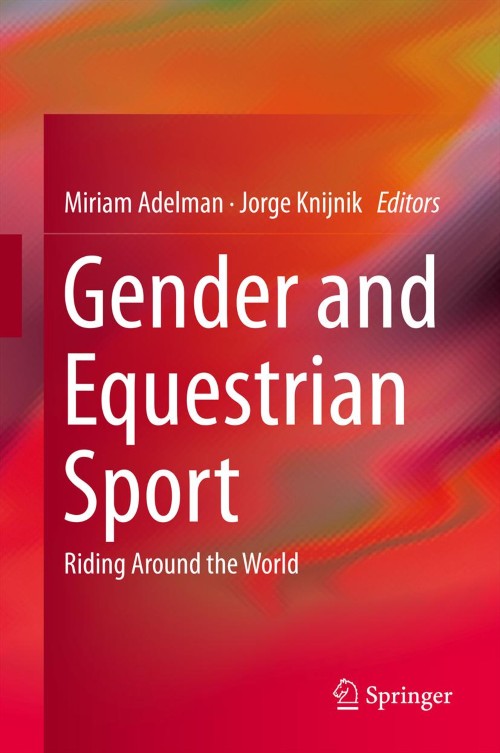
Gender and Equestrian Sport [electronic resource] : Riding Around the World / edited by Miriam Adelman, Jorge Knijnik.
Erişim Adresi
ISBN
9789400768246
Dil Kodu
İngilizce
Yer Numarası
DK/7389
Basım Bildirimi
1st ed. 2013.
Yayın Bilgisi
Dordrecht : Springer Netherlands : Imprint: Springer, 2013.
Fiziksel Niteleme
VIII, 216 p. online resource.
İçindekiler Notu
Acknowledgments -- Chapter 1. Introduction. Women, Men and Horses: Looking at the Equestrian World through a “Gender Lens”; Miriam Adelman and Jorge Knijnik -- Chapter 2. From Glamour to Drudgery - Changing Gender Patterns in the Equine Sector: A Comparative Study of Sweden and Great Britain in the 20th Century: Susanna Hedenborg and Manon Hedenborg White -- Chapter 3. Beyond the Binary: Gender Integration in British Equestrian Sport; Katherine L. Dashper -- Chapter 4. Becoming ‘One of the Lads’: Women, Horseracing and Gender in the United Kingdom; Deborah Butler -- Chapter 5. Tradition and Transgression: Women Who Ride the Rodeo in Southern Brazil; Miriam Adelman and Gabriela Becker -- Chapter 6. Romancing the Horse: Adventure and Femininity in Juvenile Equine Fiction for Girls; Ellen Singleton -- Chapter 7. Women in Equestrian Polo: Cultural Capital and Sport Trajectories; Michelle Gilbert and James Gillett -- Chapter 8. Cojones and Rejones: Multiple Ways of Experiencing, Expressing and Interpreting Gender in the Spanish Mounted Bullfight (rejoneo); Kirrilly Thompson -- Chapter 9. We Have to Make Horse Riding More Masculine!: On the Difference between Masculine Needs and Feminine practices in the Context of Swedish Equestrian Sports; Birgitta Plymoth -- Chapter 10. Horse Power: Gender, Work and Wealth in Canadian Show Jumping; Kendra Coulter -- Chapter 11. The Black, the White, the Green: Fluid Masculinities on Brazilian Dressage; Jorge Knijnik -- Chapter 12. Epilogue. A Research Agenda for Putting Gender Through its Paces; Miriam Adelman and Kirrilly Thompson.
Özet, vb.
This volume brings together studies from various disciplines of the social sciences and humanities (Anthropology, Sociology, Cultural Studies, History and Literary theory) that examine the equestrian world as a historically gendered and highly dynamic field of contemporary sport and culture. From elite international dressage and jumping, polo and the turf, to the rodeo world of the Americas and popular forms of equestrian sport and culture, we are introduced to a range of issues as they unfold at local and global, national and international levels. Students and scholars of gender, culture and sport will find much of interest in this original look at contemporary issues such as “engendered” (women’s and men’s) dentities/subjectivities of equestrians, representations of girls, horses and the world of adventure in juvenile fiction; the current “feminization” of particular equestrian activities (and where boys and men stand in relation to this); how broad forms of social inequality and stratification play themselves out within gendered equestrian contexts; men and women and their relation to horses within the framework of current discussions on the relation of animals to humans (which may include not only love and care, but also exploitation and violence), among others. Singular contributions that incorporate a wide variety of classic and contemporary theoretical perspectives and empirical methodologies show how horse cultures around the globe contribute to historical and current constructions of embodied “femininities” and “masculinities”, reflecting a world that has been moving “beyond the binaries” while continuing to be enmeshed in their persistent and contradictory legacy. The final chapter makes a brave attempt at synthesizing individual chapters and moving forward from the evidences they provide, to suggest a compelling agenda for future research. .
Konu
Sociology.
Sex.
Anthropology.
Ethnology.
Culture.
Sociology.
Gender Studies.
Anthropology.
Regional Cultural Studies.
Sex.
Anthropology.
Ethnology.
Culture.
Sociology.
Gender Studies.
Anthropology.
Regional Cultural Studies.
Diğer Yazarlar
Kurum Adı
Eseri Alıntıla
Referansları kullanmadan önce gözden geçirmeniz ve varsa gerekli düzeltmeleri yapmanız önerilir.
Dijital Kaynak
MARC Görünümü
LEADER 05418nam a22005655i 4500
001 806076
003 TR_AnAIT
005 20260127001354
007 cr nn 008mamaa
008 130620s2013 ne | s |||| 0|eng d
020 |a9789400768246|9978-94-007-6824-6
024 7 |a10.1007/978-94-007-6824-6|2doi
041 |aeng
049 |aTürk Tarih Kurumu Kütüphanesi
050 4|aHM
072 7|aJHB|2bicssc
072 7|aJHB|2bicssc
072 7|aSOC026000|2bisacsh
072 7|aJHB|2thema
072 7|aJHB|2thema
082 04|a301|223
090 |aDK/7389
245 10|aGender and Equestrian Sport|h[electronic resource] :|bRiding Around the World /|cedited by Miriam Adelman, Jorge Knijnik.
250 |a1st ed. 2013.
264 1|aDordrecht :|bSpringer Netherlands :|bImprint: Springer,|c2013.
300 |aVIII, 216 p.|bonline resource.
336 |atext|btxt|2rdacontent
337 |acomputer|bc|2rdamedia
338 |aonline resource|bcr|2rdacarrier
347 |atext file|bPDF|2rda
505 0 |aAcknowledgments -- Chapter 1. Introduction. Women, Men and Horses: Looking at the Equestrian World through a “Gender Lens”; Miriam Adelman and Jorge Knijnik -- Chapter 2. From Glamour to Drudgery - Changing Gender Patterns in the Equine Sector: A Comparative Study of Sweden and Great Britain in the 20th Century: Susanna Hedenborg and Manon Hedenborg White -- Chapter 3. Beyond the Binary: Gender Integration in British Equestrian Sport; Katherine L. Dashper -- Chapter 4. Becoming ‘One of the Lads’: Women, Horseracing and Gender in the United Kingdom; Deborah Butler -- Chapter 5. Tradition and Transgression: Women Who Ride the Rodeo in Southern Brazil; Miriam Adelman and Gabriela Becker -- Chapter 6. Romancing the Horse: Adventure and Femininity in Juvenile Equine Fiction for Girls; Ellen Singleton -- Chapter 7. Women in Equestrian Polo: Cultural Capital and Sport Trajectories; Michelle Gilbert and James Gillett -- Chapter 8. Cojones and Rejones: Multiple Ways of Experiencing, Expressing and Interpreting Gender in the Spanish Mounted Bullfight (rejoneo); Kirrilly Thompson -- Chapter 9. We Have to Make Horse Riding More Masculine!: On the Difference between Masculine Needs and Feminine practices in the Context of Swedish Equestrian Sports; Birgitta Plymoth -- Chapter 10. Horse Power: Gender, Work and Wealth in Canadian Show Jumping; Kendra Coulter -- Chapter 11. The Black, the White, the Green: Fluid Masculinities on Brazilian Dressage; Jorge Knijnik -- Chapter 12. Epilogue. A Research Agenda for Putting Gender Through its Paces; Miriam Adelman and Kirrilly Thompson.
520 |aThis volume brings together studies from various disciplines of the social sciences and humanities (Anthropology, Sociology, Cultural Studies, History and Literary theory) that examine the equestrian world as a historically gendered and highly dynamic field of contemporary sport and culture. From elite international dressage and jumping, polo and the turf, to the rodeo world of the Americas and popular forms of equestrian sport and culture, we are introduced to a range of issues as they unfold at local and global, national and international levels. Students and scholars of gender, culture and sport will find much of interest in this original look at contemporary issues such as “engendered” (women’s and men’s) dentities/subjectivities of equestrians, representations of girls, horses and the world of adventure in juvenile fiction; the current “feminization” of particular equestrian activities (and where boys and men stand in relation to this); how broad forms of social inequality and stratification play themselves out within gendered equestrian contexts; men and women and their relation to horses within the framework of current discussions on the relation of animals to humans (which may include not only love and care, but also exploitation and violence), among others. Singular contributions that incorporate a wide variety of classic and contemporary theoretical perspectives and empirical methodologies show how horse cultures around the globe contribute to historical and current constructions of embodied “femininities” and “masculinities”, reflecting a world that has been moving “beyond the binaries” while continuing to be enmeshed in their persistent and contradictory legacy. The final chapter makes a brave attempt at synthesizing individual chapters and moving forward from the evidences they provide, to suggest a compelling agenda for future research. .
650 0|aSociology.
650 0|aSex.
650 0|aAnthropology.
650 0|aEthnology.
650 0|aCulture.
650 14|aSociology.
650 24|aGender Studies.
650 24|aAnthropology.
650 24|aRegional Cultural Studies.
700 1 |aAdelman, Miriam.|eeditor.|4edt|4http://id.loc.gov/vocabulary/relators/edt
700 1 |aKnijnik, Jorge.|eeditor.|4edt|4http://id.loc.gov/vocabulary/relators/edt
710 2 |aSpringerLink (Online service)
773 0 |tSpringer Nature eBook
776 08|iPrinted edition:|z9789400768239
776 08|iPrinted edition:|z9789400768253
776 08|iPrinted edition:|z9789400793811
856 40|uhttps://doi.org/10.1007/978-94-007-6824-6
912 |aZDB-2-SHU
912 |aZDB-2-SXS
950 |aHumanities, Social Sciences and Law (SpringerNature-11648)
950 |aSocial Sciences (R0) (SpringerNature-43726)
001 806076
003 TR_AnAIT
005 20260127001354
007 cr nn 008mamaa
008 130620s2013 ne | s |||| 0|eng d
020 |a9789400768246|9978-94-007-6824-6
024 7 |a10.1007/978-94-007-6824-6|2doi
041 |aeng
049 |aTürk Tarih Kurumu Kütüphanesi
050 4|aHM
072 7|aJHB|2bicssc
072 7|aJHB|2bicssc
072 7|aSOC026000|2bisacsh
072 7|aJHB|2thema
072 7|aJHB|2thema
082 04|a301|223
090 |aDK/7389
245 10|aGender and Equestrian Sport|h[electronic resource] :|bRiding Around the World /|cedited by Miriam Adelman, Jorge Knijnik.
250 |a1st ed. 2013.
264 1|aDordrecht :|bSpringer Netherlands :|bImprint: Springer,|c2013.
300 |aVIII, 216 p.|bonline resource.
336 |atext|btxt|2rdacontent
337 |acomputer|bc|2rdamedia
338 |aonline resource|bcr|2rdacarrier
347 |atext file|bPDF|2rda
505 0 |aAcknowledgments -- Chapter 1. Introduction. Women, Men and Horses: Looking at the Equestrian World through a “Gender Lens”; Miriam Adelman and Jorge Knijnik -- Chapter 2. From Glamour to Drudgery - Changing Gender Patterns in the Equine Sector: A Comparative Study of Sweden and Great Britain in the 20th Century: Susanna Hedenborg and Manon Hedenborg White -- Chapter 3. Beyond the Binary: Gender Integration in British Equestrian Sport; Katherine L. Dashper -- Chapter 4. Becoming ‘One of the Lads’: Women, Horseracing and Gender in the United Kingdom; Deborah Butler -- Chapter 5. Tradition and Transgression: Women Who Ride the Rodeo in Southern Brazil; Miriam Adelman and Gabriela Becker -- Chapter 6. Romancing the Horse: Adventure and Femininity in Juvenile Equine Fiction for Girls; Ellen Singleton -- Chapter 7. Women in Equestrian Polo: Cultural Capital and Sport Trajectories; Michelle Gilbert and James Gillett -- Chapter 8. Cojones and Rejones: Multiple Ways of Experiencing, Expressing and Interpreting Gender in the Spanish Mounted Bullfight (rejoneo); Kirrilly Thompson -- Chapter 9. We Have to Make Horse Riding More Masculine!: On the Difference between Masculine Needs and Feminine practices in the Context of Swedish Equestrian Sports; Birgitta Plymoth -- Chapter 10. Horse Power: Gender, Work and Wealth in Canadian Show Jumping; Kendra Coulter -- Chapter 11. The Black, the White, the Green: Fluid Masculinities on Brazilian Dressage; Jorge Knijnik -- Chapter 12. Epilogue. A Research Agenda for Putting Gender Through its Paces; Miriam Adelman and Kirrilly Thompson.
520 |aThis volume brings together studies from various disciplines of the social sciences and humanities (Anthropology, Sociology, Cultural Studies, History and Literary theory) that examine the equestrian world as a historically gendered and highly dynamic field of contemporary sport and culture. From elite international dressage and jumping, polo and the turf, to the rodeo world of the Americas and popular forms of equestrian sport and culture, we are introduced to a range of issues as they unfold at local and global, national and international levels. Students and scholars of gender, culture and sport will find much of interest in this original look at contemporary issues such as “engendered” (women’s and men’s) dentities/subjectivities of equestrians, representations of girls, horses and the world of adventure in juvenile fiction; the current “feminization” of particular equestrian activities (and where boys and men stand in relation to this); how broad forms of social inequality and stratification play themselves out within gendered equestrian contexts; men and women and their relation to horses within the framework of current discussions on the relation of animals to humans (which may include not only love and care, but also exploitation and violence), among others. Singular contributions that incorporate a wide variety of classic and contemporary theoretical perspectives and empirical methodologies show how horse cultures around the globe contribute to historical and current constructions of embodied “femininities” and “masculinities”, reflecting a world that has been moving “beyond the binaries” while continuing to be enmeshed in their persistent and contradictory legacy. The final chapter makes a brave attempt at synthesizing individual chapters and moving forward from the evidences they provide, to suggest a compelling agenda for future research. .
650 0|aSociology.
650 0|aSex.
650 0|aAnthropology.
650 0|aEthnology.
650 0|aCulture.
650 14|aSociology.
650 24|aGender Studies.
650 24|aAnthropology.
650 24|aRegional Cultural Studies.
700 1 |aAdelman, Miriam.|eeditor.|4edt|4http://id.loc.gov/vocabulary/relators/edt
700 1 |aKnijnik, Jorge.|eeditor.|4edt|4http://id.loc.gov/vocabulary/relators/edt
710 2 |aSpringerLink (Online service)
773 0 |tSpringer Nature eBook
776 08|iPrinted edition:|z9789400768239
776 08|iPrinted edition:|z9789400768253
776 08|iPrinted edition:|z9789400793811
856 40|uhttps://doi.org/10.1007/978-94-007-6824-6
912 |aZDB-2-SHU
912 |aZDB-2-SXS
950 |aHumanities, Social Sciences and Law (SpringerNature-11648)
950 |aSocial Sciences (R0) (SpringerNature-43726)
Materyaller
Depodan talep edilen materyal sadece kütüphane içerisinde kullanılmaktadır.
Materyal dışarıya ödünç verilmemektedir.
Materyal dışarıya ödünç verilmemektedir.
